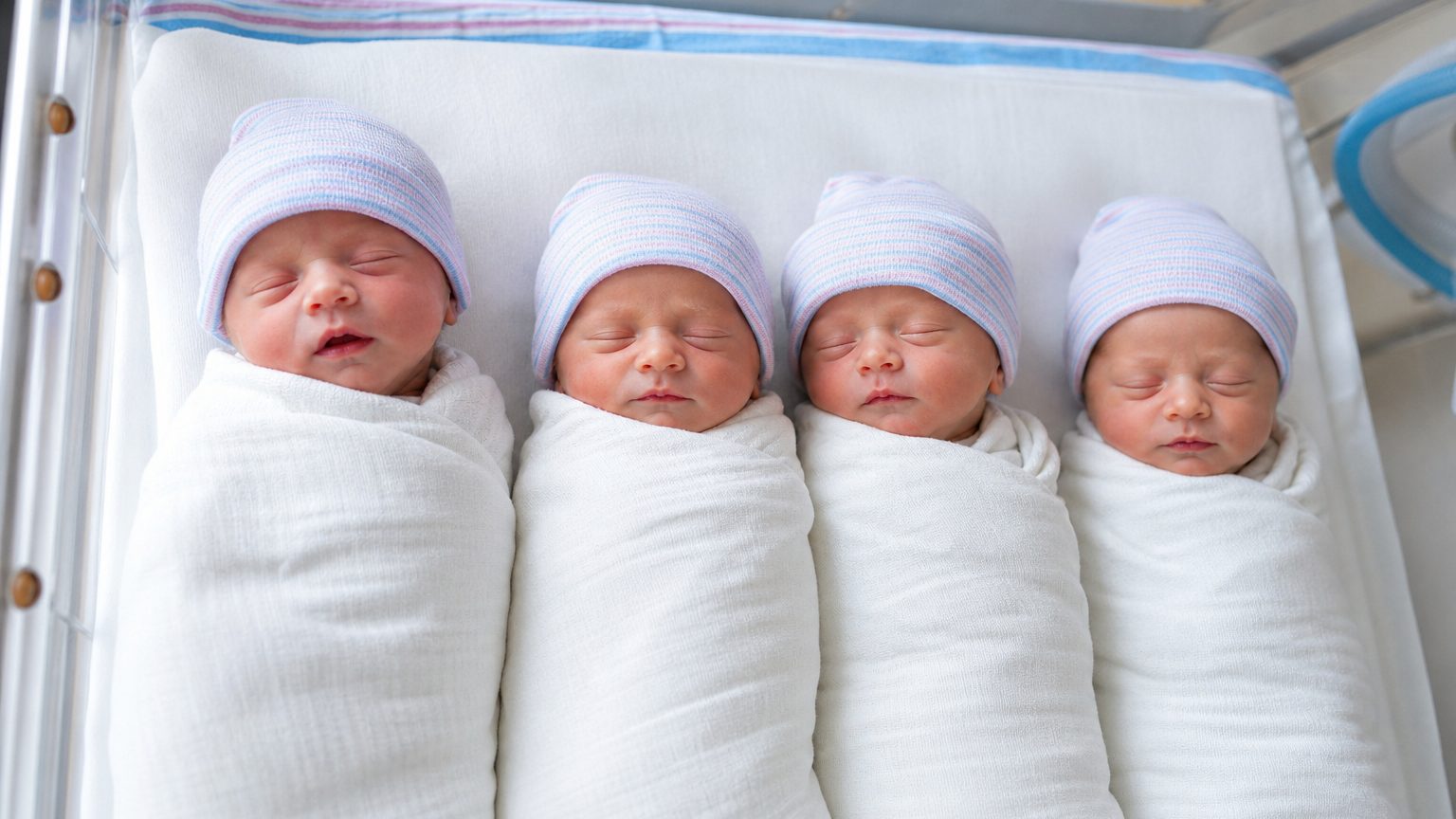
Rare identical quadruplets were born in Australia after a high-risk pregnancy, with the girls delivered early and now recovering in hospital.
Rare identical quadruplets born in Australia have drawn attention after a mother delivered four naturally conceived baby girls at the Royal Brisbane and Women’s Hospital. The pregnancy was described by doctors as extremely high risk, and the birth took place on 14 July by caesarean section.
The girls arrived at 28 weeks and four days, after doctors monitored their mother, 34-year-old Jenitar Na’amoana, closely during the pregnancy. The hospital said she was admitted as an inpatient at 25 weeks so staff could keep watch on her condition and the babies. Dr Alexa Bendall, a maternal foetal medicine specialist and obstetrician who cared for Na’amoana from the start, said the team believed reaching 28 weeks would already be a strong result.
Bendall said identical quadruplets are estimated to occur at about one in 15 million pregnancies. She added that the case was even more unusual because the four babies shared the same placenta, which she described as unheard of. The hospital said the newborns were monozygotic quadruplets, meaning one fertilised egg split into four embryos.
The babies have been named Emily, Harriet, Catherine, and Alexa, with the last name chosen in tribute to Bendall. The doctor called that gesture a beautiful tribute. She said Na’amoana had handled the pregnancy calmly from the beginning and had avoided complications for herself and the babies. The hospital said the girls are currently doing very well and will remain in the neonatal intensive care unit until they reach full term.
Na’amoana and her husband, Jortham, already had four children before the birth of the quadruplets. The hospital said the parents were taken by immense surprise when they learned they were expecting four more children. Na’amoana has since started an online fundraising campaign to help buy a van with at least 10 seats, and the effort has already brought in more than A$37,000. Rare identical quadruplets like these are far beyond the ordinary, and the family now faces the practical challenge of caring for eight children under one roof.