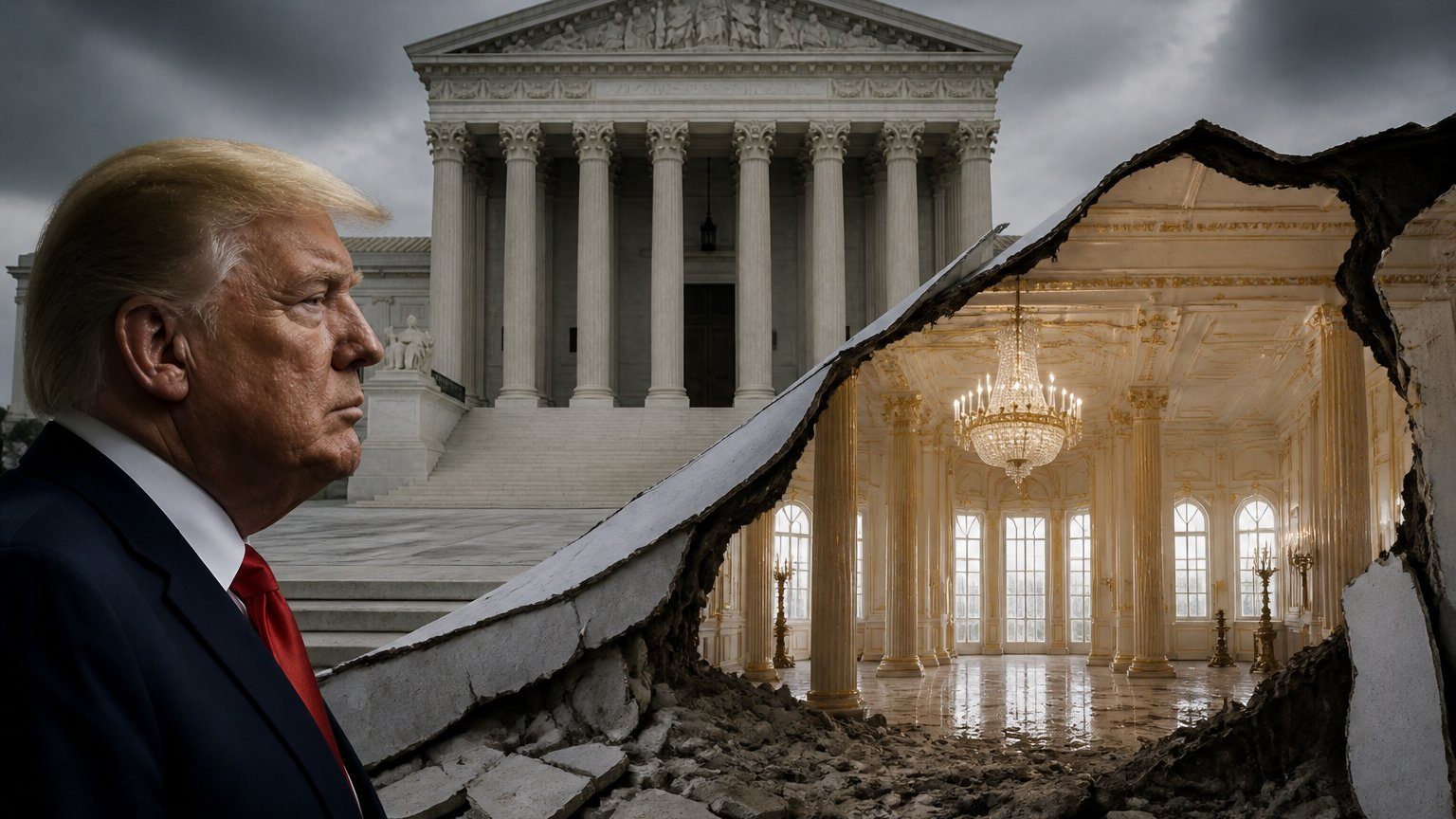
Trump’s White House ballroom case may hinge on standing, with legal experts saying the Supreme Court could dismiss it before reaching the merits.
Donald Trump’s White House ballroom fight may end up at the Supreme Court, and legal experts say the case could be decided on a threshold question before the justices ever reach the broader constitutional dispute. After a divided federal appeals court left in place an order blocking above-ground construction, Trump said he would take the White House ballroom case to the nation’s highest court.
The appeal follows a 2-1 ruling from the D.C. Circuit that said the project cannot proceed without congressional approval. Trump highlighted the dissent from Judge Neomi Rao, who argued that the National Trust for Historic Preservation had not shown it had the legal standing needed to sue. That issue, lawyers say, could become the central battleground if the Supreme Court agrees to hear the case.
The National Trust tried to ground its claim in the experience of Alison Hoagland, a member who lives near the White House and visits President’s Park about once a month. Hoagland argued that the scale and design of the proposed ballroom would harm her enjoyment of the area by making the White House feel overshadowed and less attractive. Rao rejected that theory, writing that the group had not shown the type of injury required for a court to intervene and pointing instead to security concerns tied to leaving an open construction site at the president’s home and office.
Former Justice Department attorney Abhishek Kambli told Fox News Digital that the National Trust faces a difficult path on standing. He said that although Congress created the group, it still must show the lawsuit is connected to its own interests. Kambli noted that the President’s Park area where the White House East Ballroom would be built is not one of the properties the National Trust owns. He said that makes the standing question “a very tough argument” to sustain, especially before a Supreme Court that he described as strict on standing.
“Trump’s White House ballroom case may hinge on standing, with legal experts saying the Supreme Court could dismiss it before reaching the merits.”
Kambli also said the group’s aesthetic-injury theory could be hard to prove because such claims usually depend on actual use of the space at issue. He said that if someone intends to visit the East Ballroom area, that is one thing, but a person who merely passes by would face a tougher legal argument. Hans von Spakovsky, a senior legal fellow at Advancing American Freedom, made a similar point, saying Supreme Court precedent requires a concrete injury before a lawsuit can move forward. He called the idea that a passerby has been legally injured by what she sees at the White House absurd.
The White House ballroom dispute has already run into a similar standing problem in another case. Earlier in July, U.S. District Judge Amit Mehta rejected a lawsuit aimed at blocking America 250 UFC event plans at the White House and Lincoln Memorial, saying the plaintiffs had not met the standard for aesthetic harm. That ruling added another example of how difficult it can be to persuade federal courts that a visual or environmental objection is enough to open the courthouse doors.
At the center of the ballroom case is a fight over who gets to decide major changes on federal land in Washington. The National Trust says federal law requires Congress to approve new construction on federal property in the capital. The administration says existing law already allows the president to make alterations and improvements to federal property, including the White House. Kambli said that in ordinary real-property terms, those words can cover changes to an existing structure without turning it into something entirely new.
Trump’s White House ballroom case now stands as more than a dispute over one construction project. It is also a test of how far outside groups can go in challenging White House changes in federal court and how strictly the Supreme Court will police standing. For American readers, the next move matters because it could shape who has the legal power to slow or stop major alterations at the seat of presidential power.
Frequently asked questions
What is the main legal issue in the White House ballroom case?
The biggest issue is standing. Legal experts say the Supreme Court could decide the case on whether the National Trust for Historic Preservation is legally entitled to sue.
Why did the National Trust say it had standing?
The group relied on Alison Hoagland, a member who lives near the White House and visits President’s Park about once a month. She said the ballroom would diminish her enjoyment of the area.
What did the appeals court decide?
The D.C. Circuit ruled 2-1 that the project cannot move forward without congressional approval. Trump said he would appeal to the Supreme Court.
Could the Supreme Court rule on whether Trump can build the ballroom?
Yes, but legal experts said the Court may avoid the merits if it finds the plaintiffs lack standing. In that case, the justices could dispose of the case on that threshold issue.
We value your privacy 🍪We use cookies for essential features and, if you allow it, to send you a notification whenever we publish a new story. See our Privacy Policy.
📨
Never Miss a Story
Get the headlines that matter delivered straight to your inbox.
📱 On iPhone: tap the Share icon, choose “Add to Home Screen”, then open TheTrueDefender from your Home Screen and tap 🔔 to turn on notifications. (Apple only allows notifications for saved web apps.)
🔔
Never miss a breaking storyGet free alerts the moment big US news breaks.
1Tap the ••• menu at the bottom of the screen, then tap Share(in Safari, just tap Share in the bottom bar directly)2Scroll down the menu and tap Add to Home Screen3Tap Add in the top-right corner4Open TheTrueDefender from your Home Screen, then tap 🔔 Subscribe and choose Allow
📱 Add TheTrueDefender to your home screen for one-tap access.