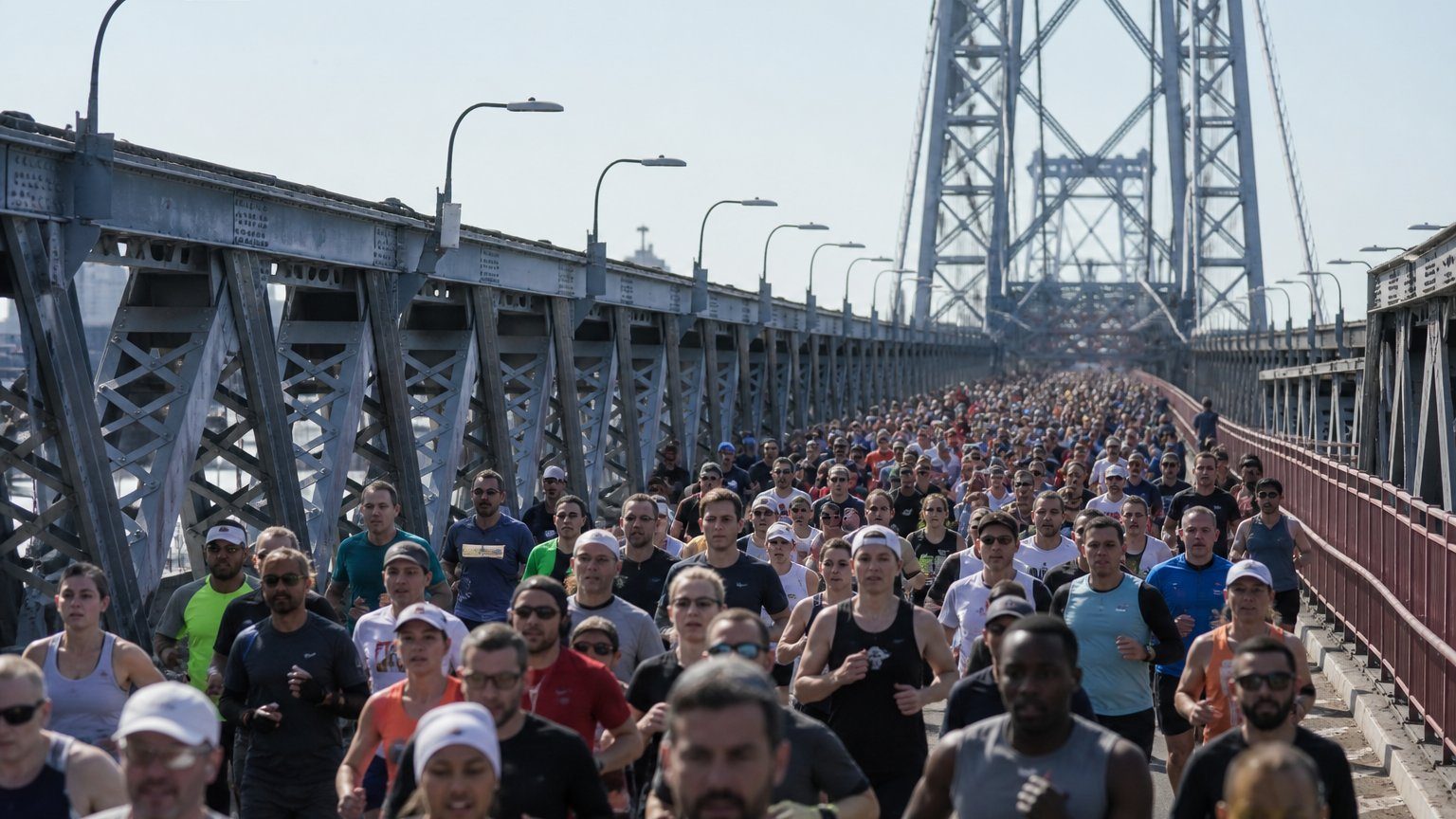
The Williamsburg Bridge Marathon turned New York’s most unlikely route into a test of endurance and attitude this weekend, as runners crossed the bridge back and forth 17 times in an unofficial race with no permit, no entry fee and no fixed distance.
Runners gathered on the Manhattan side of the Williamsburg Bridge on Friday night after sunset and waited to learn how far they would have to go. A computer-generated number between 10 and 100 was posted on the event website, and this year’s draw landed on 17 spans, which worked out to about 21.42 miles. Race creator Matt White said he was hoping for something tougher, calling it a “disappointingly short year” and joking, “Hopefully the random number generator gives us something harder next time.”
Even with the shorter route, the Williamsburg Bridge Marathon produced plenty of unfinished efforts. Thirteen women and 55 men completed the race, while many others did not make it to the end. Maya Geller finished first among the women in 3:15:04, and Joe Cady led the men in 2:30:13. For a race built around uncertainty, the results still gave the night a clear finish line for those who kept going.
White started the event after missing qualification for the New York City Marathon and deciding, on a whim, to create his own race. He later described the idea as a chance to keep running marathons in places that get worse and worse. The first year drew about 20 runners, but this year the turnout grew sharply, with volunteer James Cashen estimating between 300 and 400 people attended.
That growth reflects something larger than novelty. In a city known for crowded streets, late-night energy and constant motion, the bridge race has become a kind of moving social club. Cashen said it captures the best parts of New York and the running scene, describing it as gritty, difficult and powered by fun-loving runners. Many participants seem drawn as much by the absurdity as by the mileage, with past runners joking that not finishing could still count as a win and that the event felt like a shared experience in mutual pain.