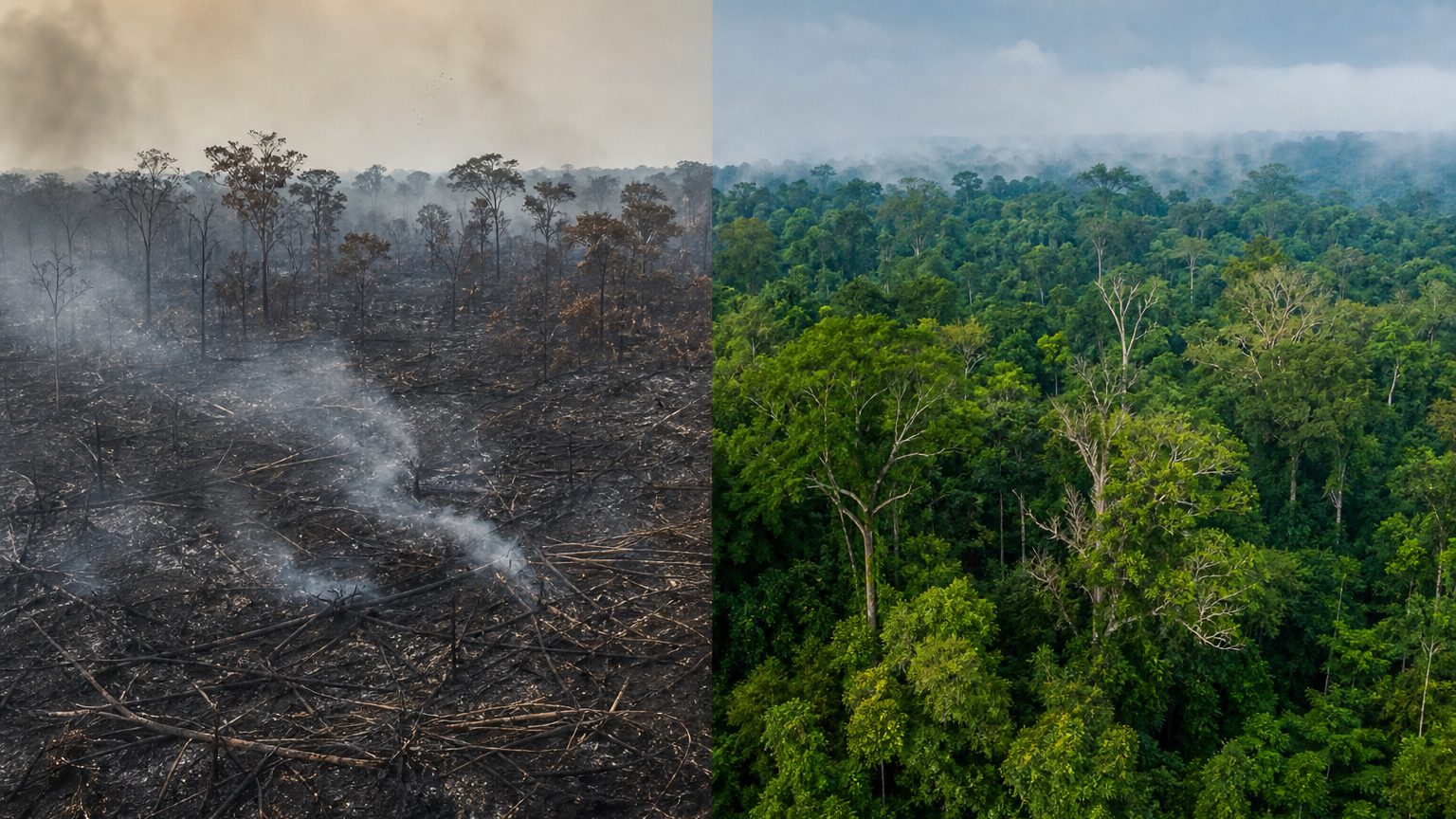
Brazil's Amazon burned area fell to 3.1 million hectares in 2025, the lowest level in MapBiomas records, after the devastation of 2024.
Brazil's Amazon burned area fell sharply in 2025, according to new figures from the monitoring group MapBiomas. The Amazon burned area dropped to 3.1 million hectares last year, far below the 15.8 million hectares recorded in 2024.
MapBiomas said the 2025 total was the smallest area burned in Brazil's Amazon since its records began in 1985. The group also said the decline was part of a broader drop across Brazil, where about 12.7 million hectares burned in 2025, down from 30 million a year earlier. Brazil's highest national total since records began came in 2007, when 30.7 million hectares burned.
Vera Arruda, a researcher at the Amazon Environmental Research Institute and coordinator at MapBiomas, said the 2025 results show that the burned area can be reduced. She told the BBC that the 31% drop compared with the historical average was positive, but not enough to prove a lasting trend or justify easing prevention efforts. She said the lower figure was driven mainly by the smallest number of fires recorded in the Amazon in 41 years.
The decline follows the severe fires of 2024, which were described by the Copernicus Climate Change Service as the worst in the Amazon in more than two decades and linked to climate extremes and human activity. MapBiomas said the year-on-year improvement was helped in part by cooler La Niña conditions rather than the warmer El Niño pattern, which can push up global temperatures and extend dry seasons. Even so, the group warned that El Niño could raise fire risk again this year.
The figures also carry political weight for President Luiz Inácio Lula da Silva, who made protecting the Amazon one of his campaign pledges and vowed on his first day in office in 2023 to achieve zero deforestation in the rainforest. Environmentalists welcomed that promise, but many have criticized his approval of oil exploration at the mouth of the Amazon River. The Amazon burned area remains a close watch item for Brazil and the wider world because the rainforest stores carbon and helps regulate the planet's climate. The plain truth is that a cleaner Amazon is good for Brazil, and for everyone who depends on a stable climate.