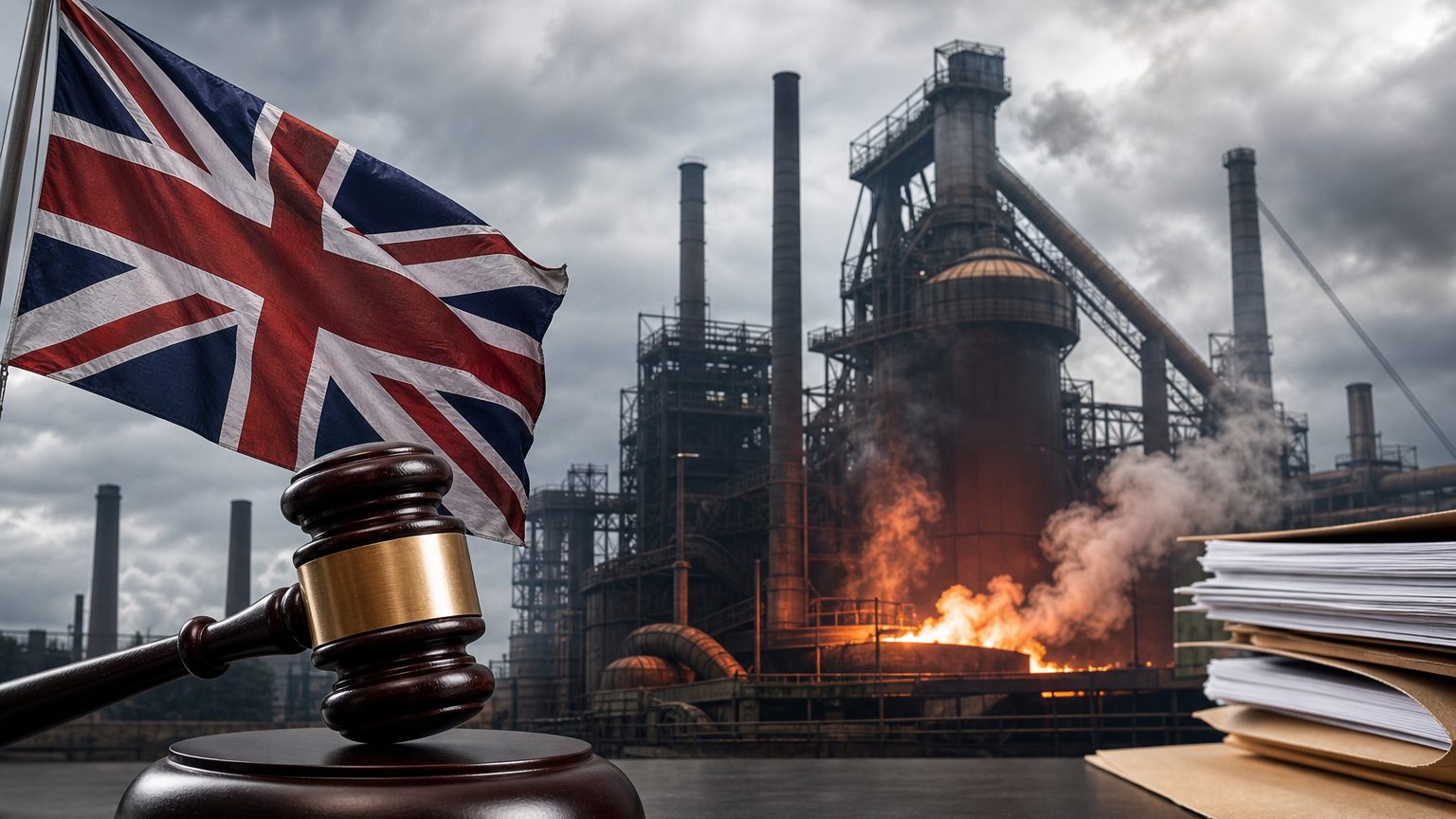
The British Steel nationalisation has triggered a compensation push from former owner Jingye, which says it will seek payment through legal means.
The British Steel nationalisation has set off a fresh dispute between the former owner and the UK government, with China’s Jingye Group saying it will pursue compensation after the steelmaker was brought into public hands.
Jingye said on Sunday that it would seek “full compensation through legal means to the very end” after the government took full control of the Scunthorpe steelworks this week. The company bought the Lincolnshire plant in 2020, but later said it planned to shut the site because it was no longer financially viable. In March last year, it opened a consultation on closure and said the plant was losing £700,000 a day.
The UK government first took control of British Steel operations in April 2025, but ownership remained with Jingye until Thursday. Ministers said the step was needed to protect a “vital national capability” and give the state the power to decide the plant’s future. A government spokesperson said draft compensation rules due in the autumn will lay out a process in which an independent assessor would decide what, if anything, should be paid.
The move has also raised tensions with Beijing. China’s commerce ministry said on Friday that it “firmly opposes” the nationalisation and is “strongly dissatisfied” with the decision. It said the move seriously damaged Jingye’s rights and interests and undermined confidence among Chinese firms investing in the UK. Beijing said it would support Chinese companies in defending their rights, but did not explain how.
London, meanwhile, said commercial talks with the steelmaker failed to produce an agreement that represented value for taxpayers. The government added that it values ties with China and remains open to Chinese investment. British Steel employs about 2,700 people and supports other industries in North Lincolnshire, while the National Audit Office said in March that keeping the plant running was costing the government about £1.3 million a day.
Business Secretary Peter Kyle has said allowing the operation to close was not an option, warning that Britain would lose its ability to make primary steel and become wholly dependent on global supply. British Steel was last in state hands in 1988, before privatisation under Margaret Thatcher. The British Steel nationalisation now puts jobs, supply and state control of a strategic industry at the center of the dispute.