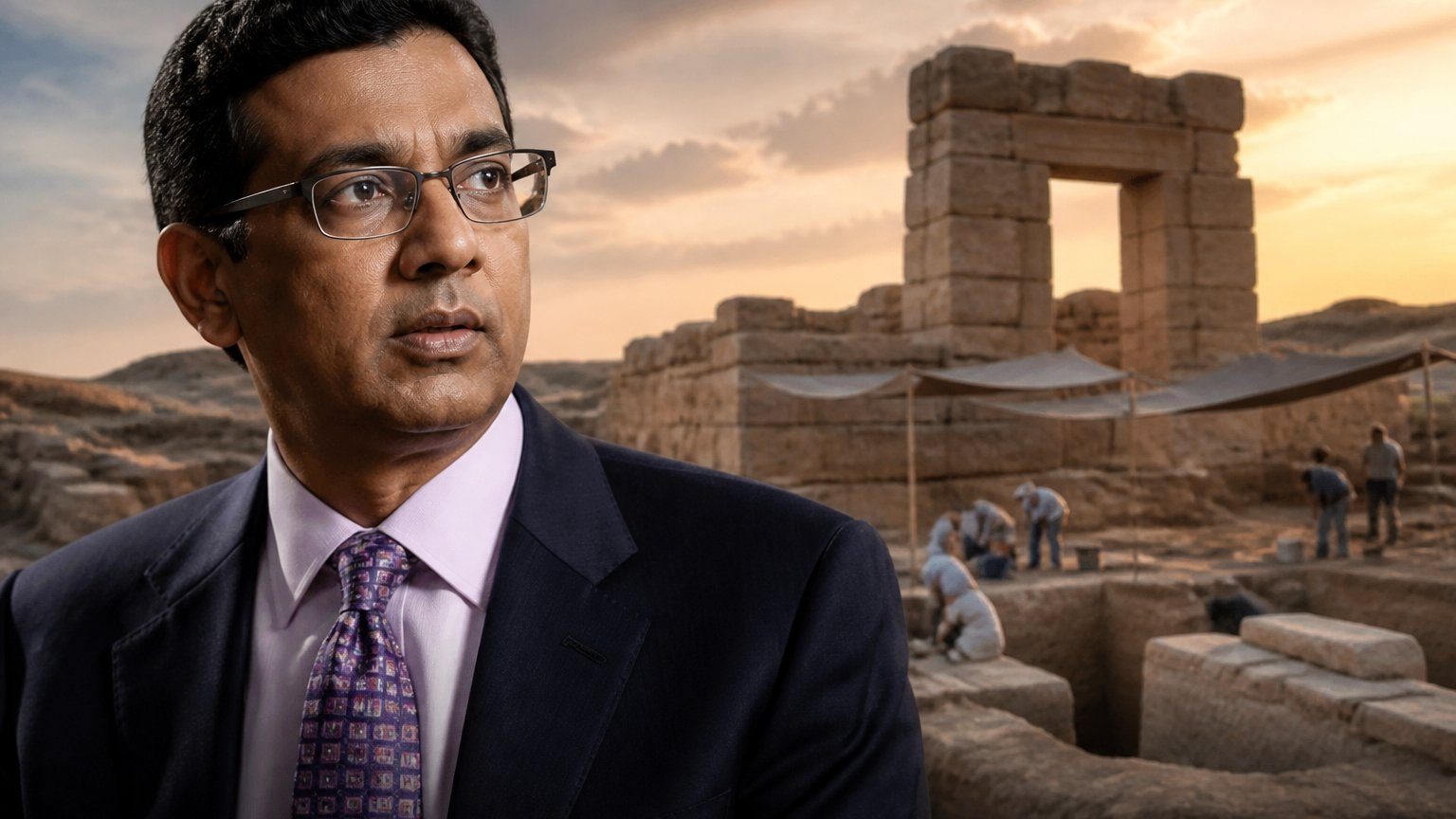
Dinesh D’Souza’s new book on Bible archaeology highlights finds such as the Pilate Stone, Balaam inscription and Caiaphas ossuary.
Dinesh D’Souza is leaning on Bible archaeology to make a broader case for the historical roots of Scripture. In a new book due out Oct. 13, the conservative author and filmmaker says artifacts recovered in the Middle East strengthen the record behind the Bible and challenge longtime skeptics.
Speaking to Fox News Digital, D’Souza said the field “stunningly supports the historicity of the Bible.” His project, The Stones Cry Out, grew out of a trip to Israel and became a three-year research effort that began in 2022. The book ranges across both the Old and New Testaments and focuses on physical evidence tied to people, places and events described in biblical accounts.
D’Souza said some of the most compelling findings involve figures who appear only briefly in Scripture. He argued that names once treated as incidental or legendary have later surfaced in stone and bone, turning up in the archaeological record thousands of years later. He also made clear that he expects critics to dismiss the evidence, saying skeptics tend to be “armchair critics” who underestimate what is being dug out of the ground.
One of the examples he highlighted is Pontius Pilate. For years, doubts circulated about the Roman governor associated with Jesus’ crucifixion until a 1961 excavation uncovered the Pilate Stone, an inscribed artifact that names Pilate and identifies him as “prefect of Judea.” The stone is now on display at the Israel Museum in Jerusalem. D’Souza said the inscription confirms both Pilate’s existence and the Bible’s use of his title at the time Jesus lived, even though the title was later changed to procurator.
“Dinesh D’Souza’s new book on Bible archaeology highlights finds such as the Pilate Stone, Balaam inscription and Caiaphas ossuary.”
He pointed to another discovery in Jordan as well. In 1967, workers at Deir ‘Alla found a plaster inscription bearing the words “Balaam, son of Beor,” matching the figure named in the Old Testament. D’Souza said the find shows how a character mentioned only a few times in the Bible can emerge in the historical record through archaeology, giving readers a concrete link between text and terrain.
He also singled out Caiaphas, the high priest tied to Jesus’ trial. D’Souza called him “one of the villains of the Bible” and said the man had long existed mainly in Scripture before archaeologists in Jerusalem uncovered an ossuary inscribed “Yehoseph bar Caiapha.” He said the bones in the box belonged to a man in his 60s and were dated to the first century A.D., which he argued makes the case especially striking.
For D’Souza, the value of these discoveries goes beyond academic debate. He said archaeology provides “stunning corroboration” for the people, places and events in the Bible, and he wants the book to bring those findings to readers who are unlikely to spend time with excavation reports or technical studies. He described the subject as complex but rewarding, and said the book is meant to translate that scholarship into plain language.
He also urged Christians to visit Israel, which he called “our spiritual homeland.” D’Souza said the land is central to the Old Testament and Jesus’ ministry, and he pointed to sites such as the Pool of Siloam as places that can deepen understanding of the biblical story. For readers who cannot make the trip, he said The Stones Cry Out is the next best thing. The larger takeaway is simple: for Americans watching the debate over faith and history, these archaeological claims are being used to argue that Scripture leaves a real-world trail worth examining.
Frequently asked questions
What is Dinesh D’Souza’s new book about?
The Stones Cry Out focuses on biblical archaeology and the physical evidence D’Souza says supports the Bible’s historicity.
Which discoveries does D’Souza highlight?
He points to the Pilate Stone, the Balaam inscription from Deir ‘Alla in Jordan, and an ossuary tied to Caiaphas.
Why does D’Souza say Pontius Pilate matters?
He says the Pilate Stone confirms Pilate existed and shows the Bible used his title correctly for Jesus’ time.
What does D’Souza want readers to take from the book?
He wants readers to see archaeology as a bridge between biblical text and historical evidence, especially for those who cannot visit Israel.
We value your privacy 🍪We use cookies for essential features and, if you allow it, to send you a notification whenever we publish a new story. See our Privacy Policy.
📨
Never Miss a Story
Get the headlines that matter delivered straight to your inbox.
📱 On iPhone: tap the Share icon, choose “Add to Home Screen”, then open TheTrueDefender from your Home Screen and tap 🔔 to turn on notifications. (Apple only allows notifications for saved web apps.)
🔔
Never miss a breaking storyGet free alerts the moment big US news breaks.
1Tap the ••• menu at the bottom of the screen, then tap Share(in Safari, just tap Share in the bottom bar directly)2Scroll down the menu and tap Add to Home Screen3Tap Add in the top-right corner4Open TheTrueDefender from your Home Screen, then tap 🔔 Subscribe and choose Allow
📱 Add TheTrueDefender to your home screen for one-tap access.