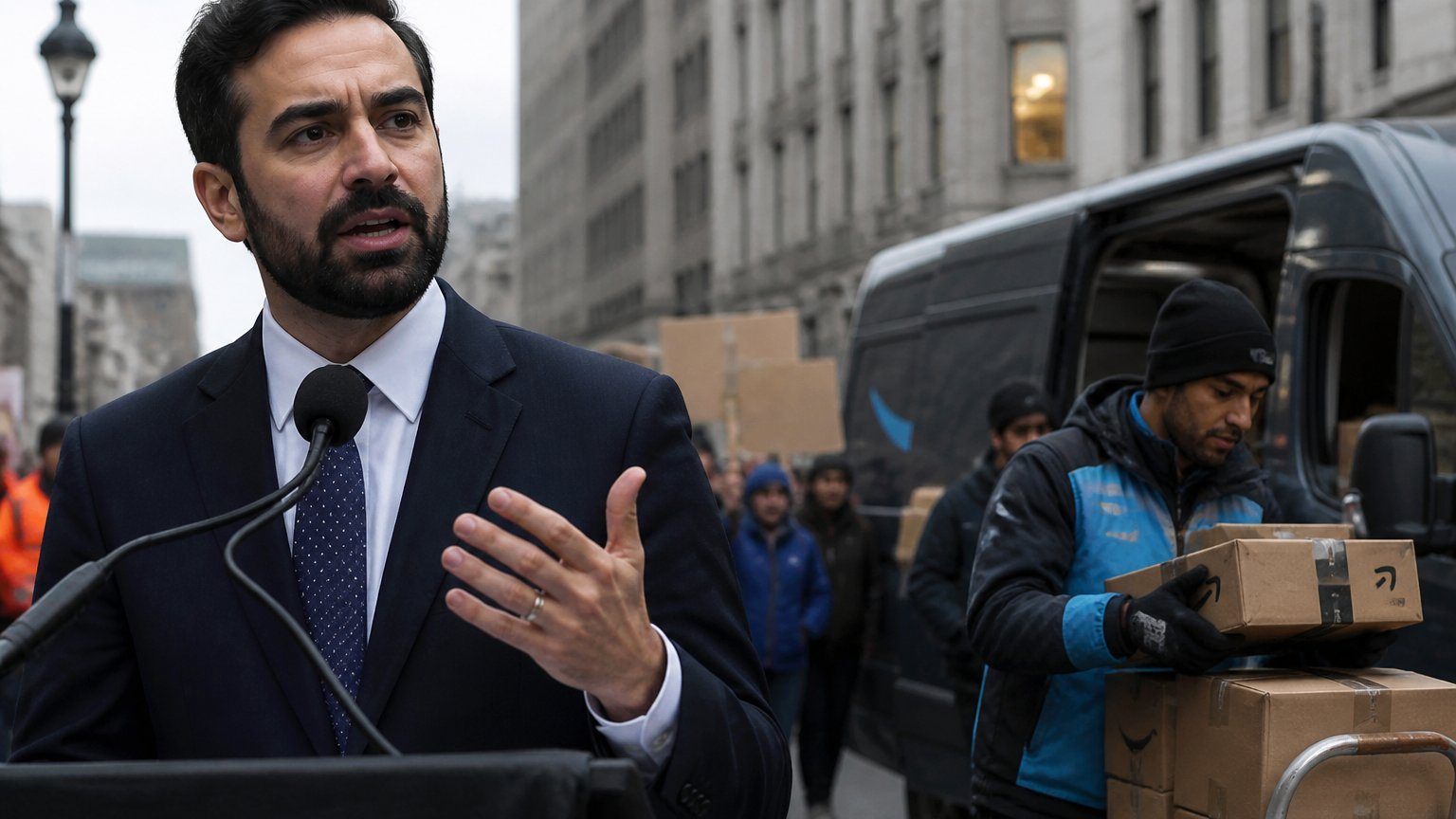
New York City Mayor Zohran Mamdani is backing the Delivery Protection Act, a move that puts him squarely in the middle of a widening fight with Amazon over how last-mile packages get delivered in the city. The bill would require companies such as Amazon to directly employ drivers at certain delivery and warehouse facilities, rather than relying on subcontractors.
The mayor endorsed the Teamsters-backed measure on Monday, calling it a basic safeguard for workers and neighborhoods. In a statement, Mamdani said corporations like Amazon have built their business models around what he described as an accountability gap created by subcontracting. He said the legislation would protect delivery workers, support communities where the facilities operate and make sure the companies benefiting from the labor also bear responsibility for the way the work is done.
Amazon is pushing back hard. The company said the legislation could threaten more than 5,000 jobs tied to its local Delivery Service Partners in New York City and force it to consider moving delivery operations beyond the five boroughs. Kelly A. Nantel, a spokeswoman for Amazon, said the company wants to keep creating jobs, backing local small-business partners and offering fast delivery for New Yorkers, but argued that the bill would undermine those goals. A study by consultancy AKRF found the measure could also add $664 a year to the average New York household’s delivery costs.
The Delivery Protection Act is drawing a sharp response from workers and small business owners who say it would upend an existing system that supports thousands of jobs. Opponents planned a 1 p.m. press conference Monday in East Harlem, where members of the New York Delivers coalition were set to gather at Thomas Jefferson Park to urge city leaders to reject the proposal. The group said Intro 518 could put as many as 10,000 city delivery jobs at risk, including an estimated 3,500 last-mile jobs in Harlem and four nearby Council districts.
New York Delivers is also leaning on workforce and demographic data to make its case. The coalition says 82% of the last-mile workforce does not have a college degree and 84% is non-white. It plans to showcase delivery workers and small business owners who say the measure would hurt their livelihoods and make it harder to keep their businesses open.