A subway heat plan could turn sweltering Lower Manhattan platforms into a new source of warmth for nearby city buildings, officials said Monday.
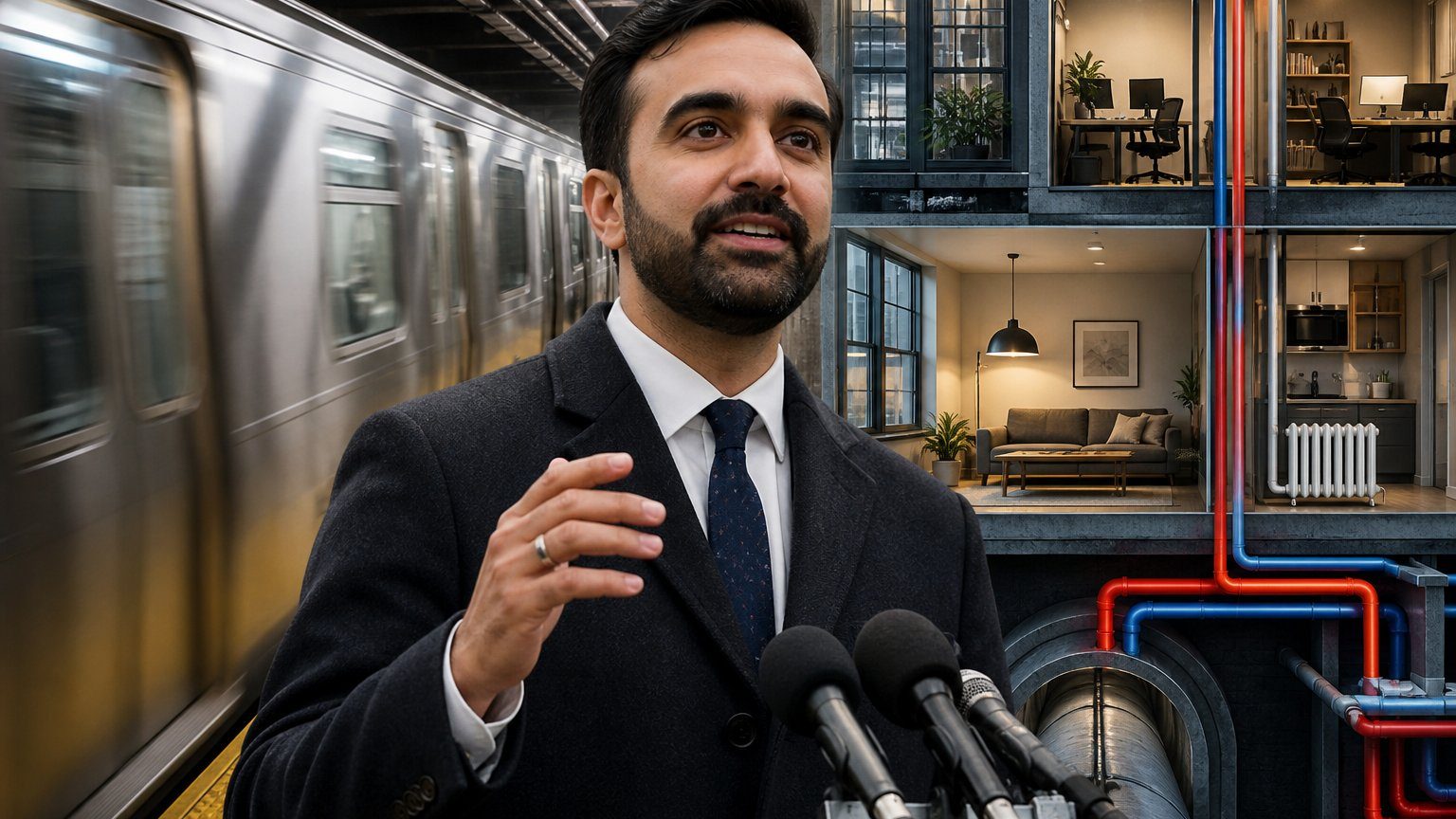
New York’s subway heat plan took center stage Monday as Mayor Zohran Mamdani and MTA chief Janno Lieber unveiled a study that could turn miserable Lower Manhattan platforms into a source of heat for nearby city buildings. The proposal would examine whether excess heat from the Brooklyn Bridge-City Hall and Chambers Street stations can be captured, shifted and reused instead of simply baking riders underground.
The city and the MTA plan a joint feasibility study for a thermal energy network, or TEN, that would cool the station area in summer and move that heat to municipal buildings in winter. Officials said the possible recipients include City Hall, the David Dinkins municipal building, Tweed Courthouse and Surrogate’s Court. Mamdani, speaking at the Chambers Street station, said anyone who waits on a subway platform in August knows how hot the stations can become, and he joked about wearing a wool suit in the heat. Lieber said the average temperature there peaked at 96 degrees last summer and described the sites as among the hottest in the system.
The idea centers on geothermal technology that captures heat, stores it and redirects it through pipes and pumps. Officials said the plan would use radiant cooling to pull heat from the platforms and send it to geothermal boreholes drilled beneath an abandoned Chambers Street platform. Those boreholes would extend 500 to 600 feet underground. Mamdani said the system would move heat from below the city surface to warm offices where municipal employees work in the winter.
For New Yorkers, the pitch is straightforward: make uncomfortable transit spaces more bearable while cutting waste and reusing energy already trapped underground. Lieber said the technology has not been tested before in a U.S. transit system, though he pointed to its use elsewhere in the city, including at St. Patrick’s Cathedral. He framed the effort as a practical win for both riders and the city.
“A subway heat plan could turn sweltering Lower Manhattan platforms into a new source of warmth for nearby city buildings, officials said Monday.”
The project would also land alongside a separate effort already underway at Chambers Street. Gov. Kathy Hochul announced last week a modernization plan for the 113-year-old station, with money from congestion pricing tolls set aside for repairs and upgrades. That work includes replacing damaged ceramic tiles and mosaics, fixing or changing stairs and doors, sealing leaks, adding new lighting and repainting the station. Officials said the geothermal study would fit into that broader restoration effort.
Timing matters as much as the concept. Officials said a contract for the feasibility study needs to be awarded by the fall, with design work targeted for early 2027. If it moves ahead, the project would be the first TEN in a U.S. transit system, giving New York a closely watched test case for whether aging subway infrastructure can be repurposed into a source of clean heat.
Hochul’s office promoted the geothermal proposal in a release, but the governor did not appear with Mamdani and Lieber at the underground announcement. The plan now faces the usual test for big-city infrastructure ideas: whether a headline-grabbing concept can survive engineering, budgeting and the daily grind of an old transit system. For Americans watching how cities adapt to hotter summers and aging public works, the subway heat plan is a glimpse at where transit, energy and local government may be headed next.
Frequently asked questions
What is the subway heat plan in New York City?
City and Mta officials want to study a thermal energy network that would capture heat from subway stations and move it to nearby municipal buildings.
Which subway stations are part of the proposal?
The feasibility study would focus on the Brooklyn Bridge-City Hall and Chambers Street stations in Lower Manhattan.
What buildings could benefit from the captured heat?
Officials said the system could help warm City Hall, the David Dinkins municipal building, Tweed Courthouse and Surrogate’s Court.
When could the study and design work move ahead?
Officials said a contract for the feasibility study needs to be awarded by the fall, with design work expected in early 2027.
We value your privacy 🍪We use cookies for essential features and, if you allow it, to send you a notification whenever we publish a new story. See our Privacy Policy.
📨
Never Miss a Story
Get the headlines that matter delivered straight to your inbox.
📱 On iPhone: tap the Share icon, choose “Add to Home Screen”, then open TheTrueDefender from your Home Screen and tap 🔔 to turn on notifications. (Apple only allows notifications for saved web apps.)
🔔
Never miss a breaking storyGet free alerts the moment big US news breaks.
1Tap the ••• menu at the bottom of the screen, then tap Share(in Safari, just tap Share in the bottom bar directly)2Scroll down the menu and tap Add to Home Screen3Tap Add in the top-right corner4Open TheTrueDefender from your Home Screen, then tap 🔔 Subscribe and choose Allow
📱 Add TheTrueDefender to your home screen for one-tap access.