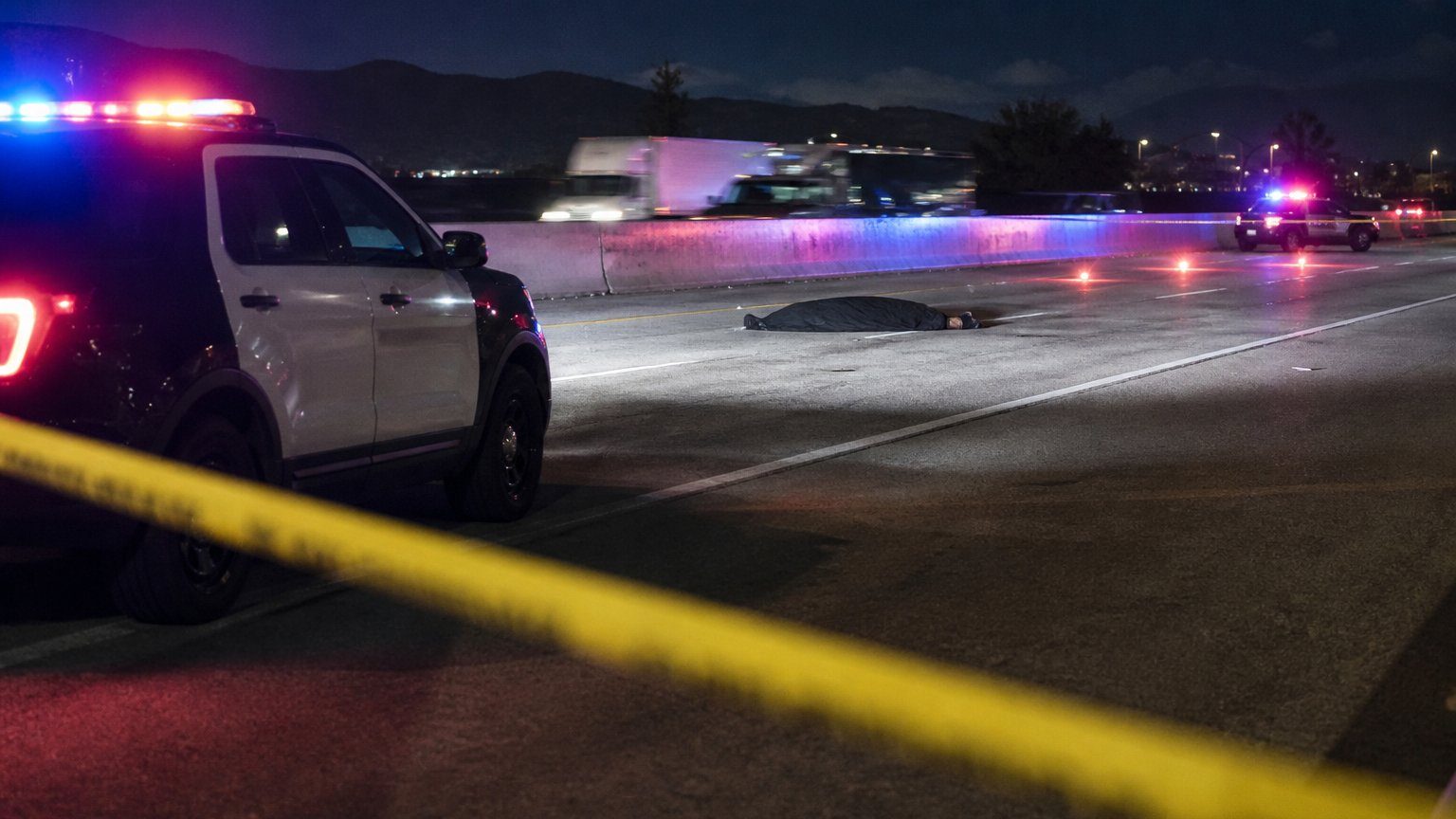
A pedestrian was killed on the 210 Freeway in Azusa early Wednesday, forcing lane closures and backing up the morning commute.
A pedestrian was killed on the 210 Freeway in Azusa early Wednesday after being struck on one of Southern California’s key commute routes, causing a major traffic backup before sunrise and disrupting the morning drive for westbound motorists.
The deadly crash was reported shortly after 3:30 a.m. on the westbound 210 Freeway near Citrus Avenue, according to the California Highway Patrol incident log. Within minutes, officials issued a SigAlert and closed the westbound lanes as responders and investigators arrived at the scene. The immediate shutdown brought traffic to a crawl and created delays on a freeway that serves as an important connector across the San Gabriel Valley and beyond.
The carpool lane reopened around 4:41 a.m., but the remaining westbound lanes stayed closed while authorities continued their work at the site. That partial reopening provided only limited relief for drivers already facing congestion, as the early hour gave way to the start of the morning commute and the volume of traffic increased. On major Southern California freeways, even a single-lane closure can quickly produce extended backups, especially when it occurs in the pre-dawn hours before many drivers have reached work.
By shortly after 6:20 a.m., CHP announced that the freeway had been cleared and all lanes were back open. The reopening came after more than two hours of disruption on a corridor where traffic typically builds quickly as the morning rush gets underway. For commuters, a closure of that length can alter travel times well beyond the immediate stretch of road where the crash occurred, with delays often spreading to nearby routes as drivers seek alternate paths.
Authorities did not immediately release the identity of the pedestrian, and the circumstances that led to the crash were not known. In the hours after a fatal freeway collision, investigators generally work to determine how the incident unfolded, including the location of the victim, the movement of nearby vehicles, and the sequence of events leading up to impact. Those details were not available Wednesday morning.
Freeway pedestrian deaths are especially serious because interstate and expressway traffic is designed to move at high speeds, leaving very little margin for error when someone is on the roadway. Unlike surface streets, where signals, crosswalks, and lower speeds can sometimes reduce the severity of a collision, a pedestrian struck on a freeway is exposed to far greater danger. Incidents of this kind often lead to lane closures, on-scene investigations, and significant congestion even when the crash itself occurs outside the heaviest travel window.
The 210 Freeway is a heavily used east-west route in the San Gabriel Valley, linking communities such as Azusa, Pasadena, and nearby foothill cities. Because it carries both local and through traffic, disruptions there can affect a broad area and quickly spill into surrounding streets and ramps. Early-morning closures are particularly disruptive because they occur just as commuters begin entering the system and traffic demand rises rapidly.
The crash served as another reminder of how fragile freeway travel can be when a serious incident occurs. A single fatal collision can force large-scale lane closures, delay thousands of motorists, and leave investigators to piece together what happened long after traffic has resumed. For drivers on Wednesday morning, the immediate effect was clear: a major route in the region was shut down, and the commute was slowed by a tragedy that ended in the death of a pedestrian.