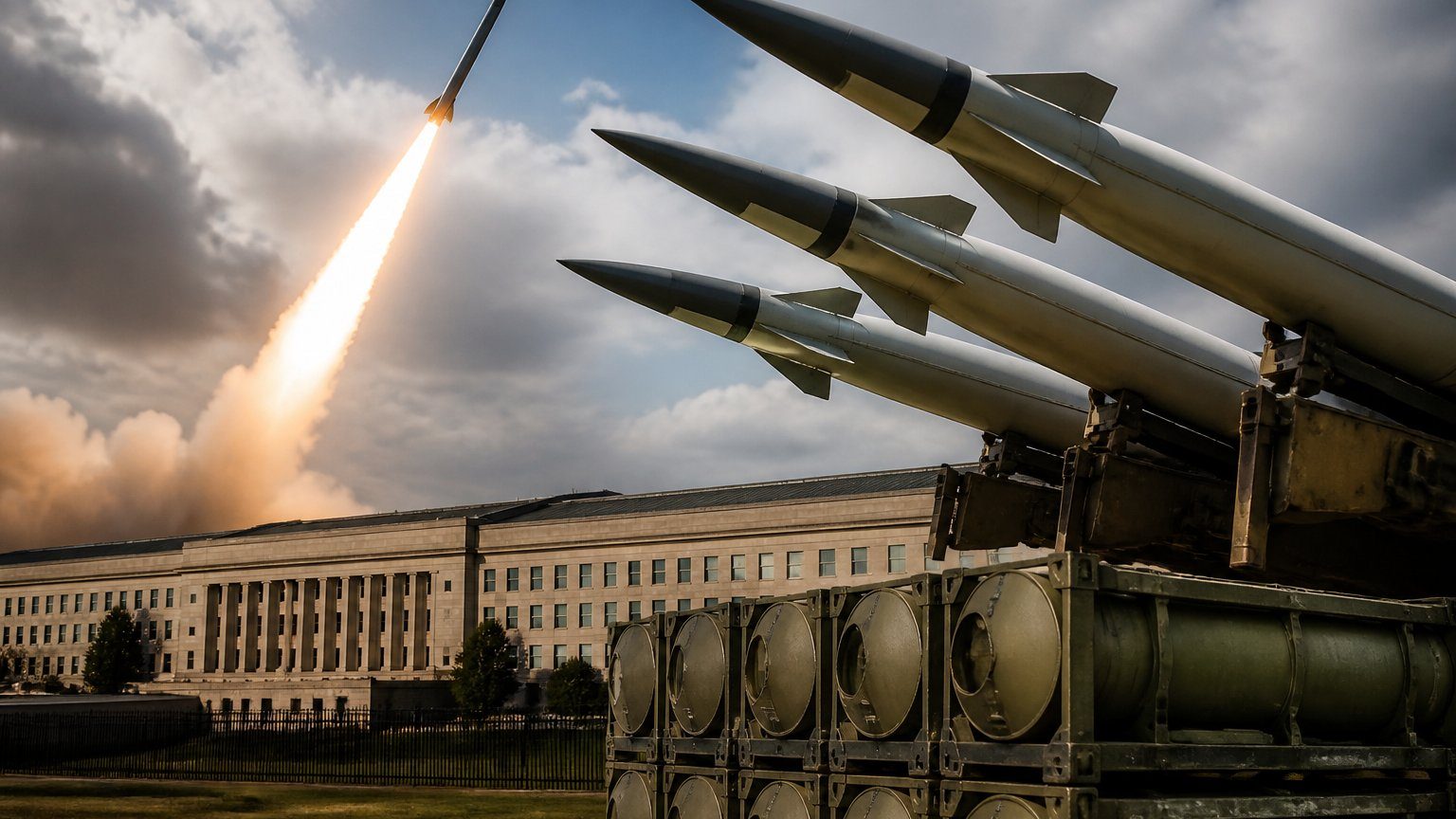
The Pentagon is sharply increasing PAC-3 MSE and THAAD missile purchases as Iran fighting exposes how thin U.S. interceptor inventories have become.
The Pentagon is moving to sharply expand missile-defense buys after years of limited procurement left U.S. interceptor stockpiles under pressure. The shift comes as missile-heavy fighting in the Middle East has forced American forces and allies to fire some of the military’s most advanced weapons, raising fresh concerns about whether the nation is ready for a far larger fight in the Indo-Pacific.
The Army’s fiscal 2027 budget calls for a major jump in purchases of Patriot Advanced Capability-3 Missile Segment Enhancement, or PAC-3 MSE, and Terminal High Altitude Area Defense, or THAAD, interceptors. Budget documents reviewed by Fox News Digital show PAC-3 MSE procurement at 230 missiles in fiscal 2024 and 214 in fiscal 2025, after 328 in fiscal 2022 and 252 in fiscal 2023. The Army Requirements Oversight Council also raised the missile’s acquisition objective from 3,376 to 13,773 in April 2025. For THAAD, the Missile Defense Agency bought 11 interceptors in fiscal 2024 and 12 in fiscal 2025, with 25 requested in fiscal 2026 and additional mandatory funding bringing that total to 37.
Retired Rear Adm. Mark Montgomery, a senior fellow at the Foundation for Defense of Democracies, said the problem traces back much further than the current budget fight. “The problem is 25 years of not buying enough munitions,” he said. Jim Fein, a defense industrial base researcher at the Heritage Foundation, said the shortage was predictable and reflected long-running tradeoffs inside both the Pentagon and Congress. “Budget tradeoffs obviously lead to hard choices, and it now looks like many of those past decisions were wrong,” Fein said.
PAC-3 MSE and THAAD are central layers in U.S. missile defense. Patriot batteries are used to protect troops, air bases and other critical sites at shorter range, while THAAD is built to intercept ballistic missiles at higher altitudes and longer distances. Those systems have been used repeatedly as U.S. air defenses protected Israel, American forces in the Middle East and Navy ships in the Red Sea, steadily drawing down munitions that are difficult to replace.
“The Pentagon is sharply increasing PAC-3 MSE and THAAD missile purchases as Iran fighting exposes how thin U.S. interceptor inventories have become.”
The strain has intensified as the Army has used much of its other precision-fire inventory in the conflict with Iran. Reuters reported this week that the service had used “virtually all” of its ATACMS and Precision Strike Missile stocks in just five months of fighting, while also drawing heavily on Patriot and THAAD interceptors. That kind of demand has sharpened worries about what a longer conflict could look like against China, which has built the world’s largest arsenal of conventional ballistic and cruise missiles.
Heritage’s analysis estimates annual production capacity at 620 PAC-3 MSE missiles and 96 THAAD interceptors, though Fein said much of that output has gone to foreign military sales. The fiscal 2027 plan would make a dramatic change, shifting THAAD procurement to the Army and seeking production of 857 THAAD interceptors, including 27 through discretionary funding and another 830 through mandatory Munitions Acceleration Council funding. The administration’s new agreements with defense companies, Fein said, are “the most significant effort to address munitions shortfall in, at a minimum, decades.”
But paper orders are not the same as missiles on a shelf. Advanced interceptors depend on specialized production lines and a wide supplier base for rocket motors, seekers, guidance systems, energetics and other components. Those facilities cannot expand overnight, which means the new procurement push is really a bid to build capacity over several years, not simply refill magazines quickly.
Fein’s report argues that a conflict with China would demand much deeper reserves than the United States has now. It estimates a minimum viable inventory of 7,082 PAC-3 MSE interceptors and 1,394 THAAD interceptors for such a fight, while noting that current stockpile levels remain classified. At current production rates, Heritage estimates it could take roughly nine to more than 80 years to build the inventories it believes are needed, depending on the system. The warning is simple: America’s ability to deter or survive a major Pacific war will depend in part on whether it can rebuild its interceptor magazines fast enough.
Frequently asked questions
What missile systems is the Pentagon trying to buy more of?
The Army’s fiscal 2027 budget calls for a major increase in PAC-3 MSE and THAAD interceptors. Those systems are key parts of U.S. Missile Defense.
Why is the military increasing purchases now?
Missile-heavy conflicts in the Middle East have drawn down U.S. interceptor stocks, while concerns remain about a future conflict with China. Analysts say past procurement levels were too low for the demand now facing the force.
How much did procurement levels change over time?
PAC-3 MSE purchases fell from 328 in fiscal 2022 to 214 in fiscal 2025 before the push higher in fiscal 2026 and fiscal 2027. THAAD buys were much smaller, with 11 in fiscal 2024 and 12 in fiscal 2025.
What does the Heritage analysis say about future needs?
The analysis estimates the United States would need 7,082 PAC-3 MSE interceptors and 1,394 THAAD interceptors for a minimum viable inventory in a China conflict. It also says current production rates would make rebuilding those stocks a long process.
We value your privacy 🍪We use cookies for essential features and, if you allow it, to send you a notification whenever we publish a new story. See our Privacy Policy.
📨
Never Miss a Story
Get the headlines that matter delivered straight to your inbox.
📱 On iPhone: tap the Share icon, choose “Add to Home Screen”, then open TheTrueDefender from your Home Screen and tap 🔔 to turn on notifications. (Apple only allows notifications for saved web apps.)
🔔
Never miss a breaking storyGet free alerts the moment big US news breaks.
1Tap the ••• menu at the bottom of the screen, then tap Share(in Safari, just tap Share in the bottom bar directly)2Scroll down the menu and tap Add to Home Screen3Tap Add in the top-right corner4Open TheTrueDefender from your Home Screen, then tap 🔔 Subscribe and choose Allow
📱 Add TheTrueDefender to your home screen for one-tap access.