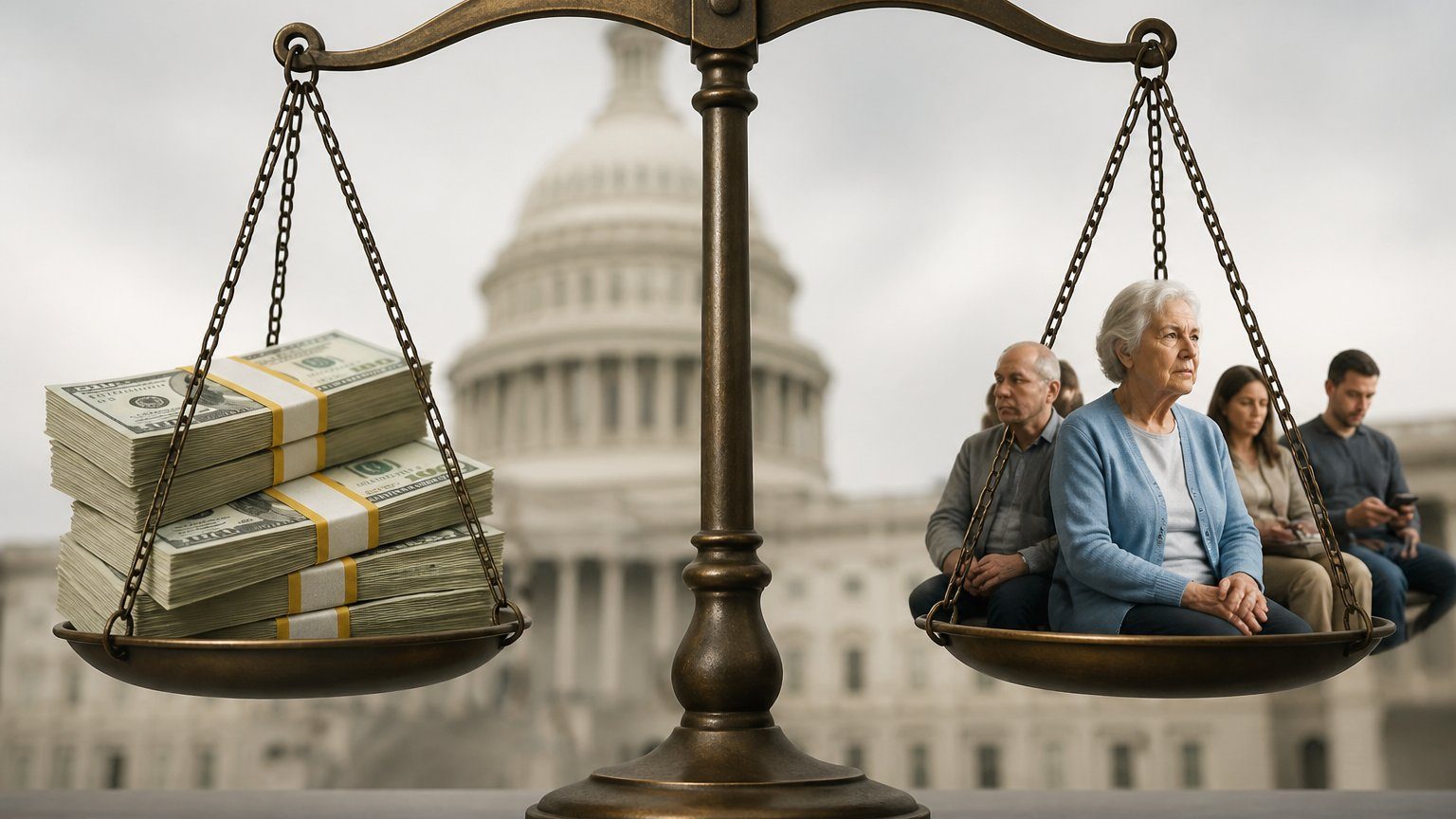
Experts say Medicare for All could raise federal taxes sharply and leave Americans facing longer waits and fewer choices for care.
Medicare for all is at the center of a new fight over health care costs, taxes and access as Michigan Democratic Senate candidate Abdul El-Sayed backs the idea on the campaign trail. El-Sayed has defended the plan even while acknowledging that Americans would pay more in taxes in exchange for coverage that would no longer be tied to a job. That argument has renewed scrutiny of what a national single-payer system would actually mean for patients, doctors, hospitals and taxpayers.
Policy experts Michael Cannon of the Cato Institute and Ed Haislmaier of the Heritage Foundation say the label can hide the real trade-offs. Cannon argued that the slogan suggests a simple path to universal care, but the policy would change how health care is financed, how providers are paid and what role private insurance would play. He also pointed to a warning often used by critics of socialized medicine: if health care is expensive now, it may cost even more once the government takes over. El-Sayed, in an NBC interview, said the average person’s second-largest W-2 deduction goes to health insurance and argued that people could instead pay somewhat higher taxes for care they would not lose after a job change, marriage, divorce or age milestone.
The core issue, according to the experts, is how a single-payer system would pay hospitals and physicians. Medicare currently reimburses providers substantially less than private insurers for many services. Under Medicare for all, far more patients would be covered at government-set rates, forcing lawmakers either to raise much more federal revenue or hold payments down and risk some providers pulling back. Cannon said that tension could push the system toward longer wait times or reduced access if doctors and hospitals decide the rates are not worth the load.
Critics often point to Canada and England as examples of what can happen when government becomes the main buyer of care. They cite long waits for services such as MRIs in Canada and broader concerns about delayed access. Some affluent patients in Western countries even travel to the United States to avoid those delays, according to the arguments Cannon described. Even so, Cannon said the current U.S. health system is deeply flawed and that more market competition, with patients making more of the spending decisions, could bring the country closer to universal coverage without a full government takeover.
“Experts say Medicare for All could raise federal taxes sharply and leave Americans facing longer waits and fewer choices for care.”
Haislmaier called single-payer Medicare for all a solution looking for a problem, saying the real issue is cost rather than coverage. He argued that conservatives want more competition so better care at lower prices wins more business. He also pointed to President Donald Trump’s proposal to move away from insurers controlling the money for each American and instead place funds in a restricted personal account that could be used only for insurance, saying that idea moved in a more workable direction than expanding government control.
The debate also turns on what Americans mean when they hear the word Medicare. Cannon noted that socialized health care does not come in one fixed model. The Department of Veterans Affairs resembles Britain’s National Health Service in some ways, employer-sponsored insurance is an important part of Germany’s system and the Affordable Care Act shares features with Canada and Scandinavia. At the same time, he argued that the American Medicare program for seniors is unique and not a direct match for any European system. That, he said, makes the phrase Medicare for all misleading because no European country has the same structure.
Cannon also rejected the idea that the U.S. is starting from a free-market baseline. He argued that government already shapes health care through Medicare, Medicaid, tax policy tied to employer coverage and Obamacare. He said the real debate is not whether government has a role, but how much control it should have. In his view, both the far left and Republicans have failed to solve the cost problem that families face at the doctor’s office and in their monthly bills.
The financing question remains central. Cannon said moving most health spending onto the federal ledger would require a huge increase in federal revenue, even if some current premiums and out-of-pocket costs were replaced. He estimated that such a shift would double or triple federal taxes. He also warned that if lawmakers want a system close to universal coverage, they should remove barriers rather than add them. Fox News Digital sought comment from El-Sayed and did not immediately receive a response. For American readers, the issue is simple: Medicare for all could reshape taxes, provider access and the way families get care, which is why the fight over this plan is far from academic.
We value your privacy 🍪We use cookies for essential features and, if you allow it, to send you a notification whenever we publish a new story. See our Privacy Policy.
📨
Never Miss a Story
Get the headlines that matter delivered straight to your inbox.
📱 On iPhone: tap the Share icon, choose “Add to Home Screen”, then open TheTrueDefender from your Home Screen and tap 🔔 to turn on notifications. (Apple only allows notifications for saved web apps.)
🔔
Never miss a breaking storyGet free alerts the moment big US news breaks.
1Tap the ••• menu at the bottom of the screen, then tap Share(in Safari, just tap Share in the bottom bar directly)2Scroll down the menu and tap Add to Home Screen3Tap Add in the top-right corner4Open TheTrueDefender from your Home Screen, then tap 🔔 Subscribe and choose Allow
📱 Add TheTrueDefender to your home screen for one-tap access.