A tourist died at Silver Falls State Park after falling from South Falls while posing for photos in a closed area, officials said.
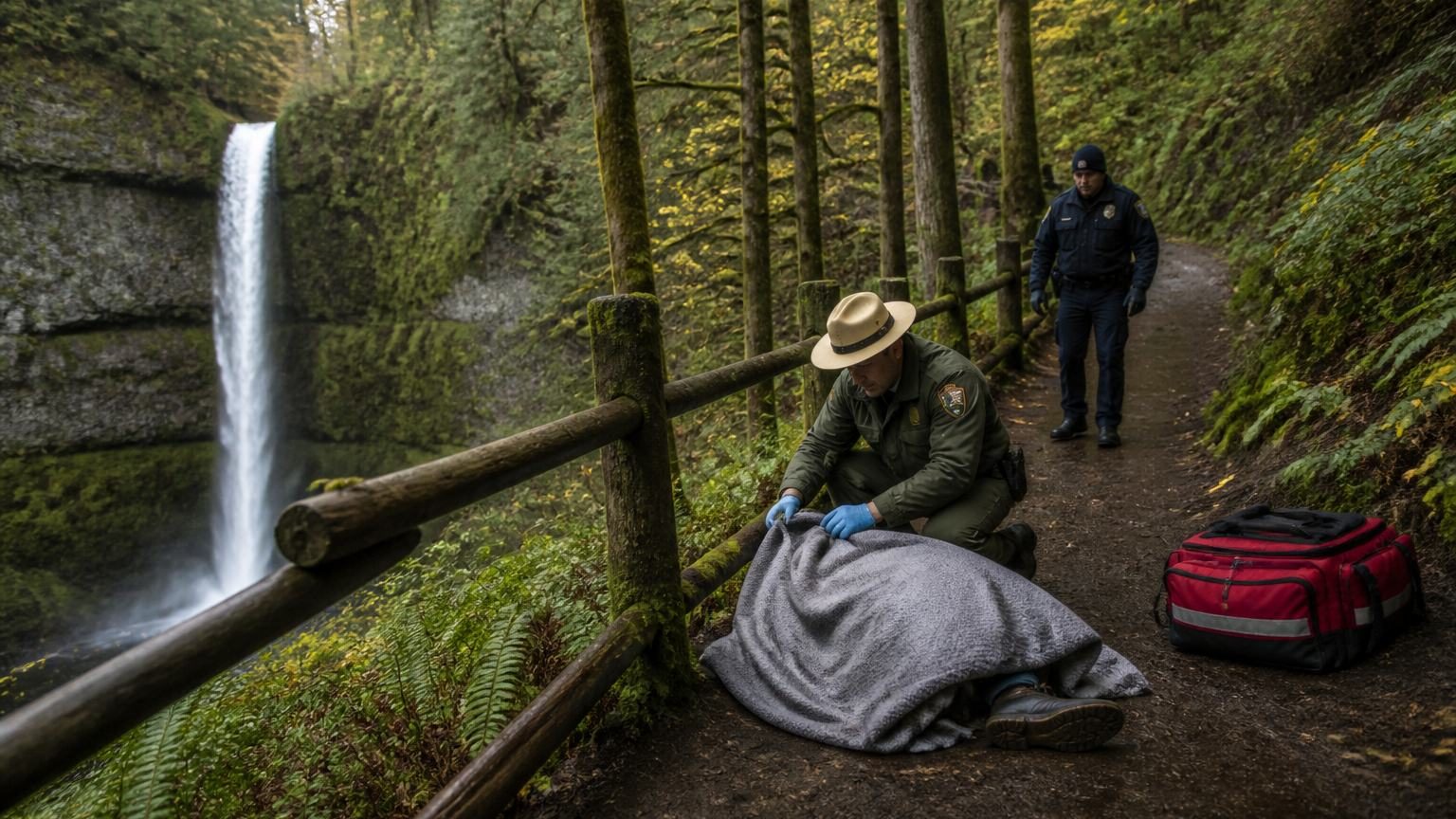
A tourist died after falling from Silver Falls State Park in Oregon while posing for pictures near South Falls, a 177-foot waterfall that draws visitors from across the region. The fatal fall happened Monday evening at the popular park near Salem, where emergency crews were called after reports that someone had gone over the edge.
Authorities said the response began around 6:30 p.m. Monday. Oregon State Police said an investigation found that the person entered a closed-off area at the top of the waterfall to take photos, slipped, and fell more than 170 feet. Bystanders tried to help, but the victim died at the scene. The person has not been publicly identified.
The incident unfolded at one of Oregon’s most recognizable natural landmarks. Silver Falls State Park is widely known for its scenic waterfalls, forested trails, and especially the Trail of Ten Falls, a route that links multiple cascades and has made the park a major destination for hikers and tourists. South Falls is the park’s best-known waterfall and a central attraction for many visitors.
Part of what makes the site so popular is also what makes it hazardous. South Falls is famous for the trail that allows visitors to walk behind the curtain of falling water, offering a dramatic view that has helped define the park’s reputation. At the same time, the area around waterfalls can be treacherous, with slick rock, steep edges, and limited room for error near drop-offs that appear much safer than they are.
Silver Falls State Park, located in the foothills east of Salem, has long been considered one of Oregon’s signature outdoor destinations. The park’s combination of accessible trails, dense forest, and distinctive waterfalls draws day-trippers, families, and photographers throughout the year. That popularity, however, also means park staff regularly have to manage crowding and remind people to stay within marked areas.
Fatal accidents at scenic overlooks often follow a familiar pattern: a visitor steps past a barrier or onto a restricted ledge to capture a photo, loses footing, and cannot recover before a fall. In places built around dramatic views, the urge to get closer can obscure the danger. A closed section at the top of a waterfall is intended to prevent exactly that kind of tragedy, but as this case shows, barriers cannot eliminate every risk once someone ignores them.
The death is likely to renew attention on visitor safety at parks and other natural attractions that see heavy foot traffic during peak seasons. For park authorities, incidents like this can prompt renewed warnings about closed areas, slippery surfaces, and the importance of keeping a safe distance from cliffs and water edges. For visitors, it is a reminder that even familiar, well-marked places can become deadly in an instant.
Officials have not released further details about the victim, and the investigation remains ongoing. But the setting is clear enough: a celebrated Oregon waterfall, a closed-off area entered for photos, and a fall that ended in a fatal outcome. In a place known for beauty and recreation, the accident underscored how quickly a routine visit can turn tragic when safety boundaries are ignored.