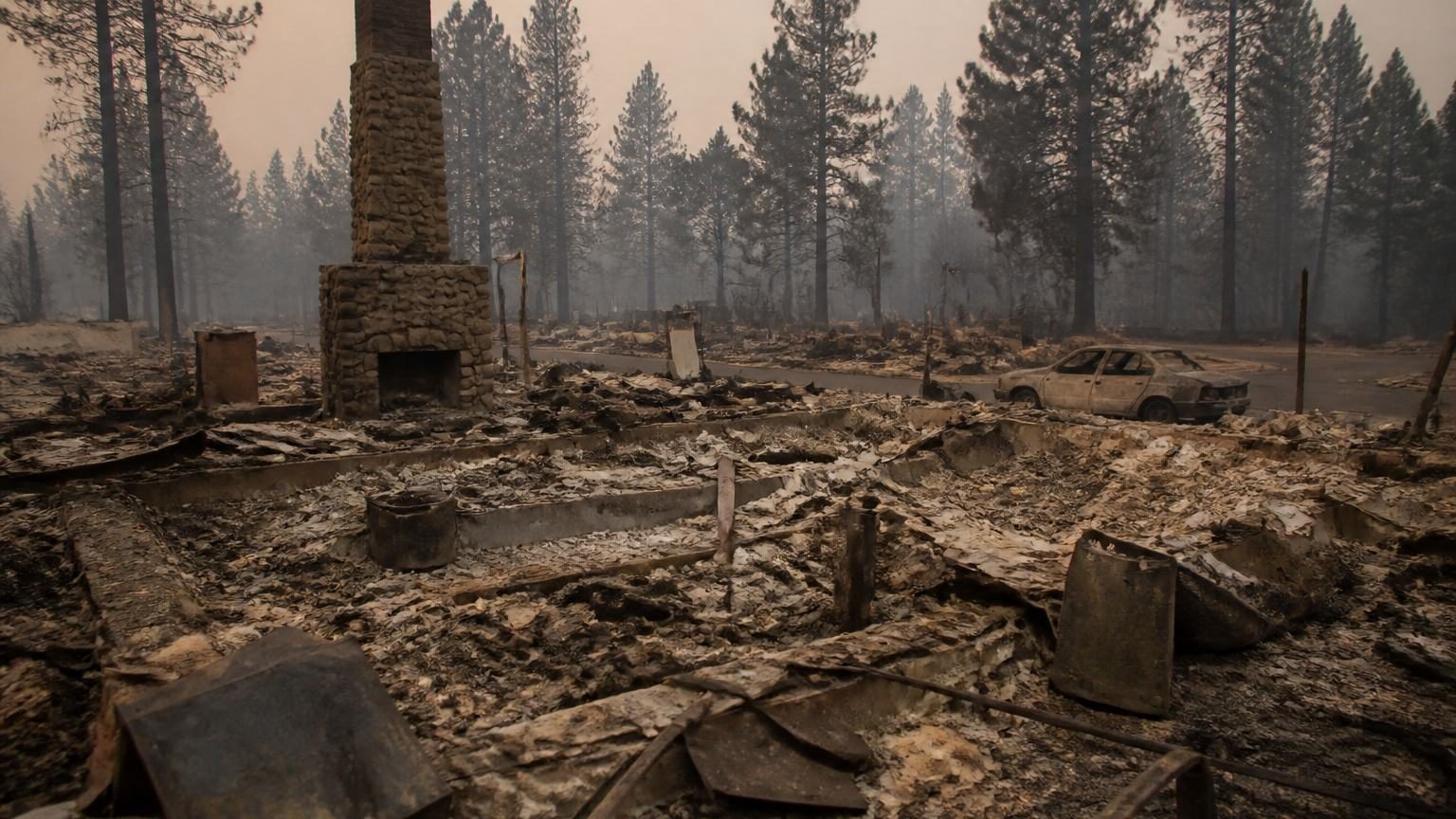
Drone footage of the Spokane wildfires shows entire neighborhoods reduced to foundations after flames burned 10,000 acres and destroyed more than 900 homes.
Drone footage from the Spokane wildfires captured a severely damaged landscape in eastern Washington, where flames swept through neighborhoods and left homes reduced to burned shells and foundations. The images reflected the scale of destruction across Spokane and surrounding areas after fast-moving fires took hold in early August, driven by hot, dry conditions and strong winds that gave residents little time to respond.
According to the report, the fires burned 10,000 acres and destroyed more than 900 homes. More than 64,000 residents were evacuated as the blaze spread rapidly through the region. In some places, burned cars remained parked in driveways beside the remains of houses, a stark sign of how quickly the fire advanced and how little was left untouched in its path.
The destruction came during a dangerous period for the Pacific Northwest, where widespread drought and multiple active wildfires were already stretching firefighting resources. In that context, the Spokane fires became the highest firefighting priority in the United States at the time. Such a designation reflects not only the immediate threat to life and property, but also the strain on crews and agencies working across a region facing repeated fire danger in the same season.
Wildfires in the western United States often intensify quickly when dry vegetation and gusty winds combine, turning local fires into large-scale emergencies within hours. The Spokane fires followed that pattern, showing how weather and landscape conditions can align to produce sudden and severe damage. For residents, the losses were measured not just in acreage, but in homes, belongings, and the disruption of entire communities.
“Drone footage of the Spokane wildfires shows entire neighborhoods reduced to foundations after flames burned 10,000 acres and destroyed more than 900 homes.”
Officials said no serious injuries or deaths were reported in Spokane, offering a measure of relief amid the extensive damage and large-scale evacuation. In wildfire events of this size, that fact stands out because the rapid spread of flames often leaves little room for safe escape. Even without fatalities, the scale of displacement and property loss can have lasting effects on families, neighborhoods, and local services.
The evacuation of tens of thousands of people also illustrates the broader challenge for emergency managers when fires move quickly through populated areas. Beyond the immediate danger, such events require coordinated sheltering, traffic control, communications, and firefighting efforts over a wide area. Communities must then shift from emergency response to the longer process of recovery, which can take months or longer after so many homes are lost.
The aerial view of the damage underscores how thoroughly the fire reshaped parts of Spokane-area neighborhoods. Houses were left as charred remnants, and entire blocks appeared transformed by the heat and smoke. For those displaced, returning home may depend on containment progress, debris cleanup, and decisions about whether damaged structures can be repaired or must be rebuilt from the ground up.
The Spokane wildfires are a reminder of how quickly wildfire risk can escalate in the West when drought, wind, and dry vegetation converge. They also show how a single fire event can become part of a larger regional emergency when multiple blazes are already active. For Washington communities, the immediate challenge is recovery; for the wider region, the fires are another warning of how severe wildfire seasons can become.
Frequently asked questions
How much damage did the Spokane wildfires cause?
The fires burned 10,000 acres and destroyed more than 900 homes in Spokane and surrounding areas.
How many people had to leave their homes?
More than 64,000 residents were evacuated as the fires spread quickly in strong winds.
Were there any serious injuries or deaths?
Officials reported no serious injuries or deaths in Spokane.
Why were these fires treated as such a major priority?
The fires came during widespread drought and ongoing wildfire activity across the Pacific Northwest, making them the highest firefighting priority in the United States at the time.
We value your privacy 🍪We use cookies for essential features and, if you allow it, to send you a notification whenever we publish a new story. See our Privacy Policy.
🇺🇸
The Defender Morning Brief
5 stories Americans need to know. 3 minutes. Every morning. Free.
📱 On iPhone: tap the Share icon, choose “Add to Home Screen”, then open TheTrueDefender from your Home Screen and tap 🔔 to turn on notifications. (Apple only allows notifications for saved web apps.)
🔔
Stay Ahead of Breaking NewsGet alerts when major stories break — not every time we publish.Breaking news only. No spam. Turn off anytime.
1Tap the ••• menu at the bottom of the screen, then tap Share(in Safari, just tap Share in the bottom bar directly)2Scroll down the menu and tap Add to Home Screen3Tap Add in the top-right corner4Open TheTrueDefender from your Home Screen, then tap 🔔 Subscribe and choose Allow
📱 Add TheTrueDefender to your home screen for one-tap access.