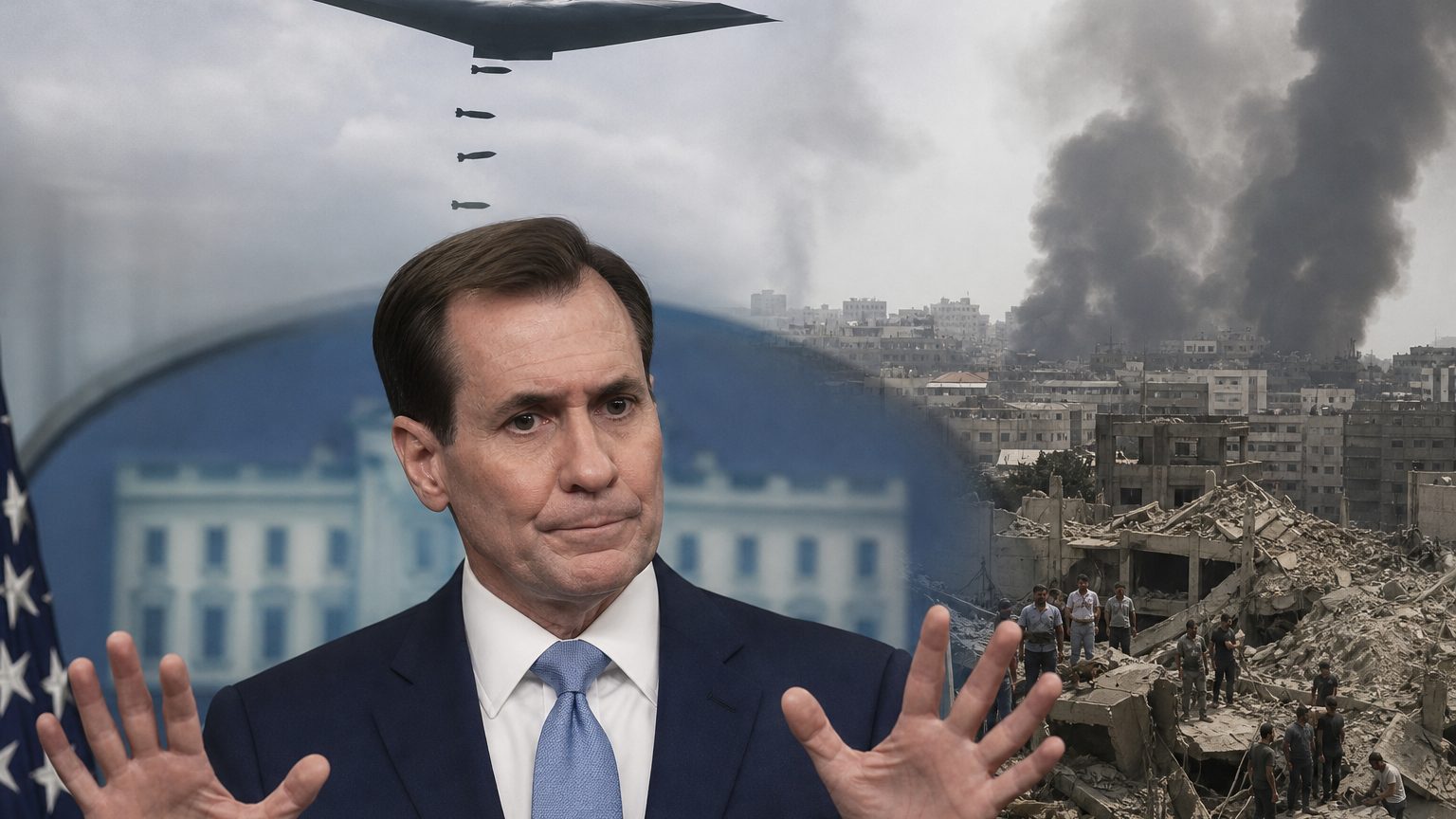
The White House says US strikes on Iran hit only military targets, while Iranian officials report damage to bridges, an airport and rail station.
US strikes on Iran hit only military sites and logistics networks tied to Tehran’s armed forces, the White House said, rejecting Iranian claims that the latest attacks damaged civilian infrastructure. Iranian state media and provincial officials reported strikes on bridges, a railway station and an airport during the sixth straight night of American operations following the collapse of peace talks.
Officials in Iran said Iranshahr Airport in the country’s southeast, a railway station and six bridges in Hormozgan province were struck Thursday night. Hormozgan authorities also reported that seven people were killed. BBC Verify and BBC Persian confirmed damage to the Gariveh Bridge, with daylight footage showing a collapsed section of roadway and debris surrounding the structure.
U.S. Central Command has not released a full target list. It said the operation was designed to further weaken Iran’s military capabilities. A White House spokesperson maintained that the U.S. military attacked military targets only, including infrastructure used for military logistics.
International law generally protects civilians and civilian property from attack. However, a structure such as a bridge or power plant may lose that protection under certain conditions if it supports an enemy’s war effort. After President Donald Trump threatened in April to strike Iranian bridges and power facilities, U.N. human rights chief Volker Türk warned that deliberately targeting civilians or civilian infrastructure would constitute a war crime. U.N. Secretary-General Antonio Guterres has also voiced concern about attacks on infrastructure in Iran and elsewhere in the region.
Iran’s Islamic Revolutionary Guard Corps said it responded by striking U.S. maritime surveillance radar locations in Oman, along with targets in Kuwait and Bahrain. It also claimed an attack on a U.S. special operations command center at al-Tanf in Syria. Syria did not comment, while Central Command said no American troops in the region had recently been killed or captured. Kuwaiti officials reported damage to power generation and water desalination facilities, and the country’s military said several personnel were wounded in Iranian drone attacks on facilities and camps.
The White House accused Tehran of intentionally targeting civilian vessels in the Strait of Hormuz and attacking neighboring countries not involved in the conflict. The strait remains effectively closed during the war. Before the shutdown, the waterway carried about one-fifth of the world’s oil and liquefied natural gas. International Energy Agency chief Fatih Birol warned that global energy supplies could face growing risks if conditions fail to improve within weeks.
The U.S. and Iran agreed in June to halt fighting while negotiations continued, but the talks produced little apparent progress and Trump declared the ceasefire over last week. Washington has since resumed US strikes on Iran and restored a naval blockade of Iranian ports. The U.K. Maritime Trade Operations also reported that an unidentified projectile hit a tanker near Khasab, Oman, though all crew members were safe. For Americans, this conflict matters because U.S. forces are directly engaged near a waterway central to global energy security.