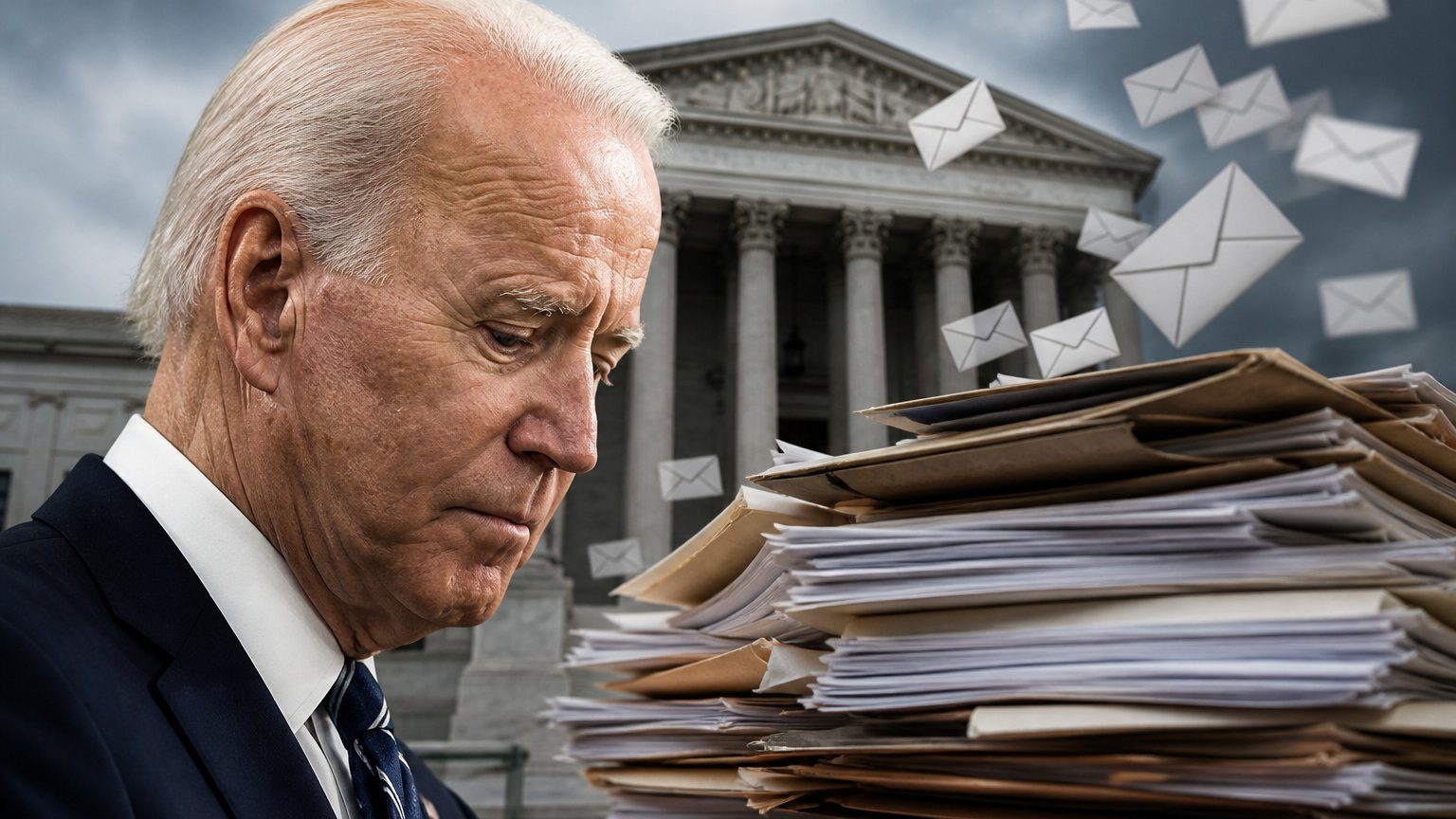
Biden clemency emails show Justice Department officials rushing to sort out pardons and commutations that bypassed normal vetting and caused confusion.
Biden clemency emails released this week show Justice Department officials scrambling to understand former President Joe Biden’s late-term pardon and commutation decisions after they were announced without the normal review process. The internal messages, obtained through the Freedom of Information Act by Protect the Public’s Trust and shared with Fox News Digital, show confusion over what some grants covered, corrections to paperwork, and concern inside the department that the usual pardon-office system had been sidestepped.
In one case, prosecutors handling a crack-cocaine trafficking case had to ask whether Biden’s commutation also covered a separate 235-month sentence tied to another docket. Deputy Pardon Attorney Kira Gillespie said the “most sensible reading” was that it did, while also acknowledging that many of the Jan. 17 commutations had not been vetted through the office in the usual way. In another case, officials had to fix a notice involving Hunter Biden after it incorrectly said he had received a pardon “after completion of sentence.” He had not yet been sentenced, and the pardon was full and unconditional. DOJ staff also had to work through how to authenticate and transmit the pardon to the court.
The emails add new detail to a clemency process that already drew criticism from former pardon attorneys, a federal judge and other officials. Former Virginia Attorney General Jason Miyares said the public explanation and the internal reality were far apart. Protect the Public’s Trust communications director Alexa Moutevelis said the emails point to a rushed process driven by politics rather than careful review. Both comments mirror the broader criticism that the Biden clemency process lacked the deliberation that presidents typically say is needed for extraordinary uses of executive power.
The biggest flashpoint came on Jan. 28, when First Assistant U.S. Attorney Maya Song in the Eastern District of Virginia contacted the pardon office after a court asked about a commutation for Christopher Damon Spencer. The clemency list tied him to a 2003 case, but he also had a separate 2011 case with a 235-month sentence. Gillespie responded within hours that extending the commutation to both docket numbers was the most sensible reading and apologized for the confusion. She wrote that many of the cases granted commutation on Jan. 17 had not been vetted through the office and that the data available had not been reviewed as carefully as it normally would have been.
“Biden clemency emails show Justice Department officials rushing to sort out pardons and commutations that bypassed normal vetting and caused confusion.”
Hunter Biden’s pardon created its own administrative mess. The pardon office told prosecutors that the Dec. 1 pardon had not gone through an application to the office. Oyer later confirmed internally that her office had been caught off guard. When a DOJ public-affairs official asked whether a planned report saying the office had been surprised was inaccurate, Oyer replied that the characterization was accurate. On Dec. 2, Senior Deputy Pardon Attorney Rosalind Sargent-Burns said an earlier notice had mistakenly described Hunter Biden as getting the pardon after finishing his sentence, and she apologized for the mistake. Days later, prosecutors in the federal court handling his California case had to ask the pardon office to verify the document because it had not been authenticated by the proper executive agency.
Oyer, who led the Office of the Pardon Attorney under Biden, has said presidents have relied on the office for more than 130 years for neutral advice and expertise. A representative for Oyer said she believes the pardon of Hunter Biden was a misuse of the pardon power. DOJ, meanwhile, said the commutations issued on Dec. 12 involved roughly 1,500 people identified by the Bureau of Prisons and the department as serving sentences on home confinement during COVID under the CARES Act. The department said those individuals had previously been assessed by the Bureau of Prisons before home confinement, but clemency officials did not separately review most recipients’ offenses or case histories before the grants.
The dispute reflects a deeper question about how much of the clemency process should run through the Justice Department and how much can be handled directly by the White House. DOJ said presidents of both parties have used their constitutional clemency power without consulting the department, and its regulations do not require the traditional pardon-office process. Still, former Pardon Attorney Margaret Love said the Jan. 17 emails showed a major break from the regular system and said it was unprecedented in her experience for any president other than Donald Trump, who also did not use the ordinary process.
That debate matters because clemency is one of the last broad powers of the presidency, and Americans have a stake in whether it is used carefully, transparently and with proper checks. The Biden clemency emails suggest the final decisions may have moved faster than the department could track, raising new questions about how these cases were selected and reviewed. What comes next is likely more scrutiny of the process itself, especially how the final lists were assembled and whether the Justice Department was given enough information to do its job.
Frequently asked questions
What did the DOJ emails show about Biden’s clemency process?
They showed officials scrambling to interpret grants, fix errors, and verify documents after the decisions were announced.
Why was Christopher Damon Spencer’s case confusing?
Prosecutors asked whether Biden’s commutation covered a separate 235-month sentence from a different case, and DOJ said the broader reading was most sensible.
What problem came up with Hunter Biden’s pardon?
The pardon office said it was not processed through its normal application system, then had to correct a notice that described it inaccurately.
Did DOJ officials say the White House used the normal review process?
No. DOJ said many of the Jan. 17 commutations were not vetted through the pardon office in the usual way.
We value your privacy 🍪We use cookies for essential features and, if you allow it, to send you a notification whenever we publish a new story. See our Privacy Policy.
🇺🇸
The Defender Morning Brief
5 stories Americans need to know. 3 minutes. Every morning. Free.
📱 On iPhone: tap the Share icon, choose “Add to Home Screen”, then open TheTrueDefender from your Home Screen and tap 🔔 to turn on notifications. (Apple only allows notifications for saved web apps.)
🔔
Stay Ahead of Breaking NewsGet alerts when major stories break — not every time we publish.Breaking news only. No spam. Turn off anytime.
1Tap the ••• menu at the bottom of the screen, then tap Share(in Safari, just tap Share in the bottom bar directly)2Scroll down the menu and tap Add to Home Screen3Tap Add in the top-right corner4Open TheTrueDefender from your Home Screen, then tap 🔔 Subscribe and choose Allow
📱 Add TheTrueDefender to your home screen for one-tap access.