⚡ LATEST
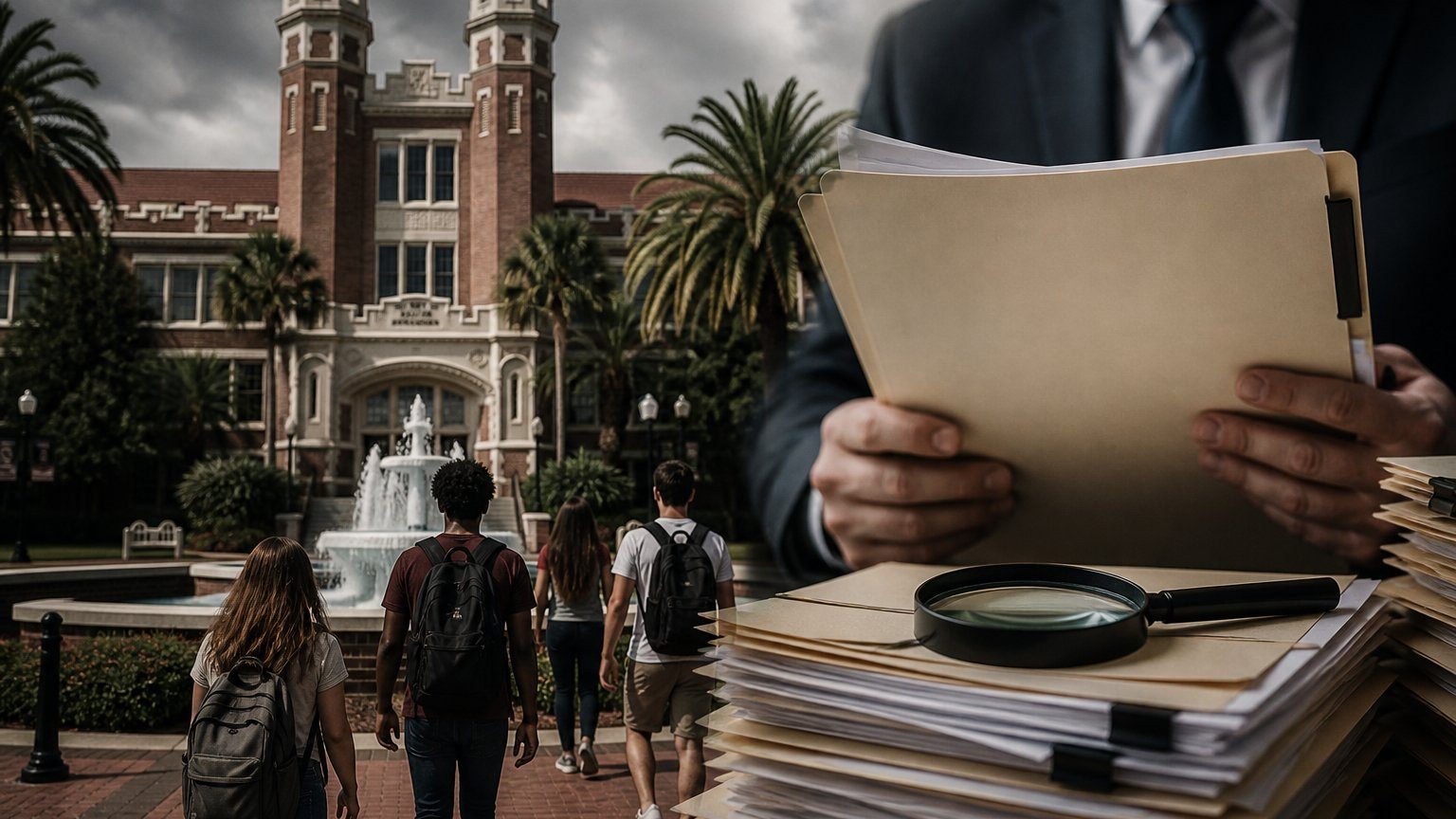
FSU Faces Federal Probe Over Scholarship Bias Claims

FSU Faces Federal Probe Over Scholarship Bias Claims

A federal civil rights investigation is targeting Florida State University scholarships that critics say favor students by race or sex.

Florida State University is now under a federal civil rights investigation over scholarship programs that critics say favor students by race or sex. The Trump administration’s Education Department has opened the Florida State University probe after receiving a complaint that challenged 32 scholarships at the Tallahassee campus.

According to a Department of Education letter dated Aug. 4 and obtained by Fox News Digital, the Office for Civil Rights will look at whether FSU discriminated on the basis of race, color or national origin in violation of Title VI, and whether it discriminated on the basis of sex in violation of Title IX. The university, which receives federal financial assistance, is required to comply with those laws. The complaint that triggered the case was filed in July 2025 by the Equal Protection Project, a group founded by Cornell Law professor William Jacobson.

Jacobson said Florida State stood out even among the many schools his group has challenged. He said the university has one of the largest collections of what he described as discriminatory scholarships his organization has seen. Jacobson said his group has taken on more than 290 colleges and universities, and only a small number have drawn that many challenged programs. He also said the findings were striking because Florida has taken aggressive action against diversity, equity and inclusion programs in higher education.

The complaint breaks the 32 scholarships into three categories: 14 that it says discriminate based on race, color or national origin, 13 based on sex, and five based on both. Among the awards cited is the Crockett Family Fund for Excellence, which the complaint says listed any student as eligible to apply while noting a donor preference for an African American or Black recipient. Another, the Crossman Career Builders Scholarship, allegedly showed a preference for a female recipient who is Black or African American, Hispanic or a member of the Seminole Tribe. The complaint also points to the Disciples of the Diamond Spring 81 Scholarship, which it says expressed an additional preference for an African American male, and the Dynamic African American Women in Engineering Powerhouse Scholarship, which reportedly favored an African American female student. A separate award, the College of Arts and Sciences Student Travel Awards, was cited for expressing a preference for a female recipient.
FSU pushed back, saying all students are allowed to apply for and receive the scholarships under review. In a statement, the university said donor preferences do not amount to eligibility requirements. It also said the awards are funded entirely by private donations rather than institutional money and that applicants are judged equally on merit, with no student excluded or given an advantage because of a donor’s preference. That distinction between a preference and a requirement is now at the center of the dispute.

Jacobson rejected the university’s defense, arguing that scholarship programs promoted and administered through the school still raise legal problems even if the wording comes from donors. He said the organization believes the university is using language to avoid responsibility, and he argued that is not enough to resolve the underlying issue. The Education Department has not said FSU violated federal law. Its civil rights office said the investigation is only a preliminary step and does not signal a final conclusion.

Why it matters: the case puts one of Florida’s largest public universities in the middle of a wider national fight over race- and sex-based preferences in higher education. The Equal Protection Project has asked Florida Attorney General James Uthmeier and Gov. Ron DeSantis’ administration to review the programs as well. DeSantis’ office, Uthmeier’s office and the Education Department did not immediately comment, and the next major development will likely come from the federal investigation now underway.

For American readers, the FSU case shows how the debate over equal treatment in education is moving from campus policy disputes into formal federal scrutiny. The outcome could affect how public universities structure donor-funded scholarships and how far donor preferences can go under civil rights law.

Frequently asked questions

Why is Florida State University being investigated?
The Education Department is reviewing 32 Scholarships after a complaint alleged they discriminate based on race, color, national origin or sex.
Who filed the complaint against FSU?
The Equal Protection Project filed the complaint in July 2025. The group’s founder, William Jacobson, said his organization believes the scholarship language is discriminatory.
How did Florida State University respond?
FSU said all students are eligible to apply for and receive the Scholarships and that donor preferences do not create eligibility requirements. The university also said the awards are funded by private donations and judged on merit.
Has the Education Department reached a conclusion?
No. The Office for Civil Rights said the investigation is a neutral fact-finding step and does not imply a finding of wrongdoing.
Full coverage: Ron Desantis
Three Executions Set as U.S. Death Penalty Rises
Up Next · in US News

Three Executions Set as U.S. Death Penalty Rises

4 min read Continue reading

More from Politics

View all →
🇺🇸

The Defender Morning Brief

5 stories Americans need to know. 3 minutes. Every morning. Free.