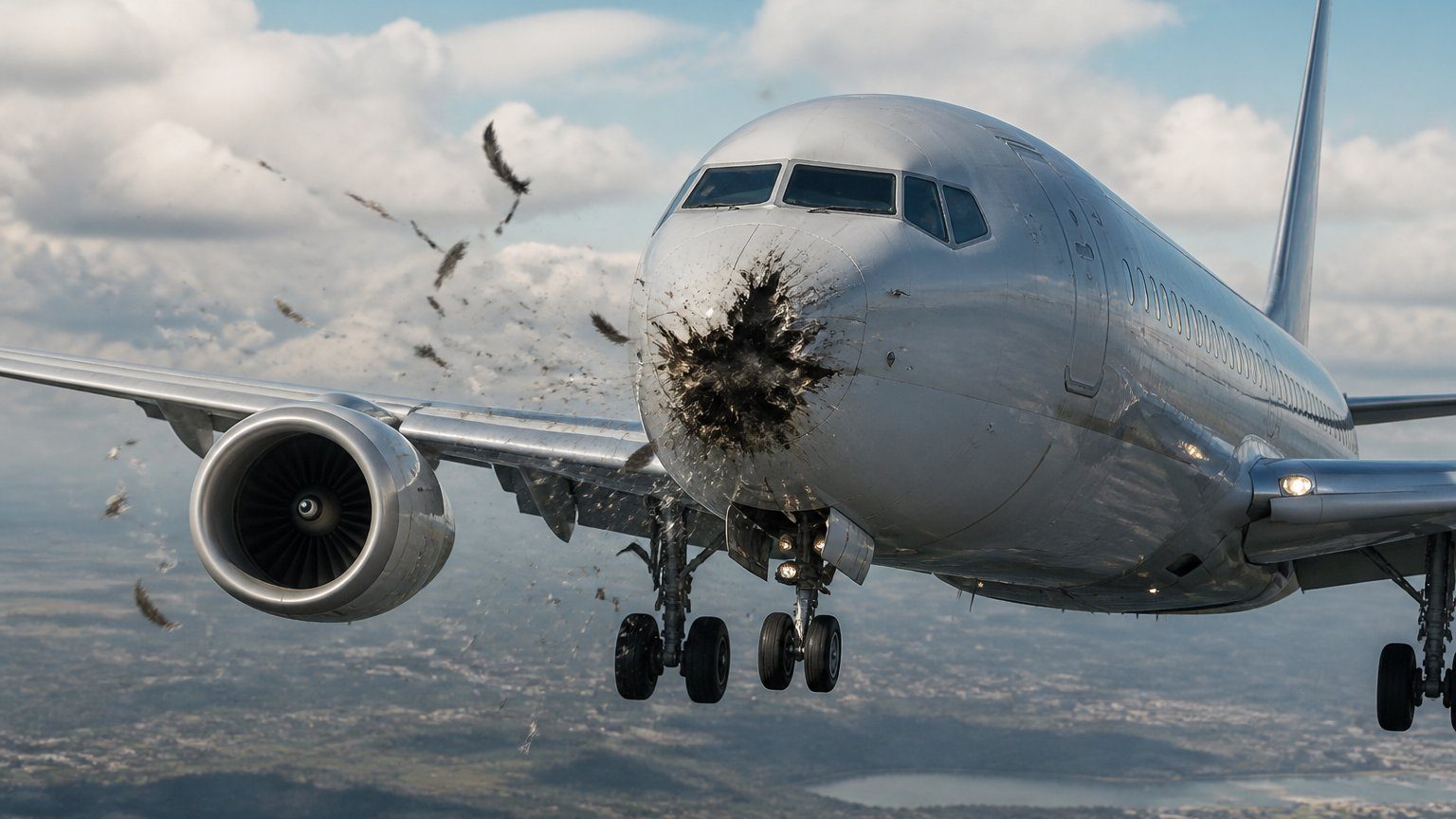
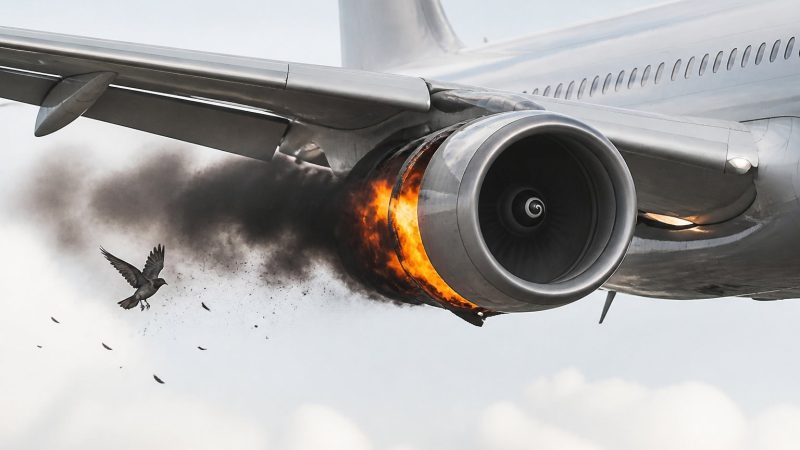
A bird strike forced American Airlines Flight 1760 to return to Myrtle Beach International Airport after passengers reported flames and a mayday call.
A bird strike sent American Airlines Flight 1760 back to Myrtle Beach International Airport on Monday morning after passengers and crew reported an engine problem and video from onboard appeared to show flames. The Boeing 737-800 was headed to Charlotte with 172 people aboard when the pilot issued a mayday call and turned the aircraft around.
Air traffic control recordings captured the pilot saying, “Mayday, mayday, mayday, we got an engine problem here.” In a passenger video, another voice can be heard saying, “The engine is backfiring like crazy,” followed by, “I think she is on fire now.” American Airlines later said there was no indication of an engine fire and reported no injuries. The airline said the plane landed safely and was taken out of service for inspection by maintenance crews.
American Airlines also said the flight returned shortly after departure because of a maintenance issue and that its team worked to move customers to Charlotte on a replacement aircraft. The company thanked its employees for handling the incident and thanked passengers for their understanding. The exact source of the flames seen in the video was not immediately clear.
The Federal Aviation Administration said Flight 1760 returned safely to Myrtle Beach around 8:40 a.m. local time on Monday, Aug. 10, after the crew reported striking a bird during departure. The FAA said the Boeing 737-800 was bound for Charlotte Douglas International Airport and confirmed that it will investigate the incident. In air traffic control audio captured by LiveATC, a worker also said a “significant” number of birds were found on the runway and were being removed.
“A bird strike forced American Airlines Flight 1760 to return to Myrtle Beach International Airport after passengers reported flames and a mayday call.”
The bird strike fits into a broader aviation problem that pilots and safety officials deal with regularly across the United States. The FAA says there have been about 292,000 reported wildlife strikes with civil aircraft in the country from 1990 through 2023. Those incidents are especially common from July to October, when young birds leave nests and fall migration begins.
The agency also says most bird strikes happen close to the ground, with about 70% occurring between zero and 500 feet above ground level. About 62% happen in daylight, while smaller shares take place at dawn, dusk, or night. The timing and altitude help explain why departures and arrivals can be vulnerable, even at busy commercial airports.
For American travelers, the episode is a reminder that routine flights can change fast when wildlife meets commercial aviation. The airplane was brought down safely, passengers were rebooked, and investigators will now review what happened on the runway and in the air. The bottom line: the bird strike forced a dangerous-looking return, but the flight ended without injuries and the FAA is now reviewing the case.
Frequently asked questions
What happened to American Airlines Flight 1760?
The Boeing 737-800 returned to Myrtle Beach International Airport after the crew reported striking a bird during departure. The pilot also made a mayday call over an engine problem.
Were there any injuries on board?
American Airlines said there were no reported injuries. The airline also said the aircraft landed safely and was taken out of service for inspection.
Why did passengers think there was a fire?
A passenger video appeared to show flames, and voices onboard described the engine as backfiring. American Airlines said it had no indication of an engine fire, and the origin of the flames was not clear.
Will the incident be investigated?
Yes. The FAA said it will investigate after the crew reported a bird strike on departure from Myrtle Beach.
We value your privacy 🍪We use cookies for essential features and, if you allow it, to send you a notification whenever we publish a new story. See our Privacy Policy.
📨
Never Miss a Story
Get the headlines that matter delivered straight to your inbox.
📱 On iPhone: tap the Share icon, choose “Add to Home Screen”, then open TheTrueDefender from your Home Screen and tap 🔔 to turn on notifications. (Apple only allows notifications for saved web apps.)
🔔
Never miss a breaking storyGet free alerts the moment big US news breaks.
1Tap the ••• menu at the bottom of the screen, then tap Share(in Safari, just tap Share in the bottom bar directly)2Scroll down the menu and tap Add to Home Screen3Tap Add in the top-right corner4Open TheTrueDefender from your Home Screen, then tap 🔔 Subscribe and choose Allow
📱 Add TheTrueDefender to your home screen for one-tap access.