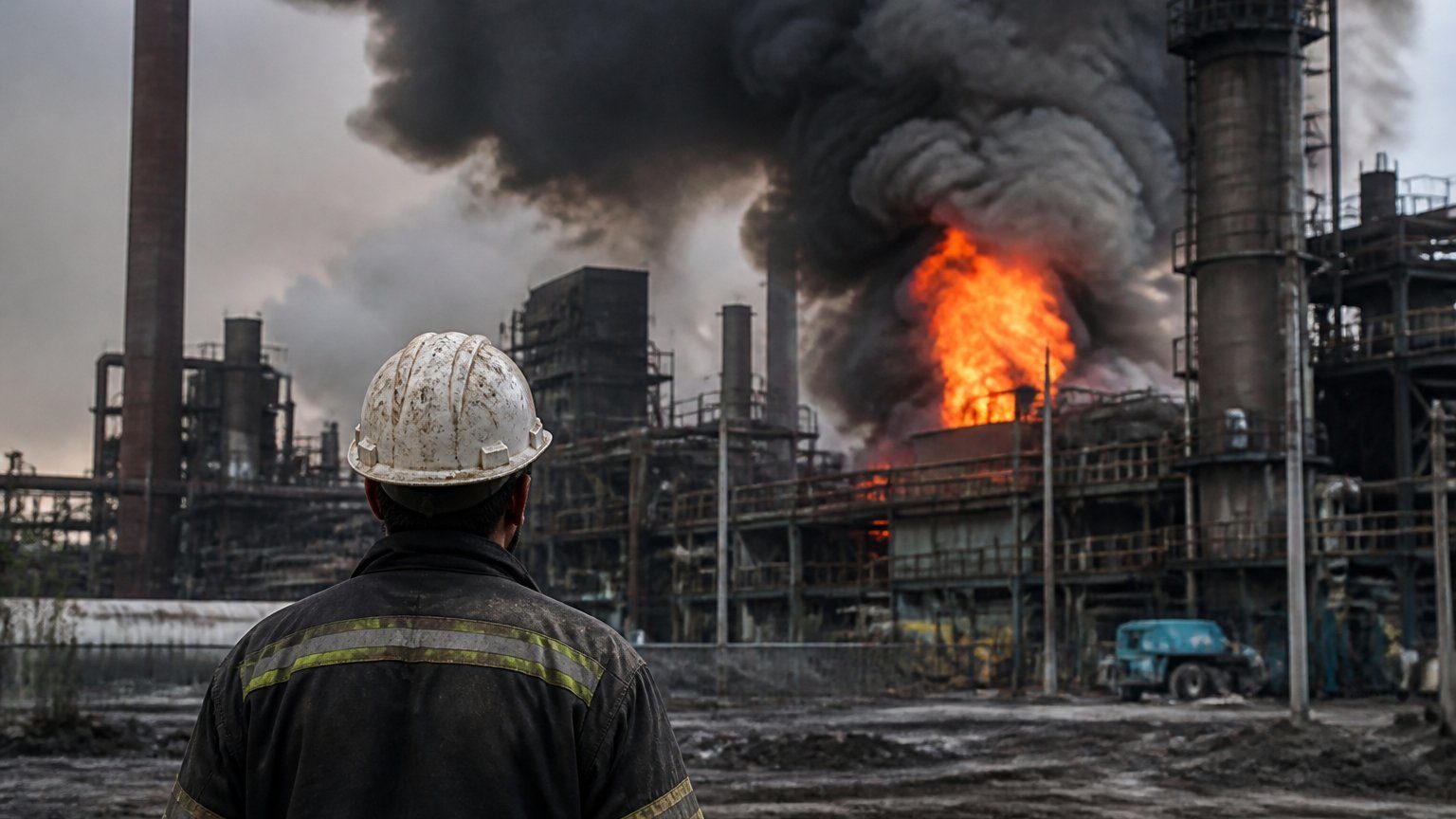
A federal report says the Clairton Coke Works explosion stemmed from preventable safety and management failures that killed two workers and injured 11.
A federal report on the Clairton Coke Works explosion says the deadly blast at U.S. Steel’s Pennsylvania plant was the result of preventable safety and management failures. The Aug. 11, 2025, explosion killed two workers, injured 11 others and left behind millions of dollars in damage at one of the region’s most important industrial sites.
The U.S. Chemical Safety and Hazard Investigation Board released its final findings Monday and said the disaster followed an informal cleaning practice, poor plant layout and an ineffective process safety system. CSB Chairperson Steve Owens said the blast should have been prevented. The report also estimated property damage at $52.5 million. Five of the injured workers suffered serious injuries.
Investigators said the explosion happened while U.S. Steel workers and contractors from MPW Industrial Services were working on a double-disc gate isolation valve tied to piping that carried coke oven gas to Battery 13. Workers routinely “exercised” the valve by closing and reopening it to make sure it still moved through its full range. Employees told investigators that coke oven residue sometimes built up and kept valves from closing all the way, which led crews to use steam or high-pressure water to clear the blockage when needed.
On the day of the blast, a supervisor arranged for MPW contractors to use pressurized water on the Battery 13 valve. As the water went in, workers closed or nearly closed the valve’s two gates, trapping water between them. Pressure rose inside the valve until it exceeded what the equipment could handle. The CSB said the valve then failed catastrophically, releasing toxic and highly flammable coke oven gas into the area. The gas ignited and exploded within minutes.
“A federal report says the Clairton Coke Works explosion stemmed from preventable safety and management failures that killed two workers and injured 11.”
The report said U.S. Steel lacked a written procedure for the cleaning operation that set off the chain of events. It also said the valve itself was a cast-iron unit made in 1953 and refurbished in 2013. The board noted that cast iron is brittle and that safety guidance warns against using it in certain hazardous settings involving flammable substances like coke oven gas.
Beyond the valve failure, investigators said the plant’s physical layout made the blast worse. Several occupied buildings sat less than 20 feet above the piping involved in the explosion, and those structures were not built to withstand a blast. Timothy Quinn and Steven Menefee were in or near separate control rooms above the piping when they were killed. Two of the seriously injured workers were in a break room nearby. One worker trapped in the wreckage pulled himself free and crawled through debris to get help, while another was rescued about four hours later.
The CSB also said U.S. Steel had not carried out needed facility siting reviews in the years before the explosion. Drew Sahli, the board’s investigator in charge, said occupied buildings must be placed or built to protect people and equipment from fire, explosions or toxic releases. He added that the outcome could have been much less severe if workers had been farther from the coke batteries.
The board issued new safety recommendations for U.S. Steel, including a review of occupied and potentially occupied buildings at Clairton Coke Works and fixes for hazards identified in that process. U.S. Steel said it would review the recommendations and said it had already strengthened several safety protocols after the explosion. The company said it created multidisciplinary teams to standardize industrial valve cleaning and improved its Management of Change program, with employees trained on the new procedures. It also said workers across its Mon Valley Works would lower flags to half-staff and observe a moment of silence for the dead. The case matters because it shows how weak procedures and poor plant design can turn a routine task into a deadly industrial disaster.
Frequently asked questions
What caused the Clairton Coke Works explosion?
Investigators said pressurized water trapped inside a valve caused it to fail catastrophically. The failure released coke oven gas, which ignited and exploded.
Who was hurt in the blast?
Two workers, Timothy Quinn and Steven Menefee, were killed. Eleven others were injured, including five with serious injuries.
What safety problems did the federal board identify?
The board cited an informal cleaning procedure, an ineffective process safety system and the location of occupied buildings near hazardous piping.
How did U.S. Steel respond?
The company said it would review the recommendations, said it had already strengthened safety protocols, and described new training and standardized valve-cleaning practices.
We value your privacy 🍪We use cookies for essential features and, if you allow it, to send you a notification whenever we publish a new story. See our Privacy Policy.
🇺🇸
The Defender Morning Brief
5 stories Americans need to know. 3 minutes. Every morning. Free.
📱 On iPhone: tap the Share icon, choose “Add to Home Screen”, then open TheTrueDefender from your Home Screen and tap 🔔 to turn on notifications. (Apple only allows notifications for saved web apps.)
🔔
Stay Ahead of Breaking NewsGet alerts when major stories break — not every time we publish.Breaking news only. No spam. Turn off anytime.
1Tap the ••• menu at the bottom of the screen, then tap Share(in Safari, just tap Share in the bottom bar directly)2Scroll down the menu and tap Add to Home Screen3Tap Add in the top-right corner4Open TheTrueDefender from your Home Screen, then tap 🔔 Subscribe and choose Allow
📱 Add TheTrueDefender to your home screen for one-tap access.