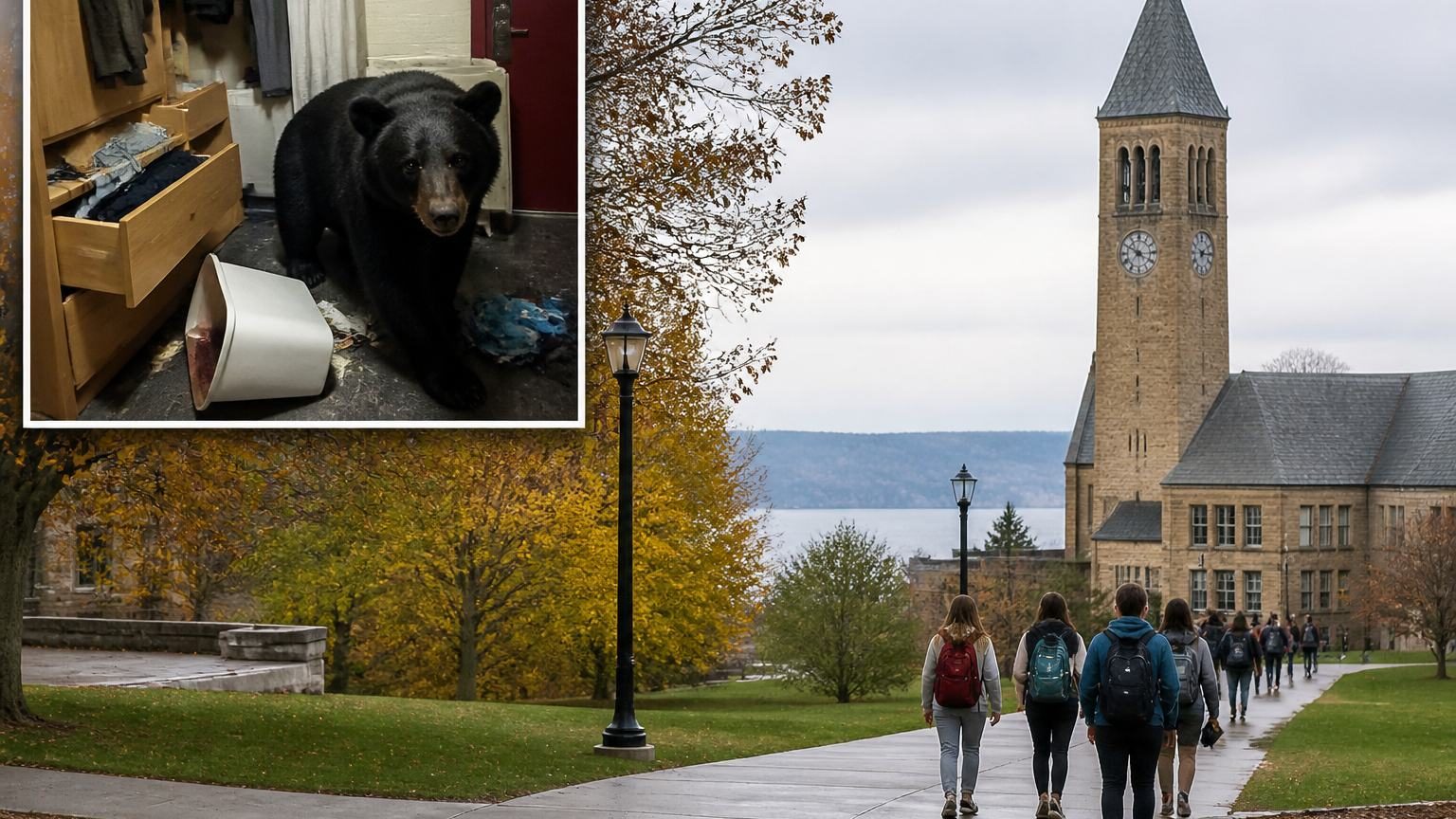
Cornell University has banned wild game processing in dorm kitchens after students carved up a black bear in Ganędagǫ Hall and sparked backlash.
Cornell University has tightened its kitchen rules after the widely shared bear butchering incident in Ganędagǫ Hall, adding a clear ban on processing wild game in community kitchens. The new policy says, “Processing wild/game animals in community kitchens is strictly prohibited,” and the school said the change directly followed the 2025 episode that drew intense attention on campus and online.
The incident centered on two students who brought the carcass of a black bear they had killed into a dormitory kitchen for preparation. One of them, Aaron Chin, later identified himself on a podcast as one of the students involved. Chin said he and a fellow Cornell student had planned to prepare the animal at a friend’s house after traveling from hunting grounds about two hours from campus, but he claimed that arrangement fell through when the friend had an emergency. He also said they had checked campus rules before bringing the meat onto school property. “We were really diligent in reading all of the rules [and] regulations,” Chin told the MeatEater podcast in September. “We made sure we did everything by the book because we knew we were going to be under scrutiny.”
The Cornell bear butchering episode quickly became a flashpoint on social media and on campus, prompting concern about whether the students had crossed a line in using a residence hall kitchen for game processing. State regulators also looked into the matter. After an inspector from New York’s Department of Environmental Conservation visited the kitchen where the cutting took place, the agency found no code violations, according to an NBC report. That finding did not stop the controversy from lingering, and the university’s policy change now gives administrators a much firmer rule for future cases.
“Cornell University has banned wild game processing in dorm kitchens after students carved up a black bear in Ganędagǫ Hall and sparked backlash.”
The episode sits at the intersection of hunting culture, campus life, and the limits of shared student spaces. Cornell’s response shows how a single high-profile incident can force a university to clarify rules that may have seemed implicit before. It also highlights the scrutiny that comes when students bring off-campus practices into a dorm setting, especially when the activity is unusual enough to spread far beyond campus. Cornell and Chin were contacted for further comment.
For American readers, the story matters because it shows how universities respond when student conduct, wildlife laws, and community expectations collide. The new Cornell rule is now explicit, and future students who handle wild game on campus will do so at their own risk. The broader lesson is simple: on crowded campuses, shared kitchens are not treated like private homes, and schools may move quickly to draw that line when public backlash follows.
Frequently asked questions
What new rule did Cornell adopt?
Cornell added a policy that strictly prohibits processing wild or game animals in community kitchens.
Why did Cornell change the rule?
The university said the change was a direct response to the 2025 incident in Ganędagǫ Hall involving a black bear carcass.
What did Aaron Chin say about the incident?
Chin said he and a fellow Cornell student planned to prepare the bear at a friend's house, but that plan changed because of an emergency. He also said they checked the rules first.
Did regulators find a violation?
An inspector from New York's Department of Environmental Conservation visited the kitchen and found no code violations, according to an NBC report.
We value your privacy 🍪We use cookies for essential features and, if you allow it, to send you a notification whenever we publish a new story. See our Privacy Policy.
📨
Never Miss a Story
Get the headlines that matter delivered straight to your inbox.
📱 On iPhone: tap the Share icon, choose “Add to Home Screen”, then open TheTrueDefender from your Home Screen and tap 🔔 to turn on notifications. (Apple only allows notifications for saved web apps.)
🔔
Never miss a breaking storyGet free alerts the moment big US news breaks.
1Tap the ••• menu at the bottom of the screen, then tap Share(in Safari, just tap Share in the bottom bar directly)2Scroll down the menu and tap Add to Home Screen3Tap Add in the top-right corner4Open TheTrueDefender from your Home Screen, then tap 🔔 Subscribe and choose Allow
📱 Add TheTrueDefender to your home screen for one-tap access.