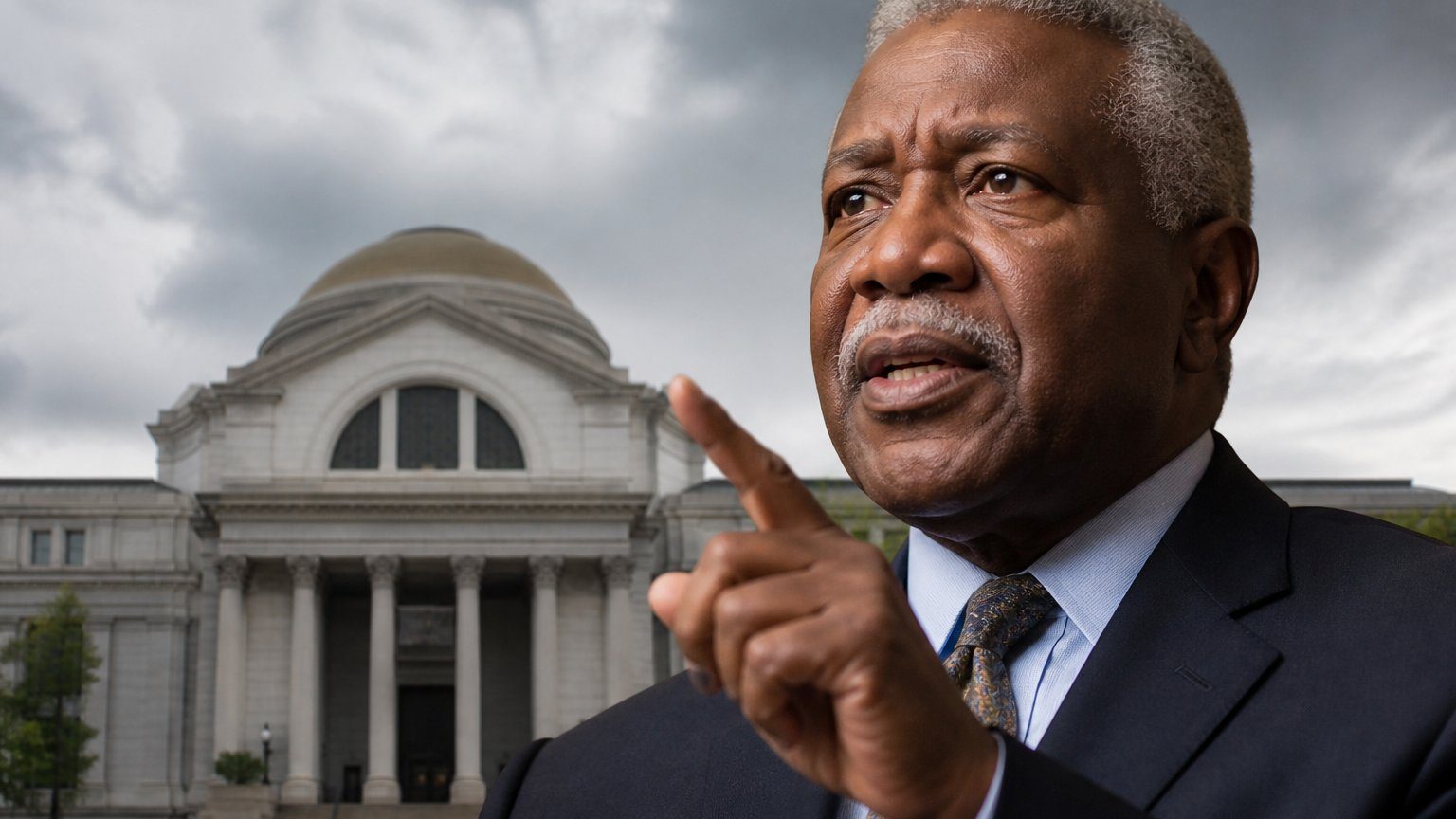
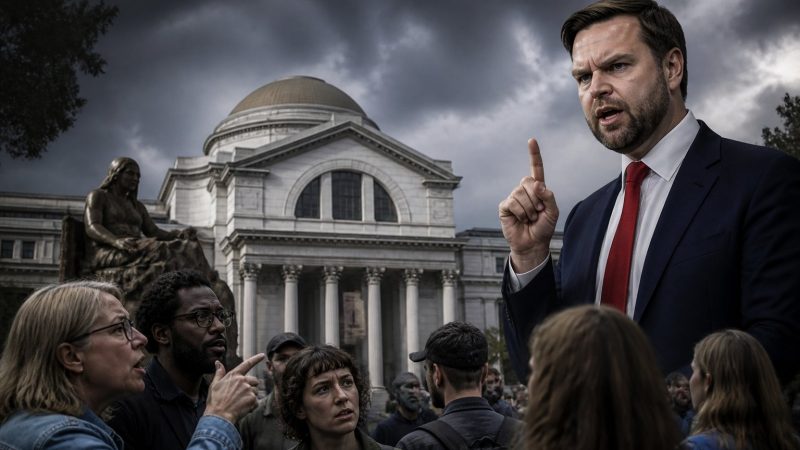
Earl Walker Jackson says the Smithsonian National Museum of American History is pushing anti-American indoctrination instead of teaching facts.
Black bishop and author Earl Walker Jackson is warning that the Smithsonian National Museum of American History is drifting into anti-American indoctrination, and he says the country’s history should be taught with facts, not a political agenda. Jackson, whose great-grandparents were enslaved, argued that America still offers more opportunity and hope than any other nation.
In an interview with Fox News Digital, Jackson said he was angered by the latest fight over what the White House has described as the Smithsonian’s woke ideological capture. He said Americans are being pushed to see the nation through race, class and income divisions instead of recognizing what he called the blessing of the United States. “This is a wonderful country; it’s the greatest nation on earth,” he said. He added that he believes many people have been conditioned to view the country as deeply flawed rather than exceptional.
The Smithsonian National Museum of American History has come under closer scrutiny after the White House Domestic Policy Council released its 162-page “Saving America’s Story” report in July. The report concluded that the museum had experienced ideological capture and included images of exhibits and placards, along with information about curators and leaders. Congressional hearings followed, turning more attention to museum director Anthea Hartig, who has led the institution since 2019.
A resurfaced video of Hartig drew particular notice. In that presentation, she described history as a practice and called it a prime tool of social justice. In a February 2025 appearance before University of California, Los Angeles students, Hartig said the United States’ long and violent racial history remains part of the national reckoning. She also said reparations should go beyond acknowledgment of wrongdoing and should focus on responsibility, correction and restorative justice through history.
“Earl Walker Jackson says the Smithsonian National Museum of American History is pushing anti-American indoctrination instead of teaching facts.”
Jackson rejected that approach. He said history should present what happened and allow people to draw their own conclusions. In his view, using history to shape emotional responses turns education into a lesson in resentment. He said the goal appears to be to make Americans angry and bitter about their country rather than informed about it.
Jackson said his objections are not new. In 2015, he challenged the Smithsonian’s National Portrait Gallery over the inclusion of Planned Parenthood founder Margaret Sanger in an exhibit on civil rights leaders. Jackson objected to Sanger’s presence because, as he put it, she was an elitist, a eugenicist, racist, an admirer of Adolf Hitler and someone who spoke for the Ku Klux Klan. He has pointed to that fight as part of a broader pattern at the Smithsonian and beyond.
He also said what he sees at the museum reflects a wider problem in education, entertainment, journalism and sports. Jackson blamed much of the influence on Howard Zinn’s “A People’s History of the United States,” which he described as a polemic against America written by a professed anarchist. He said the book has been more influential in shaping American history lessons than any other text used in schools or colleges, and he argued that it remains in use today. He pointed to Zinn Education Project materials that connect current deportation operations with Great Depression-era actions described as rooted in racism.
Jackson said that kind of teaching helps explain why some Americans protest outside ICE facilities and why others talk about the United States as though it were the worst place to live. He argued instead that no place on earth has done more to affirm human dignity or create opportunity for human flourishing. For Americans watching the Smithsonian debate, the larger question is whether major cultural institutions will teach history as a record of facts or as a tool for political activism. That choice matters because it shapes how the next generation understands the country they inherit.
Frequently asked questions
Who is Earl Walker Jackson?
He is a Black bishop and author who says he is a descendant of enslaved ancestors. He spoke out against what he views as ideological bias at the Smithsonian.
Why is the Smithsonian National Museum of American History under scrutiny?
The White House Domestic Policy Council’s July report said the museum had undergone ideological capture. That led to congressional hearings and renewed attention on its leadership.
What did Anthea Hartig say that drew criticism?
In a presentation and a February 2025 UCLA appearance, Hartig described history as a tool of social justice and spoke about reparations and restorative justice through history.
What larger concern does Jackson raise beyond the museum?
He says similar ideology is affecting education, entertainment, journalism and sports. He also points to Howard Zinn’s book as especially influential in how American history is taught.
We value your privacy 🍪We use cookies for essential features and, if you allow it, to send you a notification whenever we publish a new story. See our Privacy Policy.
📨
Never Miss a Story
Get the headlines that matter delivered straight to your inbox.
📱 On iPhone: tap the Share icon, choose “Add to Home Screen”, then open TheTrueDefender from your Home Screen and tap 🔔 to turn on notifications. (Apple only allows notifications for saved web apps.)
🔔
Never miss a breaking storyGet free alerts the moment big US news breaks.
1Tap the ••• menu at the bottom of the screen, then tap Share(in Safari, just tap Share in the bottom bar directly)2Scroll down the menu and tap Add to Home Screen3Tap Add in the top-right corner4Open TheTrueDefender from your Home Screen, then tap 🔔 Subscribe and choose Allow
📱 Add TheTrueDefender to your home screen for one-tap access.