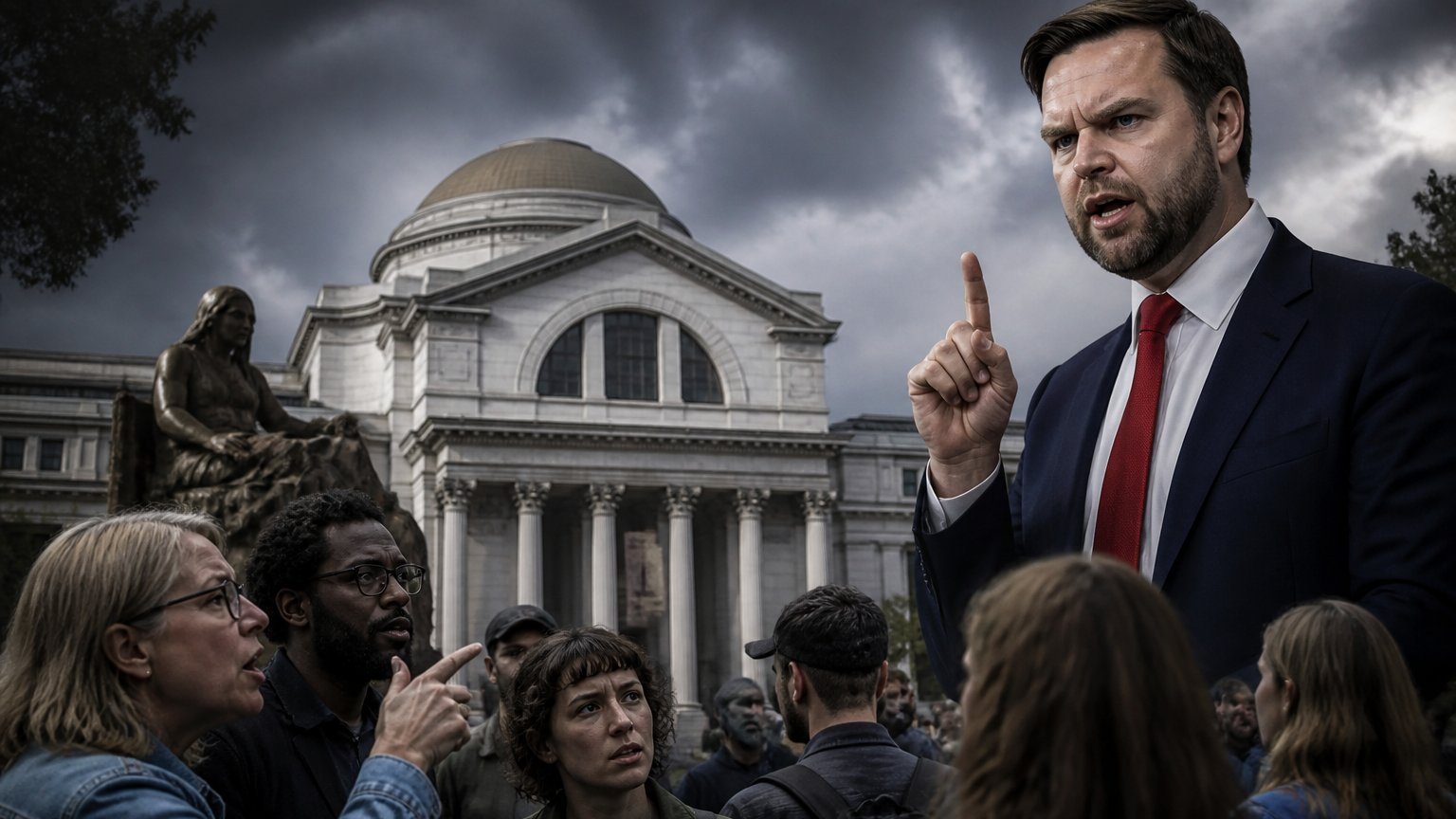
A bishop warned that the Smithsonian’s anti-American indoctrination is a serious concern, adding fresh fire to a growing culture fight.
A bishop is warning that the Smithsonian has crossed a line with what he described as anti-American indoctrination, putting the nation’s premier museum and research institution at the center of a fresh culture fight. The criticism lands in a political climate already shaped by battles over how America’s history is taught, displayed, and judged in public spaces.
The warning came as part of a broader roundup of major political and cultural stories drawing attention Monday morning, including debates over party pressure, social media feuds, and renewed arguments about institutions that shape public opinion. The bishop’s comments stood out because they targeted the Smithsonian directly, framing the issue not as a narrow museum dispute but as a wider question about how American identity is presented to the public.
That dispute matters because the Smithsonian sits in a unique place in American life. Its museums and programs are closely tied to the country’s historical record, and many Americans see them as stewards of national memory. When critics accuse the institution of pushing a political message instead of presenting history plainly, the charge quickly becomes about more than one exhibit or one speech. It turns into a fight over whether public institutions are reflecting the country fairly or reshaping it through ideology.
The bishop’s warning also arrived alongside a separate political line-up that underscored the depth of division in Washington and beyond. In the same morning slate of headlines, Bernie Sanders was said to be demanding that Democrats ban super PACs from primaries while attacking AIPAC and what he called a corrupt system. Elsewhere, the Republican National Committee pushed back on crossover speculation around James Talarico, and a House primary winner said he was ready to help flip a longtime GOP seat.
“A bishop warned that the Smithsonian’s anti-American indoctrination is a serious concern, adding fresh fire to a growing culture fight.”
Those details show the broader backdrop behind the Smithsonian criticism. Americans are watching institutions of every kind — political, cultural, and media — face pressure over trust, neutrality, and influence. For many readers, the central question is not just who is loudest, but which institutions still present themselves as public-serving rather than partisan. That is why the Smithsonian fight resonates beyond museum walls and into the larger argument over national values.
The morning roundup also highlighted how quickly culture disputes now spread across politics and media. A WNBA feud was already going viral, while other items touched on media networks, cameras, and constitutional concerns. That mix reflects a country where even a museum criticism can become part of a much bigger conversation about institutions, power, and who gets to define the American story.
For everyday Americans, the issue cuts to something basic: whether public institutions respect the nation they serve or try to lecture it. With the Smithsonian now in the spotlight, the next question is whether the criticism fades as another headline or grows into a wider push for accountability. Why this matters to you: the fight over the Smithsonian is really a fight over who gets to shape America’s history and values.
Frequently asked questions
What did the bishop say about the Smithsonian?
The Bishop called out the Smithsonian for what he described as anti-American indoctrination.
Why is the Smithsonian criticism significant?
The Smithsonian is a major public institution tied to American History and memory, so accusations of bias carry broader cultural weight.
What other political stories were mentioned alongside it?
The roundup also referenced Bernie Sanders, AIPAC, super PACs, the RNC, and a House primary contest.
Why does this matter to readers?
It reflects a larger fight over whether public institutions present American History fairly or through a political lens.
We value your privacy 🍪We use cookies for essential features and, if you allow it, to send you a notification whenever we publish a new story. See our Privacy Policy.
📨
Never Miss a Story
Get the headlines that matter delivered straight to your inbox.
📱 On iPhone: tap the Share icon, choose “Add to Home Screen”, then open TheTrueDefender from your Home Screen and tap 🔔 to turn on notifications. (Apple only allows notifications for saved web apps.)
🔔
Never miss a breaking storyGet free alerts the moment big US news breaks.
1Tap the ••• menu at the bottom of the screen, then tap Share(in Safari, just tap Share in the bottom bar directly)2Scroll down the menu and tap Add to Home Screen3Tap Add in the top-right corner4Open TheTrueDefender from your Home Screen, then tap 🔔 Subscribe and choose Allow
📱 Add TheTrueDefender to your home screen for one-tap access.