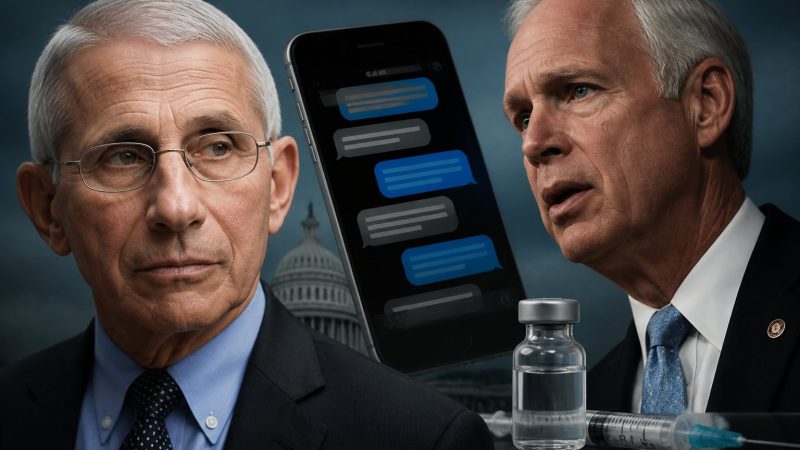
Fauci texts on miscarriage concern are drawing fire after a Senate committee released messages showing Dr. Anthony Fauci privately raised a theoretical link between fever after a second COVID-19 vaccine dose and miscarriage in the first trimester. The January 2021 exchange, pulled from Fauci’s government-issued cellphone, has become the latest flashpoint in the long-running fight over how federal health officials handled public messaging during the pandemic.
In the conversation, Fauci, then the director of the National Institute of Allergy and Infectious Diseases, discussed worries about fever and other reactions after a second dose. He wrote that the response “theoretically could be associated with miscarriage in the 1st trimester.” Republican lawmakers and allies quickly seized on the texts, saying they showed a gap between Fauci’s private doubts and public statements. Sen. Rand Paul, R-Ky., who released the conversation with Sen. Ron Johnson, R-Wis., accused Fauci on social media of saying one thing publicly and another privately. Paul also said Fauci was willing to put women and unborn children at risk rather than admit he was wrong about the vaccines he urged Americans to take.
Florida Attorney General James Uthmeier also attacked the former health official, saying pregnant women were not told the full story and arguing that the missed information could have put them and their unborn children in danger. Former Rep. Marjorie Taylor Greene, R-Ga., went further and called for Fauci’s arrest. In one post, she said Fauci belonged in prison and claimed he knew COVID shots cause miscarriages. In a separate post, she warned that if a COVID vaccine could cause harm in pregnancy, it could raise questions about what else it might do.
The release of the Fauci texts on miscarriage concern adds another layer to the political and public health debate that followed the rollout of COVID-19 vaccines. Vaccine guidance in that period was changing quickly as officials tried to balance limited data, emerging safety questions, and the need to build public confidence. Johnson’s office said the messages could affect public health and the principle of informed consent, a phrase that remains central to disputes over how much uncertainty doctors and agencies should share with patients.