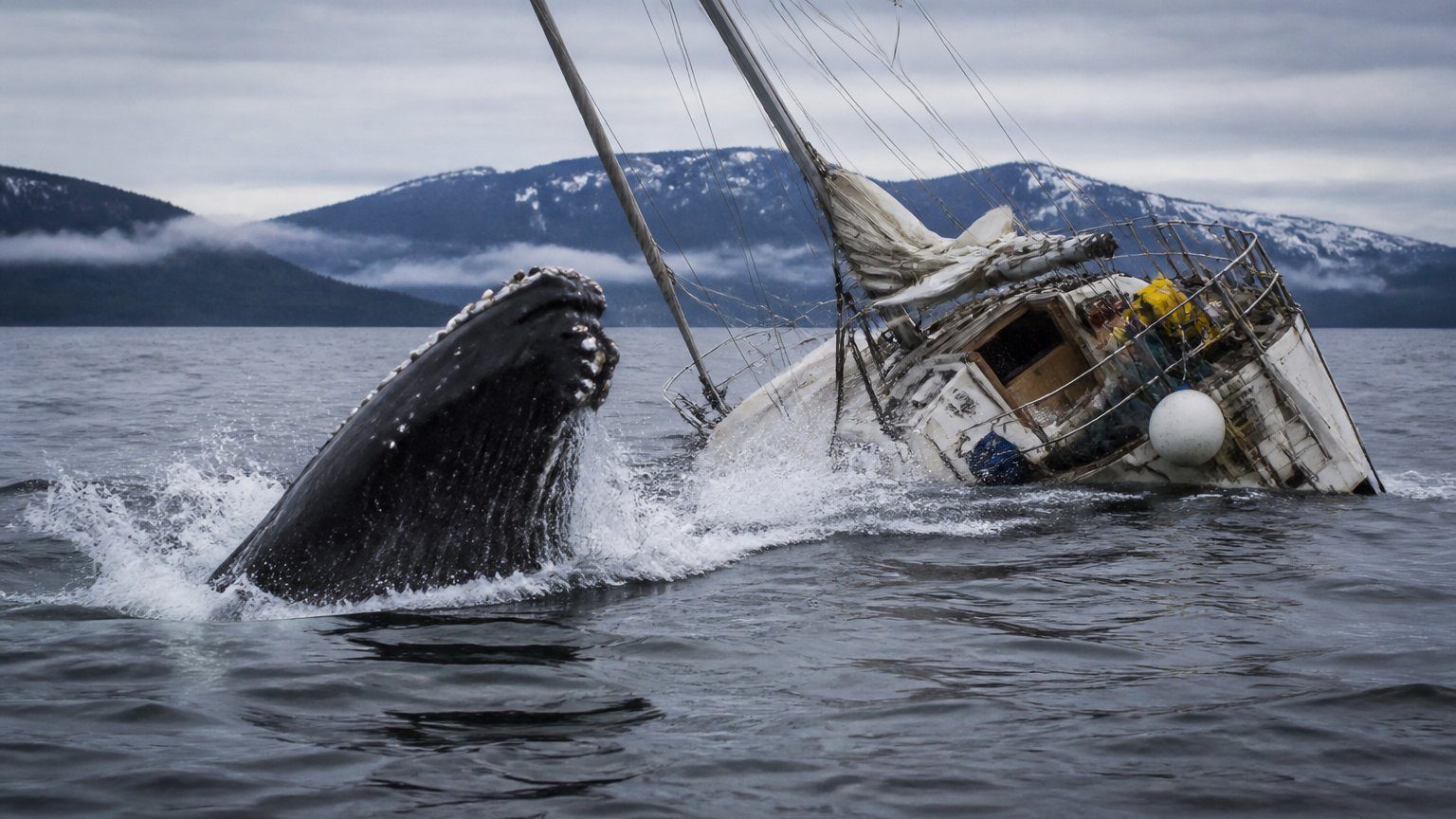
A humpback whale sank an Alaska family’s sailboat in Glacier Bay after a late-night crash left them scrambling into the water.
A humpback whale sank a family’s sailboat in Glacier Bay, Alaska, after a late-night collision sent the vessel under and forced the passengers to scramble into the water. Tania Lewis said the family had gone to sleep after a day of sailing on July 29 when the whale struck around 11:30 p.m., transforming a routine summer outing in one of Alaska’s best-known marine parks into a sudden emergency.
Lewis said the impact came without warning, beginning with a heavy thud that rocked the boat. Her son, Lou, was awake reading and realized something was wrong before alerting his parents that the vessel was sinking. But even with that quick warning, there was no time to recover an emergency bag stored in the cabin. The family also faced another obstacle: an attached dinghy had flipped over, leaving them with an unusable escape route as water rushed in.
According to Lewis, the family struggled to right the small boat after it had filled with water. Once they managed to flip it back over, she and her husband used the dinghy to make their way to shore. Lou reached land by swimming, using a backpack as a flotation aid. The family crossed about 130 yards of water before reaching solid ground, a short distance on a map but a daunting crossing in cold, dark conditions and with little equipment.
What they had with them was limited. Lewis said they did not have enough time to gather warm clothing or the supplies they would normally have wanted for a night stranded outdoors. Once on the beach, they had just enough emergency gear to build a fire. Even so, the family was left exposed to chilly temperatures and an uncertain wait for help in a remote setting where rescue can take hours to arrive.
“A humpback whale sank an Alaska family’s sailboat in Glacier Bay after a late-night crash left them scrambling into the water.”
The Lewis family remained onshore until 6:30 a.m. the following day, when rescue crews were able to reach them. Crews later located the wrecked sailboat and found a large hole in the keel, evidence of the force of the collision. Lewis said she later spoke with a park biologist, who suggested the whale may have rammed the boat while pursuing fish in the water. That explanation fits with the behavior of humpback whales, which feed by chasing schools of fish and other small prey through coastal waters.
Glacier Bay draws visitors for the same reasons it can be dangerous: dramatic scenery, wildlife sightings and the sense of being close to a wild, largely unchanged landscape. Humpback whales are a familiar presence in Alaska waters, especially in summer, when they feed in rich coastal areas. But the incident shows how little warning boaters may have when a large marine animal surfaces or changes direction near a vessel, particularly in darkness.
For small craft, a strike from an animal of that size can be catastrophic. A sailboat has limited protection against a blow to the hull, and once breached, it can sink quickly. In this case, the family had only moments to react before the boat went down, underscoring how quickly a peaceful night on the water can turn into a life-threatening emergency far from shore.
Even after the ordeal, Lewis said the family tried to make the best of the night they spent waiting on the beach. She described a full moon rising and a fire that gave them some comfort in the aftermath. For all the hardship, the experience also left them with a vivid memory of Alaska’s beauty and unpredictability — a place where wildlife, weather and isolation can combine in an instant to test even experienced travelers.
Frequently asked questions
What happened to the Lewis family’s sailboat?
A humpback whale rammed the sailboat in Glacier Bay and sank it late on July 29.
How did the family get off the water?
Tania Lewis and her husband used an overturned dinghy to reach shore, while their son swam in with a backpack as flotation.
When did rescue crews arrive?
The family waited until 6:30 a.m. the next day before rescue crews could help them.
What did officials think caused the strike?
A park biologist suggested the whale may have hit the boat while chasing fish.
We value your privacy 🍪We use cookies for essential features and, if you allow it, to send you a notification whenever we publish a new story. See our Privacy Policy.
📨
Never Miss a Story
Get the headlines that matter delivered straight to your inbox.
📱 On iPhone: tap the Share icon, choose “Add to Home Screen”, then open TheTrueDefender from your Home Screen and tap 🔔 to turn on notifications. (Apple only allows notifications for saved web apps.)
🔔
Never miss a breaking storyGet free alerts the moment big US news breaks.
1Tap the ••• menu at the bottom of the screen, then tap Share(in Safari, just tap Share in the bottom bar directly)2Scroll down the menu and tap Add to Home Screen3Tap Add in the top-right corner4Open TheTrueDefender from your Home Screen, then tap 🔔 Subscribe and choose Allow
📱 Add TheTrueDefender to your home screen for one-tap access.