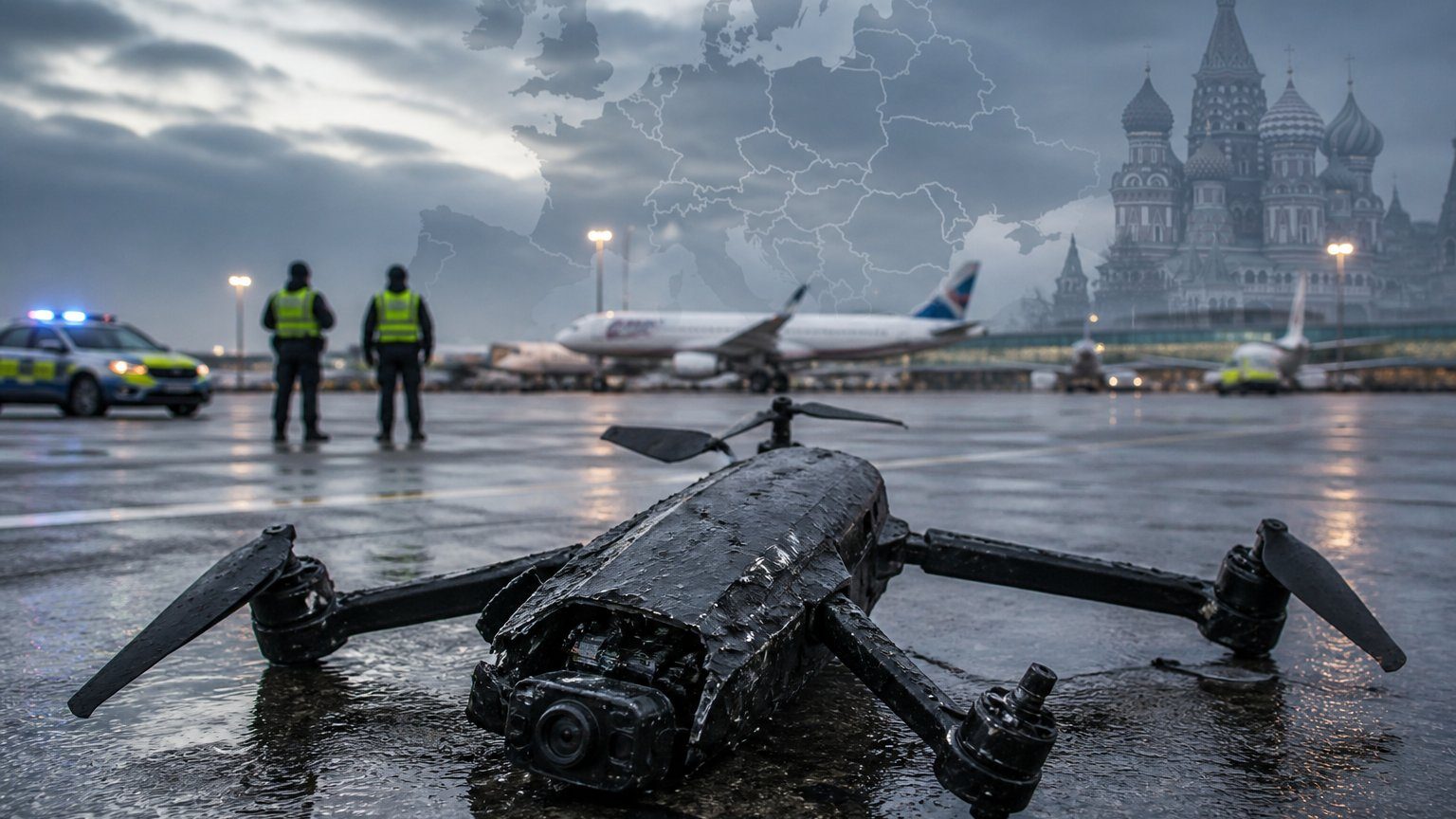
A drone at Leipzig airport loaded with explosives has fueled new concern over hybrid warfare, though Germany has not linked the device to Russia.
A drone loaded with explosives at Leipzig airport has put Germany at the center of a fresh debate over hybrid warfare, with officials warning that the incident could point to a new level of danger. Investigators are still trying to determine who sent the device, how it reached the airport runway, and whether a second drone was involved after a cargo plane reported colliding with an unidentified object nearby.
Germany’s interior minister said the attack may involve foreign powers, but there is no proof at this stage linking the drone directly to Russia. Moscow has denied any role. Even so, the case has revived attention on the methods used in earlier plots tied to Russian-linked proxies, including operations that moved drones, explosives, and other components through Europe.
The drone was found late on Tuesday night at Leipzig airport, where it forced one runway into lockdown and brought a bomb disposal robot onto the scene. German media images suggested the aircraft was a relatively small quadcopter spotted floating between parked Ukrainian Antonov cargo planes. Around the same time, a DHL cargo plane struck an unidentified object as it attempted to take off, and investigators are still working to establish whether that was a separate drone.
The airport episode has drawn comparison to a 2024 case in which a parcel containing a sophisticated incendiary device caught fire at the DHL hub in Leipzig before it could be loaded onto a plane. Similar packages later ignited in the UK and Poland, causing extensive damage. In that investigation, men were charged in Lithuania and Poland, where prosecutors said they were part of a broader network of proxies recruited by Russian military intelligence.
“A drone at Leipzig airport loaded with explosives has fueled new concern over hybrid warfare, though Germany has not linked the device to Russia.”
One little-noted part of that case may now carry added significance. Lithuanian prosecutors said investigators had seized RDX explosives intended for other terrorist attacks, and case documents viewed by the BBC describe how some of the men on trial transported explosives and drone parts across Europe. The materials were hidden in ordinary-looking food cans and other containers, with detonators concealed inside headphone sets. Prosecutors also allege that some items were brought into the European Union from Kaliningrad, the Russian exclave.
A Ukrainian suspect charged in Poland, Vladyslav D., told investigators that he made repeated long car trips in July 2024 under instructions from someone he knew as “Warrior.” He said he collected cans of corn, headphone packages, and drone components from different locations, including a Lithuanian forest and a cemetery, and then left them at handoff points in Poland and Germany. He said he was paid more than $2,000 in cryptocurrency for the work.
Experts say the physical damage from a drone like the one found in Leipzig could have been limited, depending on its casing and payload. But analysts also caution that the purpose of such an operation may not be destruction alone. Instead, it could be designed to unsettle the public, test security, and signal that major European sites are vulnerable. That is why the Leipzig drone find matters beyond one airport: it raises the stakes for Germany, Ukraine’s European partners, and anyone watching how far sabotage campaigns can reach inside the continent.
Officials from Nato said they were aware of the incident and that German authorities continue to investigate. Antonov Airlines has declined to say whether the Ukrainian planes on the tarmac were tied to military support for Ukraine, and a spokeswoman in Kyiv said no assumptions were being made about the drone’s purpose. For Americans watching Europe’s security landscape, the message is clear: hybrid attacks are becoming a bigger part of the confrontation around Ukraine, and the pressure to stop them is likely to grow.
Frequently asked questions
What happened at Leipzig airport?
A drone loaded with explosives was found late Tuesday night, forcing one runway into lockdown. A DHL cargo plane also struck an unidentified object nearby as it tried to take off.
Has Germany linked the drone to Russia?
Not at this stage. Officials say there is no proof of a direct Russian link, and Russia denies any role.
Why are investigators looking at past cases?
Earlier plots tied to Russian-linked proxies involved drones, explosives, and transport routes through Germany and other European countries. Those cases may help explain how the Leipzig device reached the airport.
What do experts think the purpose may have been?
Analysts say the aim may have been to spread fear and show that major European sites can be reached. They argue such incidents are meant to unsettle governments and the public.
We value your privacy 🍪We use cookies for essential features and, if you allow it, to send you a notification whenever we publish a new story. See our Privacy Policy.
📨
Never Miss a Story
Get the headlines that matter delivered straight to your inbox.
📱 On iPhone: tap the Share icon, choose “Add to Home Screen”, then open TheTrueDefender from your Home Screen and tap 🔔 to turn on notifications. (Apple only allows notifications for saved web apps.)
🔔
Never miss a breaking storyGet free alerts the moment big US news breaks.
1Tap the ••• menu at the bottom of the screen, then tap Share(in Safari, just tap Share in the bottom bar directly)2Scroll down the menu and tap Add to Home Screen3Tap Add in the top-right corner4Open TheTrueDefender from your Home Screen, then tap 🔔 Subscribe and choose Allow
📱 Add TheTrueDefender to your home screen for one-tap access.