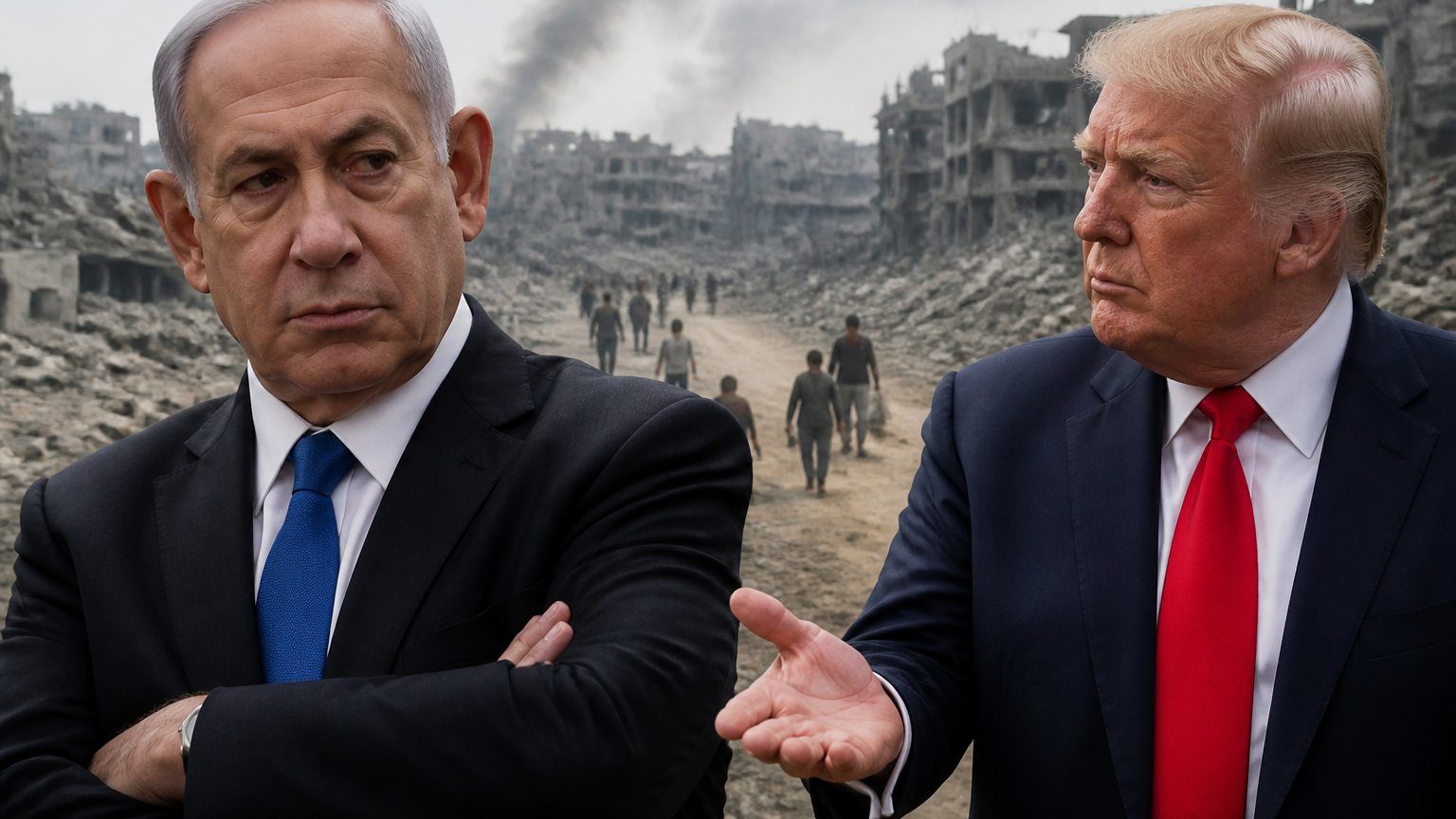
Netanyahu rejects Trump’s Gaza peace plan, saying Israel will not withdraw until Hamas is fully disarmed and no Palestinian state will be created.
Israeli Prime Minister Benjamin Netanyahu rejected Trump’s Gaza peace plan, saying Israel will not accept the 15-point document that was presented as a possible opening toward ending the conflict. Netanyahu made the remarks at a weekend cabinet meeting, putting him publicly at odds with President Trump’s latest push for a deal involving Hamas and the Gaza Strip.
“I want to be precise here: Israel rejects the 15-point document,” Netanyahu said. He added that Israel will “not withdraw at all until Hamas is genuinely disarmed and will continue to thwart threats against our forces and citizens.” Netanyahu also said that his government is speaking with the Americans, who have “ideas, some of which are acceptable to us and some are not,” and that Israel knows how to resist pressure when needed.
The Israeli leader went further, saying, “As long as I am prime minister, no Palestinian state will be established — not in Gaza and not in the West Bank.” That statement underscored how far apart Netanyahu remains from the broader direction of Trump’s peace effort, even after years of a close relationship between the two leaders. Netanyahu also said Sunday that Israel will do what it believes is necessary for its security, even “against our best friends when necessary.”
The dispute comes after Trump said last month that his panel had reached a deal with Hamas under which the group would disarm in exchange for an Israeli withdrawal from the Gaza Strip. Trump’s team has been trying to move forward with phase 2 of a wider 20-point Gaza peace plan announced last October. That broader plan includes a cease-fire and humanitarian aid, demilitarization and reconstruction, and eventual recognition of a Palestinian state. Trump also chairs the Board of Peace overseeing the effort.
“Netanyahu rejects Trump’s Gaza peace plan, saying Israel will not withdraw until Hamas is fully disarmed and no Palestinian state will be created.”
Netanyahu’s rejection is significant because the 15-point proposal had been viewed by some as a possible breakthrough. Hamas and other Palestinian groups said they would only agree if Israel moved its forces back to the “yellow line” described in the 20-point plan. They also wanted Israel to stop all strikes in the Gaza Strip. At present, Israeli forces remain on the ground in more than half of Gaza, including in the east and south, and some members of Netanyahu’s cabinet have shown interest in expanding that footprint.
After Netanyahu’s comments, Bassem Naim, a member of Hamas’ politburo, called on the American side to press the Israeli leader. In a post on X, he said mediators and the American guarantor should pressure Netanyahu and his government to follow the roadmap and avoid derailing the process for internal political and electoral reasons.
The split also lands at a sensitive political moment for Netanyahu. He is a long-time hardliner facing an election in October, and his coalition is underwater in a number of polls. He met with Trump and Vice President JD Vance during his trip to Washington, D.C., last month for the funeral of Sen. Lindsey Graham of South Carolina. The disagreement now raises fresh questions about how far Trump can push the Gaza diplomacy and whether Israel and the United States can keep the process aligned. For American readers, the stakes are clear: this fight will shape U.S. leverage in the Middle East and the next steps in any Gaza cease-fire effort.
Frequently asked questions
What did Netanyahu reject?
He rejected Trump’s 15-point document tied to efforts to disarm Hamas and move the Gaza peace process forward.
What did Netanyahu say Israel would do instead?
He said Israel would not withdraw until Hamas is genuinely disarmed and would keep acting against threats to its forces and citizens.
How did Hamas respond?
Bassem Naim, a Hamas politburo member, said mediators and the American guarantor should pressure Netanyahu to stick to the roadmap.
Why does this matter politically?
Netanyahu is heading into an October election with his coalition polling poorly, while Trump is trying to advance phase 2 of a broader Gaza plan.
We value your privacy 🍪We use cookies for essential features and, if you allow it, to send you a notification whenever we publish a new story. See our Privacy Policy.
📨
Never Miss a Story
Get the headlines that matter delivered straight to your inbox.
📱 On iPhone: tap the Share icon, choose “Add to Home Screen”, then open TheTrueDefender from your Home Screen and tap 🔔 to turn on notifications. (Apple only allows notifications for saved web apps.)
🔔
Never miss a breaking storyGet free alerts the moment big US news breaks.
1Tap the ••• menu at the bottom of the screen, then tap Share(in Safari, just tap Share in the bottom bar directly)2Scroll down the menu and tap Add to Home Screen3Tap Add in the top-right corner4Open TheTrueDefender from your Home Screen, then tap 🔔 Subscribe and choose Allow
📱 Add TheTrueDefender to your home screen for one-tap access.