Trump’s childhood vaccine order seeks to spread out routine shots, including a future split of the MMR vaccine into separate visits.
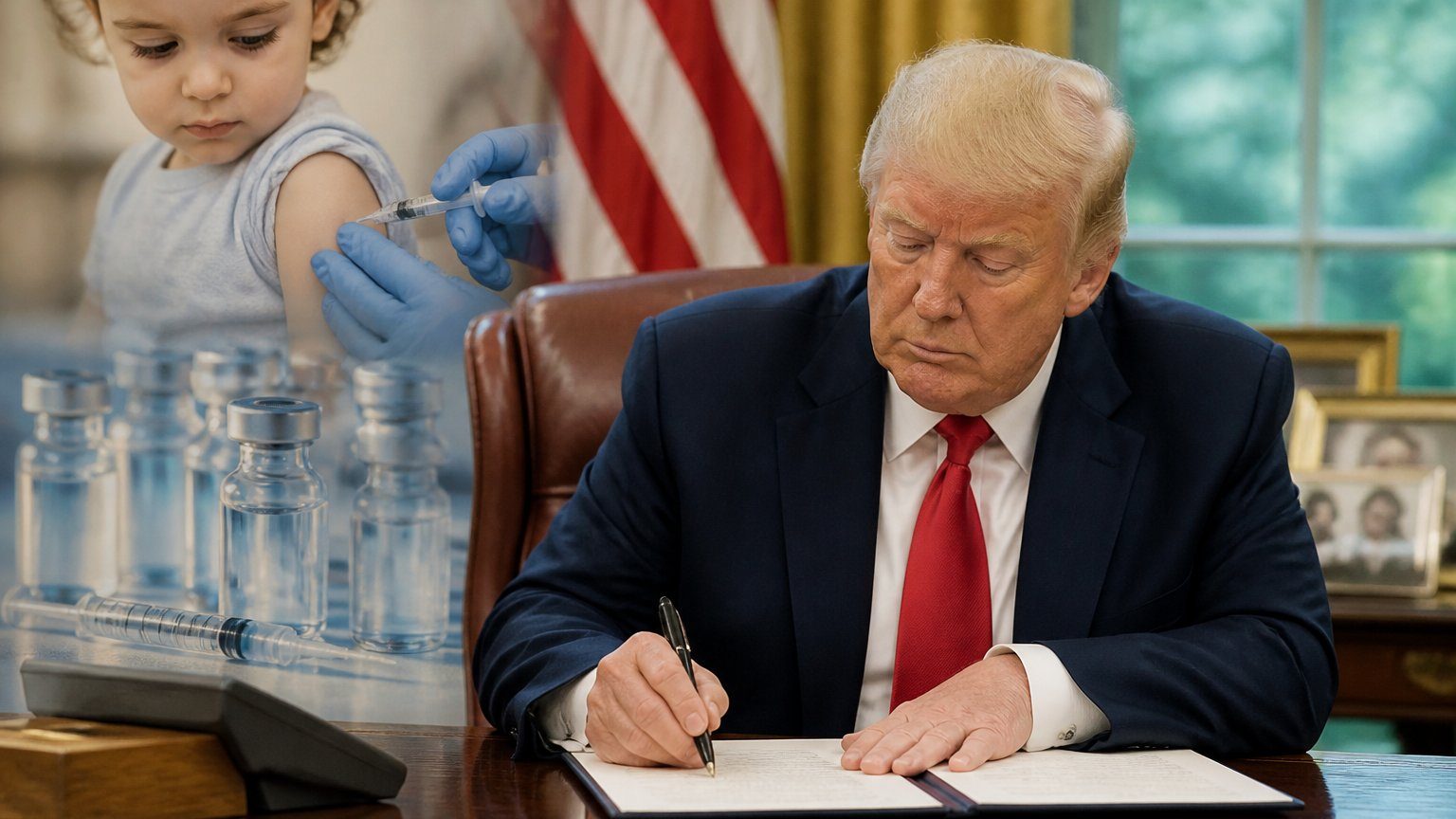
President Donald Trump signed a childhood vaccine order on Monday that calls for a major rewrite of federal recommendations, opening the door to more spacing between shots and giving parents and doctors more say over when immunizations are given. The move pushes the administration’s campaign to reshape the childhood vaccine schedule a step further and places new pressure on federal health officials to revisit the timing and order of routine vaccines.
The order directs the Department of Health and Human Services to reexamine how childhood vaccines are sequenced and timed. It also encourages officials to favor single-disease shots over combined injections whenever possible. Trump went a step farther by saying the measles, mumps and rubella vaccine, or MMR, should eventually be separated into three individual shots given at different visits. During the Oval Office signing, he said the administration was recognizing what he called “gold standard childhood vaccine recommendations” for 11 core vaccinations against serious diseases, along with the MMR, which he said he hoped would be split up.
Trump said the change would give children more time between appointments and suggested that vaccines given to 1-year-old children could be spread across about five visits instead of several being administered in one appointment. The administration says the goal is to give families more flexibility while leaving parents free to choose additional vaccinations if they want them. Officials have also framed the effort as a way to bring US recommendations closer to practices used in some other developed countries.
The new order fits into a broader effort by the Trump administration to pull back from long-standing federal vaccine guidance. Health and Human Services Secretary Robert F. Kennedy Jr. has already overseen earlier changes, and the administration has sought to reduce the number of vaccines universally recommended for children. In some cases, it has pushed certain shots toward higher-risk groups or toward decisions left more directly to parents and physicians. Trump also began pressing for a review of the schedule last year, when he told federal health officials to study how the United States compares with other countries.
“Trump’s childhood vaccine order seeks to spread out routine shots, including a future split of the MMR vaccine into separate visits.”
The push has revived a familiar controversy. Trump has repeatedly raised questions about whether the number and timing of childhood vaccines could be tied to rising autism diagnoses. Major medical organizations continue to say extensive scientific research has not shown a causal link between vaccines and autism, and they maintain that childhood vaccines are safe and effective. Critics of the administration’s approach argue that spreading out shots could leave children exposed to preventable diseases for longer and that existing schedules are based on evidence about when children are most vulnerable.
One practical hurdle stands in the way of the administration’s preferred MMR plan: separate measles, mumps and rubella vaccines are not currently available in the United States. That means manufacturers would have to produce individual versions before the shots could be widely administered on different schedules. Until then, the existing combined vaccine remains the standard option in the US.
Even with the federal shift, states will still control much of the practical policy around school immunization requirements. The federal government generally sets vaccination recommendations, while state and local officials decide most school-entry rules. That means Trump’s order could change the tone and direction of national guidance without automatically rewriting every requirement families face in daily life. For American parents, the fight now centers on who controls childhood vaccination decisions and how far Washington should go in changing a system built around broad protection from serious disease.
Frequently asked questions
What did Trump’s executive order do?
It directed federal health officials to reassess childhood vaccine timing and sequencing and encouraged more use of individual shots.
What does the order say about the MMR vaccine?
Trump said he wants measles, mumps and rubella Vaccines separated into three individual shots given during different visits.
How have medical groups responded?
They have pushed back, warning that longer spacing could leave children vulnerable to preventable diseases and noting Vaccines are considered safe and effective.
Will this change school vaccine rules right away?
Not necessarily. The federal government sets recommendations, but states and local governments handle most school immunization requirements.
We value your privacy 🍪We use cookies for essential features and, if you allow it, to send you a notification whenever we publish a new story. See our Privacy Policy.
🇺🇸
The Defender Morning Brief
5 stories Americans need to know. 3 minutes. Every morning. Free.
📱 On iPhone: tap the Share icon, choose “Add to Home Screen”, then open TheTrueDefender from your Home Screen and tap 🔔 to turn on notifications. (Apple only allows notifications for saved web apps.)
🔔
Stay Ahead of Breaking NewsGet alerts when major stories break — not every time we publish.Breaking news only. No spam. Turn off anytime.
1Tap the ••• menu at the bottom of the screen, then tap Share(in Safari, just tap Share in the bottom bar directly)2Scroll down the menu and tap Add to Home Screen3Tap Add in the top-right corner4Open TheTrueDefender from your Home Screen, then tap 🔔 Subscribe and choose Allow
📱 Add TheTrueDefender to your home screen for one-tap access.