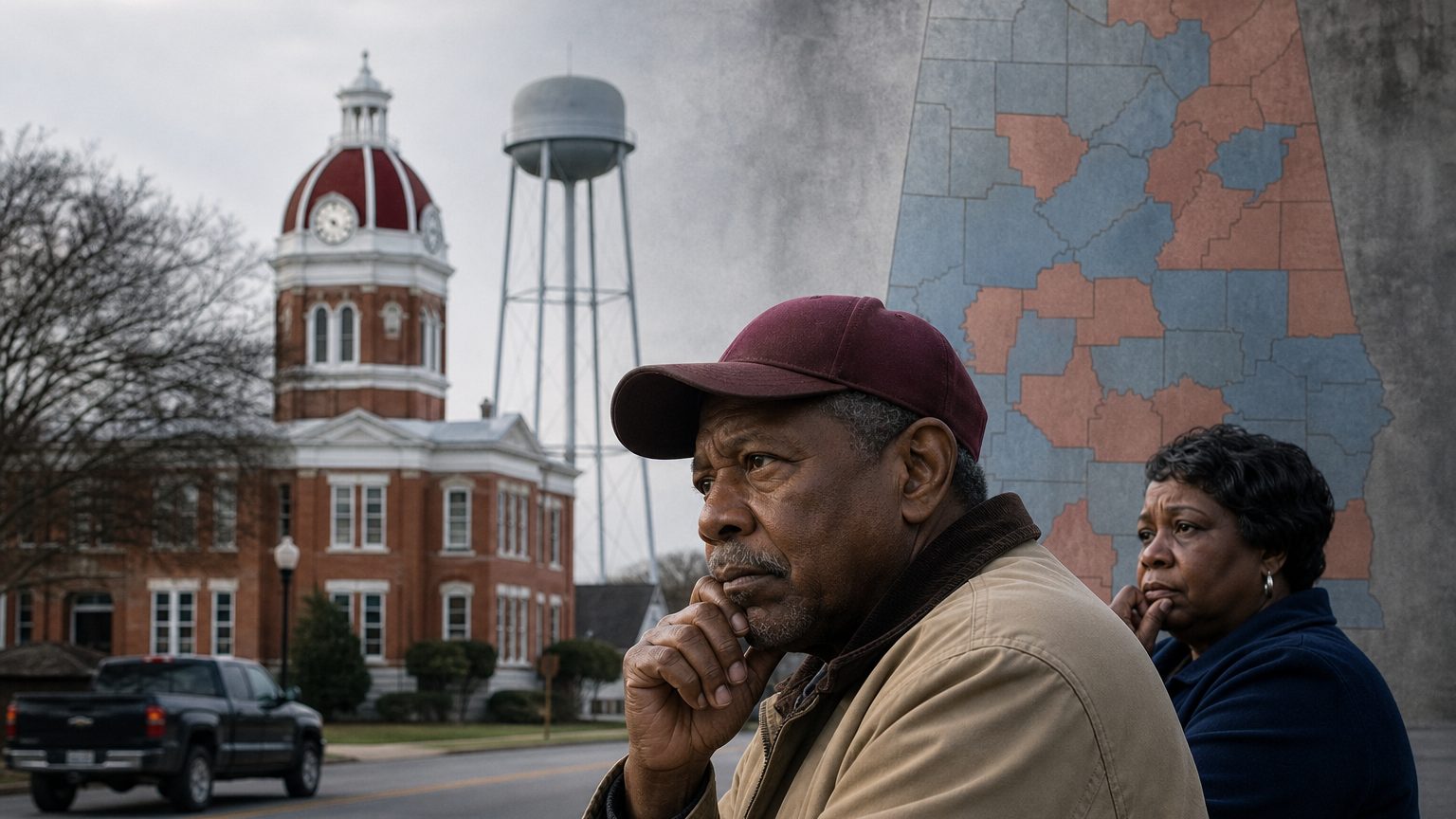
The Tuskegee federal funding debate is growing as residents worry a new Alabama map could cost them the House seat tied to local aid.
The Tuskegee federal funding debate is growing in rural Alabama, where residents and local leaders say the city could lose support if Rep. Shomari Figures is pushed out by a new congressional map. In Tuskegee, a city of fewer than 9,000 people, many depend on federal help for basic services, and they worry that a change in representation could put that stream at risk.
The concern is rooted in daily life. De'Mari Benham, a 19-year-old Tuskegee University student, said he was taken to the fire department after glass shattered on his arm and blood was running down his limb. Firefighters wrapped the wound and told him to go to a hospital in the next town for stitches and medicine, but he said he stayed away because the trip was too far and he did not have the money. City officials say Tuskegee has no general hospital and no 24-hour emergency clinic, while the fire department often handles serious calls even though the building is not suited for that role.
Figures, a Democrat and the first Black person to represent Tuskegee in Congress in modern history, helped secure $1 million in federal money for a civic center that is planned to serve as a storm shelter and also house the police and fire departments. That project has made his seat more than symbolic for many local residents. Mayor Chris Lee said the city depends on federal funding and needs someone in Washington who will fight for it. “It’s very important that we have someone who has our back,” he said.
The political fight changed after the Supreme Court in April made it harder to challenge maps on racial discrimination grounds. That ruling allowed Republican-led states across the South to redraw districts, including in Alabama, where the new lines could wipe out majority-Black seats. Figures now faces a redrawn, white-majority district in the November midterms. The earlier version of his district had been created after the court, in 2023, said Alabama’s Republican-led map illegally split Black voters and diluted their power. That decision forced lawmakers to redraw the lines and produced two districts where African Americans were either in the majority or close to it.
Figures said he believes the latest push is racially driven, pointing to a text message cited by judges in the earlier case in which Montgomery was referred to as “monkey town.” Alabama Attorney General Steve Marshall rejected that view, saying the dispute is political rather than racial and arguing that both parties use redistricting to their advantage. Republican activist Cedric Coley also defended the new approach, saying voters should be judged on merit and that judges should not force racial districts. Civil rights activist Joe Reed took the opposite view, saying the change is a major setback for Black Alabamians because race and politics are deeply tied together in the state.
For people in Tuskegee and nearby communities, the issue reaches beyond party labels. The district stretches across parts of the Black Belt, a region tied to Black history, poverty, and long fights over voting rights. In places like Eufaula, where racial and economic gaps remain sharp, residents say representation can affect whether hospitals, services, and other public needs are supported. The takeaway is simple: for these towns, the shape of a congressional district can decide whether federal help stays close to home or disappears with the seat.