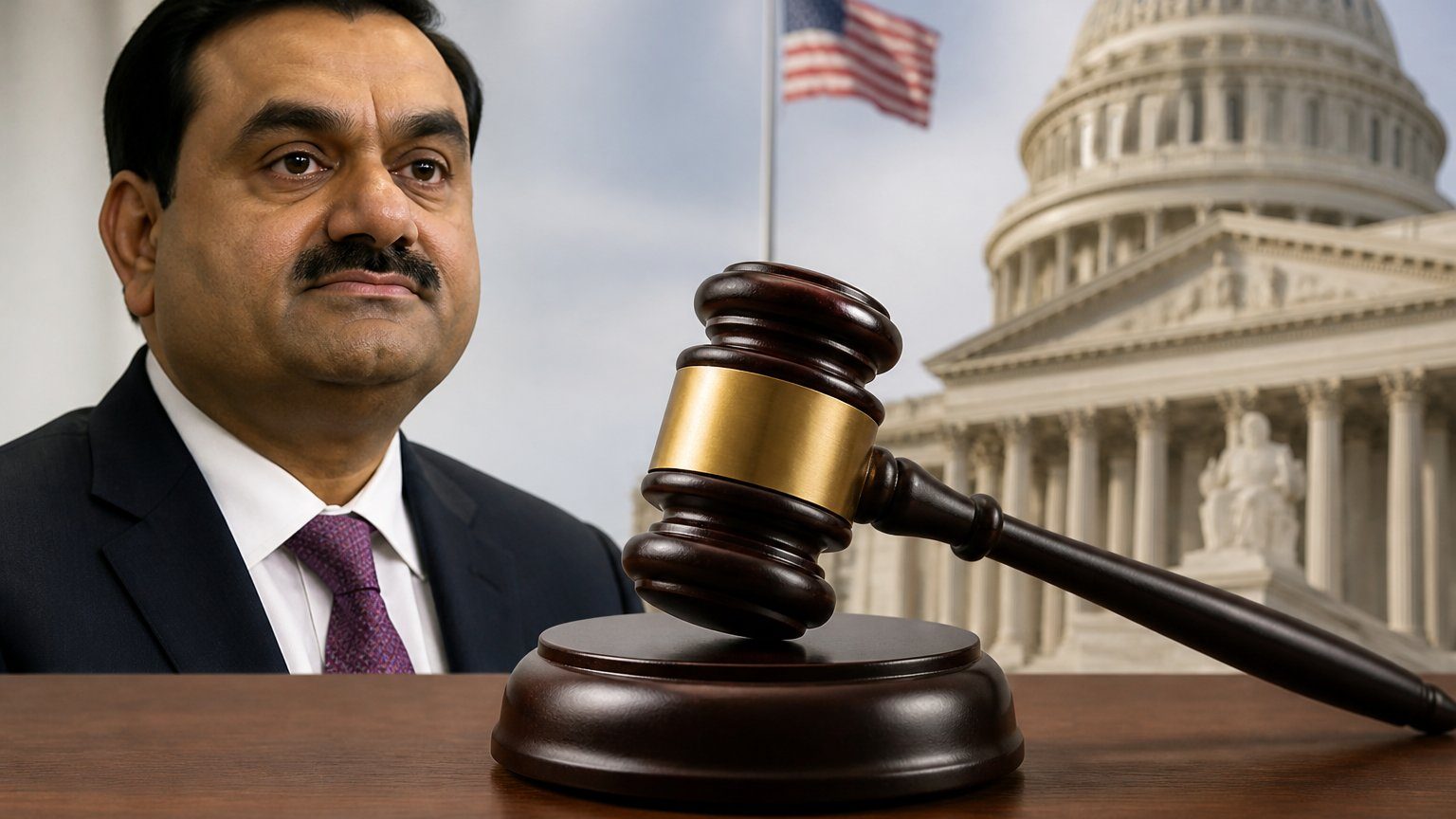
A US judge dismissed the Gautam Adani bribery case, but faulted the Justice Department for how it moved to drop the charges.
The Gautam Adani bribery case in the United States came to a close on Monday when a federal judge dismissed the criminal charges against the Indian billionaire, ending a closely watched prosecution that had put one of India’s best-known business figures under a cloud.
US District Judge Nicholas Garaufis approved the Justice Department’s request to drop the case, but he did not let the matter pass quietly. In a 47-page order, he said the way the decision was reached was highly unusual. The judge wrote that R Trent McCotter, the principal associate deputy attorney general, worked with Adani’s lawyers on the dismissal without first consulting the prosecutors and investigators who had handled the case. He said McCotter appeared to have substituted his own judgment for that of officials directly involved in the investigation.
Adani and his companies had denied wrongdoing throughout the dispute. After the ruling, Adani said he accepted the court’s decision with humility and deep respect for the judicial process. He also said on X that his faith in truth, fairness and the rule of law had remained unwavering during what he called a challenging period.
The case began in 2024, when Adani was accused of paying bribes to Indian officials tied to major renewable energy projects and of misleading US investors about the conduct. The Justice Department moved in May to dismiss the charges, saying much of the alleged conduct happened outside the United States, which made prosecution difficult, and that continuing the case no longer fit the department’s priorities. Judge Garaufis initially pushed back, saying in June that the government’s explanation was not enough and ordering officials to provide more detail.
“A US judge dismissed the Gautam Adani bribery case, but faulted the Justice Department for how it moved to drop the charges.”
The judge also examined whether Adani’s pledge to invest $10 billion in the United States and create 15,000 jobs had affected the outcome. Adani announced the investment in November 2024, in a post congratulating Donald Trump on his election victory. Later reporting said Adani’s lawyers raised the investment in discussions with the Justice Department. His lawyers said it was never offered in exchange for dismissing the charges. Garaufis ultimately concluded the investment did not influence the government’s decision, though he said the public could draw its own conclusions about how such discussions shape confidence in equal justice and the rule of law.
Garaufis also said the dismissal process lacked meaningful input from the prosecutors, FBI investigators, and Securities and Exchange Commission staff who had worked on the case. He wrote that the irregularities were concerning. The charges were dismissed with prejudice, which means they cannot be filed again.
The Adani bribery case was only one part of broader legal pressure on the conglomerate. In May, Adani agreed to pay $6 million and his nephew, Sagar Adani, agreed to pay $12 million to settle Securities and Exchange Commission allegations tied to investor disclosures, without admitting or denying wrongdoing. In a separate matter, Adani Enterprises agreed to pay $275 million to settle potential civil liability over apparent violations of US sanctions on Iran.
Adani, 64, chairs the Adani Group, a large conglomerate with interests in energy, ports, airports and other infrastructure businesses. He is widely viewed as close to Prime Minister Narendra Modi, and both men come from Gujarat in western India. The ruling closes the criminal chapter for now, but the judge’s criticism keeps attention on how the case was handled and how aggressively US authorities pursue conduct that crosses borders. For American readers, the takeaway is simple: major overseas business deals can still face US legal scrutiny when investors, sanctions, and federal enforcement overlap.
Frequently asked questions
What did the judge decide in the Adani case?
Judge Nicholas Garaufis approved the Justice Department’s request to dismiss the criminal charges against Gautam Adani. The dismissal was with prejudice, so the case cannot be brought again.
Why did the judge criticize the Justice Department?
He said the dismissal process was highly unusual and said a senior Justice Department official worked with Adani’s lawyers without consulting the prosecutors and investigators who handled the case.
What were Adani and his companies accused of?
They were accused in 2024 of paying bribes to Indian officials linked to renewable energy projects and misleading US investors about it.
Are there other US cases involving Adani?
Yes. In May, Adani and his nephew settled SEC allegations over investor disclosures, and Adani Enterprises settled potential civil liability tied to US sanctions on Iran.
We value your privacy 🍪We use cookies for essential features and, if you allow it, to send you a notification whenever we publish a new story. See our Privacy Policy.
📨
Never Miss a Story
Get the headlines that matter delivered straight to your inbox.
📱 On iPhone: tap the Share icon, choose “Add to Home Screen”, then open TheTrueDefender from your Home Screen and tap 🔔 to turn on notifications. (Apple only allows notifications for saved web apps.)
🔔
Never miss a breaking storyGet free alerts the moment big US news breaks.
1Tap the ••• menu at the bottom of the screen, then tap Share(in Safari, just tap Share in the bottom bar directly)2Scroll down the menu and tap Add to Home Screen3Tap Add in the top-right corner4Open TheTrueDefender from your Home Screen, then tap 🔔 Subscribe and choose Allow
📱 Add TheTrueDefender to your home screen for one-tap access.