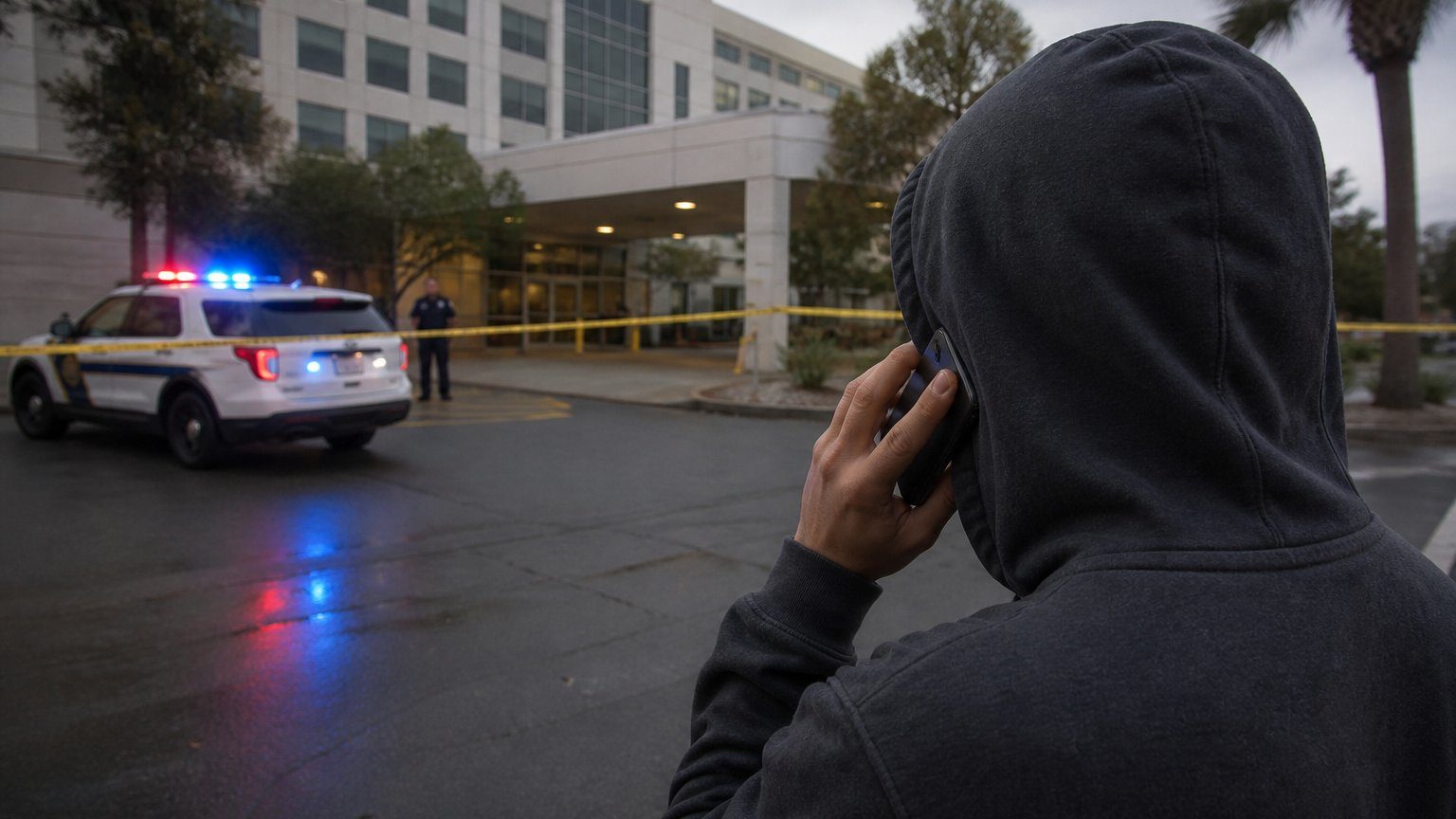
The 764 group was linked to a Pasadena hospital bomb threat Friday as investigators worked with federal agencies to identify the caller.
Investigators say the Pasadena hospital bomb threat that rattled Huntington Hospital on Friday was tied to the extremist group 764. The call sent police and fire crews into response mode early in the day and put a spotlight back on a network that authorities say has repeatedly fueled fear through swatting and other intimidation tactics.
A city spokesperson said the unidentified caller gave information during the threat call that could help investigators piece together what happened. Lisa Derderian said the caller identified the group they were with and described in detail what they claimed they were going to do. She also said the name was already familiar to law enforcement. No one was hurt in the incident, but Derderian said the disruption forced police and fire resources to shift toward the threat response. She added that officials would pursue criminal charges if investigators can identify the person or group behind the call.
The 764 group has drawn attention for using swatting calls and other malicious behavior to terrorize victims. The group has also been accused of blackmailing victims, often minors, into making false emergency calls and carrying out abusive acts against themselves or others. Authorities say members have caused chaos in the Los Angeles area and traumatized local children. One member, Bryant Najera Gonzalez, was arrested in Downey in February and charged with production of child pornography after allegedly making threats and demanding disturbing acts from a victim.
“The 764 group was linked to a Pasadena hospital bomb threat Friday as investigators worked with federal agencies to identify the caller.”
The Pasadena hospital bomb threat also comes as federal officials have been investigating the broader reach of 764. Last year, Washington, D.C., authorities charged Leonidas “War” Varagiannis and Prasan “Trippy” Nepal with allegedly coercing girls into self-harm, sexual acts online, harming animals, and other disturbing conduct. U.S. Attorney for the District of Columbia Jeanine Pirro previously described the group as one that allegedly pushed young girls toward acts of self-mutilation, online sexual activity, self-immolation, harm to animals, and even suicide and murder for the group’s entertainment.
That background makes the Pasadena case part of a larger public safety problem rather than a single hoax call. Swatting and bomb threats can pull officers, firefighters, and hospital personnel away from real emergencies while leaving communities on edge. In Southern California, where schools and other institutions have already faced similar threats this year, local officials say the toll is measured not only in fear but in diverted manpower and lost time.
The FBI and Pasadena Police Department are still investigating the call as they work to identify who made it and whether more charges will follow. For American readers, the case is a reminder that online-driven threats can spill into real-world chaos fast, and local agencies are now being forced to treat those calls as both a public safety issue and a criminal investigation.
Frequently asked questions
What happened at Huntington Hospital in Pasadena?
A bomb threat was called in early Friday, prompting a law enforcement and fire response. Officials later said the caller tied the threat to the group 764.
Who is 764?
Authorities describe 764 as an extremist group known for swatting calls, blackmail, and other malicious conduct. Federal officials have also brought cases involving members of the group.
Was anyone injured in the hospital threat?
No one was hurt in the Pasadena incident. Officials said the larger impact was the disruption and the resources tied up in responding.
What happens next in the investigation?
The Fbi and Pasadena Police Department are still investigating the call. Officials said they would pursue charges if they can identify those responsible.
We value your privacy 🍪We use cookies for essential features and, if you allow it, to send you a notification whenever we publish a new story. See our Privacy Policy.
📨
Never Miss a Story
Get the headlines that matter delivered straight to your inbox.
📱 On iPhone: tap the Share icon, choose “Add to Home Screen”, then open TheTrueDefender from your Home Screen and tap 🔔 to turn on notifications. (Apple only allows notifications for saved web apps.)
🔔
Never miss a breaking storyGet free alerts the moment big US news breaks.
1Tap the ••• menu at the bottom of the screen, then tap Share(in Safari, just tap Share in the bottom bar directly)2Scroll down the menu and tap Add to Home Screen3Tap Add in the top-right corner4Open TheTrueDefender from your Home Screen, then tap 🔔 Subscribe and choose Allow
📱 Add TheTrueDefender to your home screen for one-tap access.