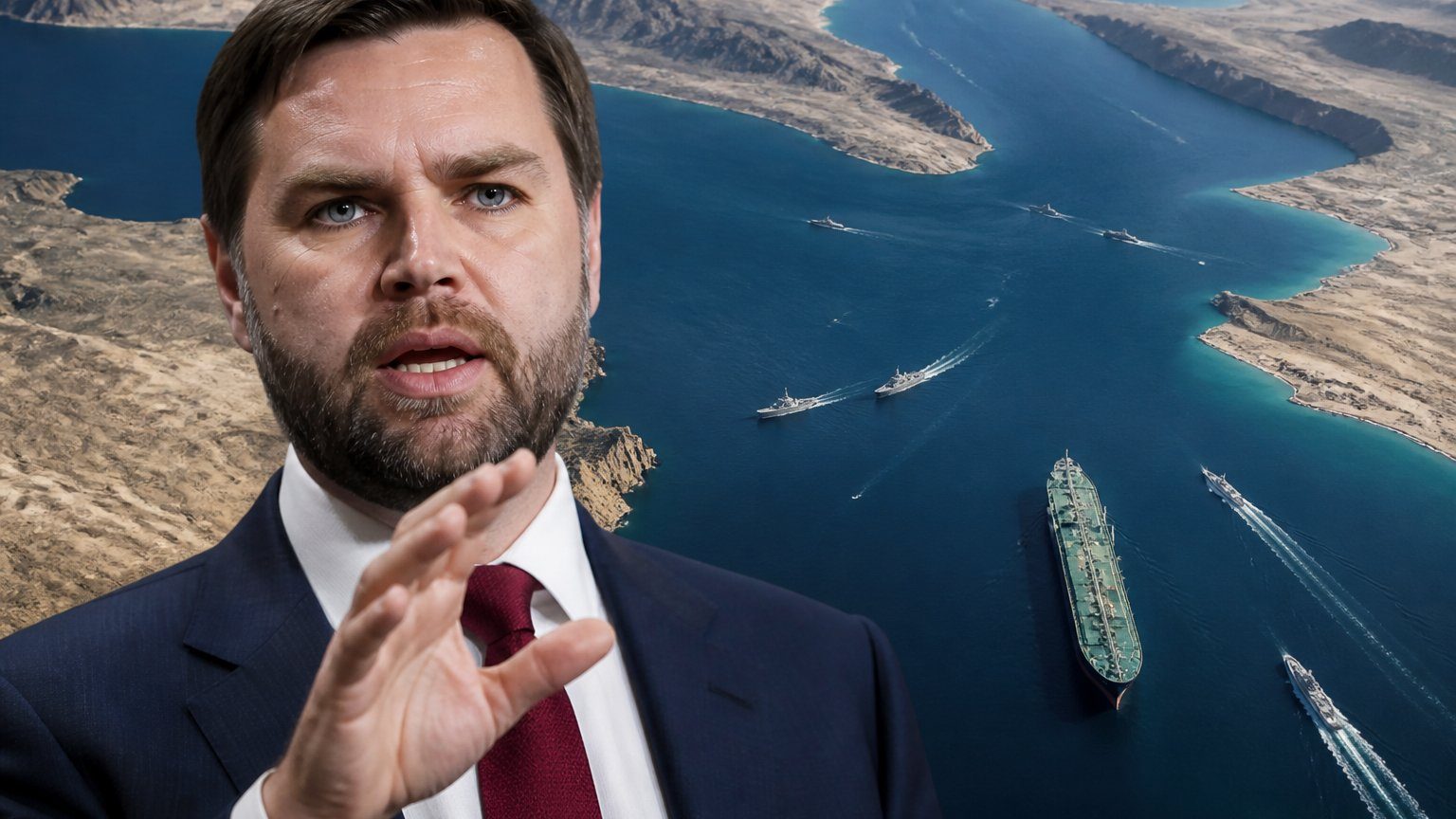
JD Vance said the U.S. and Iran are still in the middle of talks over the Strait of Hormuz as Iran pressed new demands to reopen shipping.
Vice President JD Vance said the U.S.-Iran talks over the Strait of Hormuz are still far from finished, describing the standoff as being “in the middle of the game” as Tehran pushes new demands to reopen a vital global shipping lane.
Vance, who helped negotiate a Memorandum of Understanding with Iran in June, made the remarks Saturday on Fox News as Iranian Foreign Minister Abbas Araqchi said Iran and Oman were “very close” to an agreement on reopening shipping through the strait. Vance said he expects the same amount of oil to keep moving through the waterway as before the war, but he did not outline how that would happen. He told Kayleigh McEnany on her Saturday in America show that the administration is using diplomatic, economic and military tools to secure what it sees as the best result for Americans. “I feel quite confident we will get there,” he said, though he stressed that the issue is not resolved.
The Strait of Hormuz sits at the center of the latest U.S.-Iran dispute because of its role in moving oil out of the region. President Trump said Thursday that a deal “could be soon,” and markets have reacted positively to signs of progress. Oil prices have fallen as traders looked for evidence that shipping could resume without a wider disruption. That reaction shows how tightly American energy prices and global commerce are tied to events in the Persian Gulf.
Vance also said Iran told the U.S. it had no plans to toll the strait, answering concerns that Tehran or Oman might impose charges on a route that had been free before the U.S. and Israel attacked Iran. He added that Iran placed a “large number of mines” early in the war and said the current challenge is designing a traffic system that allows ships to pass safely. “They’re hurting in a big way,” he said, adding that the Iranians want the conflict to end, though the terms remain unsettled.
“JD Vance said the U.S. and Iran are still in the middle of talks over the Strait of Hormuz as Iran pressed new demands to reopen shipping.”
Iran, for its part, has been laying out a much broader list of conditions. Mohammad Bagher Zolghadr, the secretary of Iran’s National Security Council, said the United States must end what he called its blockade, withdraw forces, lift sanctions and pay reparations before the strait reopens. Those issues have also surfaced in earlier talks, while the United States has tied economic measures to Iran ending its nuclear program. Iranian state media, cited by Iran International, reported that Zolghadr said the strait would not reopen until the United States “corrects its behavior.”
Zolghadr said correcting that behavior would mean Iran is never again threatened or humiliated, that aggression against Iran and its allies ends permanently, and that U.S. naval and air forces withdraw from around Iran. He also called for compensation for war damage, an end to sanctions and the release of frozen Iranian assets. He added that the Supreme National Security Council would not back down in war or in negotiations.
The conflict has already spread beyond the immediate waterway, with Iran hitting U.S. bases in allied states including Jordan and Kuwait. That broader pressure helps explain why Washington is treating the shipping fight as part of a larger regional contest rather than a narrow trade dispute. For Americans, the stakes reach beyond diplomacy: the Strait of Hormuz affects oil flows, market stability and the risk of a wider clash, which is why the next move in these talks matters at the pump and in the broader economy.
Frequently asked questions
What did JD Vance say about the talks with Iran?
He said the United States and Iran are “in the middle of the game” and that the issue is not finished. He said the administration is using diplomatic, economic and military tools to reach a better outcome for Americans.
What is Iran asking for?
Mohammad Bagher Zolghadr said the United States must end its blockade, withdraw forces, end sanctions and pay reparations. He also said frozen Iranian assets should be released.
Why does the Strait of Hormuz matter?
It is a key route for oil shipping, so any disruption can affect global Energy Markets. Vance said he expects the same amount of oil to flow through it as before the war.
Has there been any sign of progress?
Trump said Thursday that a deal could be soon, and markets responded positively. Vance also said he feels confident the U.S. will get there, though details are still being worked out.
We value your privacy 🍪We use cookies for essential features and, if you allow it, to send you a notification whenever we publish a new story. See our Privacy Policy.
📨
Never Miss a Story
Get the headlines that matter delivered straight to your inbox.
📱 On iPhone: tap the Share icon, choose “Add to Home Screen”, then open TheTrueDefender from your Home Screen and tap 🔔 to turn on notifications. (Apple only allows notifications for saved web apps.)
🔔
Never miss a breaking storyGet free alerts the moment big US news breaks.
1Tap the ••• menu at the bottom of the screen, then tap Share(in Safari, just tap Share in the bottom bar directly)2Scroll down the menu and tap Add to Home Screen3Tap Add in the top-right corner4Open TheTrueDefender from your Home Screen, then tap 🔔 Subscribe and choose Allow
📱 Add TheTrueDefender to your home screen for one-tap access.