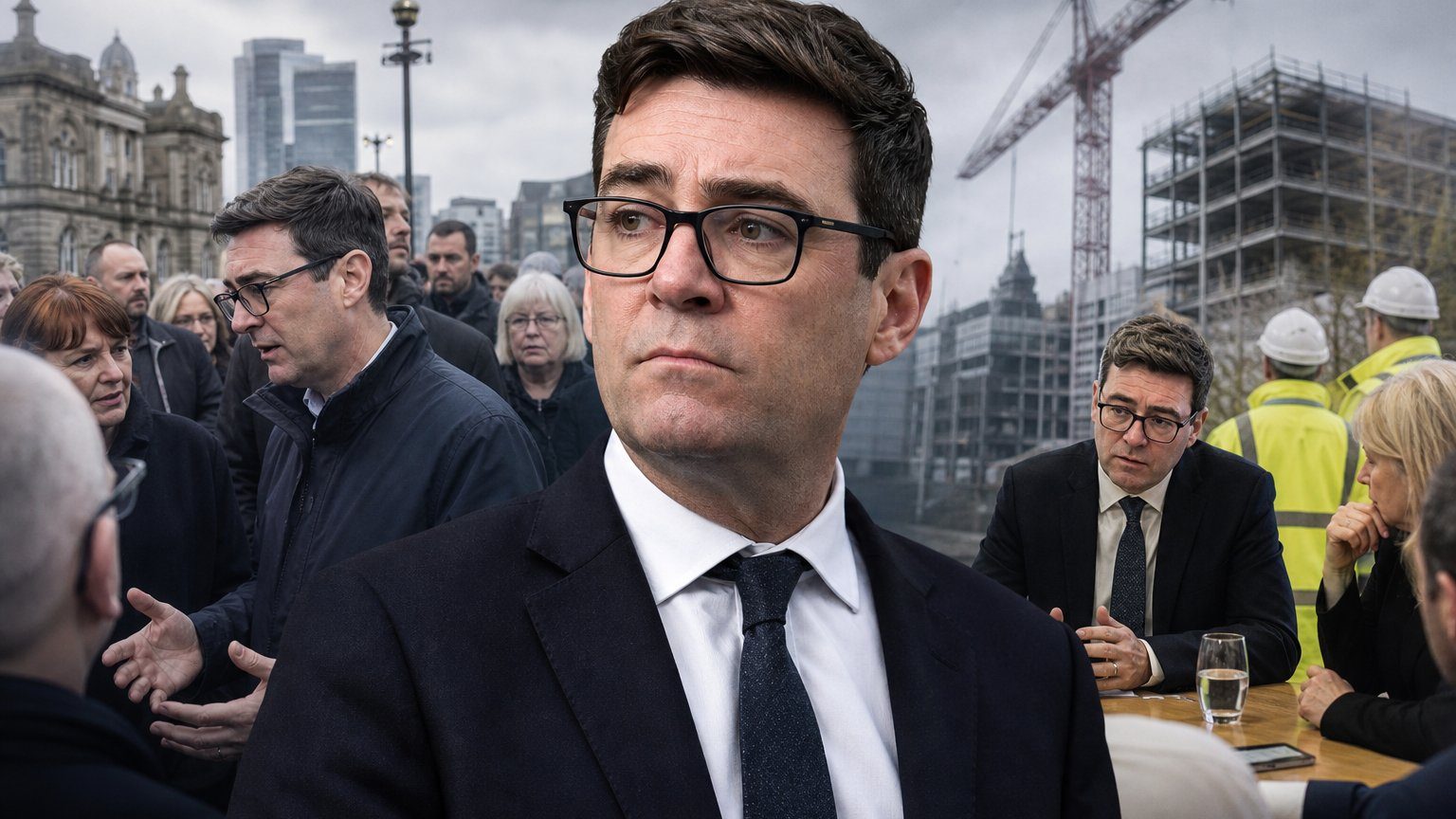
Andy Burnham’s first week in power has brought quick announcements, fresh scrutiny and early questions about how far his plan can go.
Andy Burnham’s first week in power has put the spotlight on the new Burnham administration and on whether it can turn bold talk into real change. The new prime minister has moved quickly from Manchester, where his government is setting up a new base, while trying to convince voters that he is already delivering on a different kind of politics.
That push has come with a stream of early announcements, including business rates in England, bus fares in England and a VAT cut on electricity bills. Burnham has also brought together what Angela Rayner called a “pride of mayors” for a meeting of the National Economic Council at No 10 North in Manchester. Burnham says that move marks the start of “the biggest rebalancing of power our country has seen,” and promises “the biggest changes in the last 40 years,” though he says his full 10-year plan for Britain will come later.
For now, the early signs suggest a government trying to look decisive while it gets organized. Burnham has already changed parts of how No 10 operates, including the creation of the Office of Prime Minister, and he has made plain that authority is flowing through him. He said on Friday that being at No 10 North with Chancellor John Healey and First Secretary of State Lou Haigh sent a “powerful message” that the “political commitment is there.”
“Andy Burnham’s first week in power has brought quick announcements, fresh scrutiny and early questions about how far his plan can go.”
Opposition figures are adjusting to the new reality. Conservative leader Kemi Badenoch used a rooftop appearance in London to question whether Burnham’s offer is more style than substance. She mocked his informal approach, then said his plans looked thin and asked whether he was still acting like the mayor of Manchester rather than the prime minister of the United Kingdom.
But the first week has also exposed the hard choices that come with the job. Burnham has called for a pause on early prisoner release in England and Wales, a move that highlights the pressure created by overcrowded prisons. Abroad, he renewed America’s permission to use British airbases for defensive strikes on Iran, and Tehran has since said those bases are legitimate targets. At the same time, the conflict in the Middle East has helped push oil prices higher again.
The bigger question is whether Burnham can back up his promises on housing, taxes and public spending. He has pledged the biggest council house building programme since the postwar period, but no target has been set. Angela Rayner has also said Labour’s promise to build 1.5 million new homes in England by 2029 looks like “a difficult target.” With talk now turning to whether Burnham might seek a fresh general election sooner rather than later, the next phase will show whether this first week of the Burnham administration was a statement of intent or the easy part. The takeaway is simple: the first test of any new government is not the headline, but whether it can make the numbers, the promises and the politics line up.
Frequently asked questions
What kinds of early announcements has Burnham made in his first week?
He has announced changes to business rates in England, bus fares in England, and a VAT cut on electricity bills.
What was the significance of the meeting at No 10 North in Manchester?
Burnham brought together a “pride of mayors” for a National Economic Council meeting there. He says it marks the start of a major rebalancing of power.
What criticisms is Burnham already facing?
Conservative leader Kemi Badenoch questioned whether his approach is more style than substance. She also said his plans looked thin and suggested he was still acting like the mayor of Manchester.
What major policy challenges does the article say Burnham now faces?
The article points to pressures over prisons, Iran and British airbases, rising oil prices, housing, taxes, and public spending. It also says no target has been set for his promised council house building programme.
We value your privacy 🍪We use cookies for essential features and, if you allow it, to send you a notification whenever we publish a new story. See our Privacy Policy.
📨
Never Miss a Story
Get the headlines that matter delivered straight to your inbox.
📱 On iPhone: tap the Share icon, choose “Add to Home Screen”, then open TheTrueDefender from your Home Screen and tap 🔔 to turn on notifications. (Apple only allows notifications for saved web apps.)
📱 Add TheTrueDefender to your home screen for one-tap access.