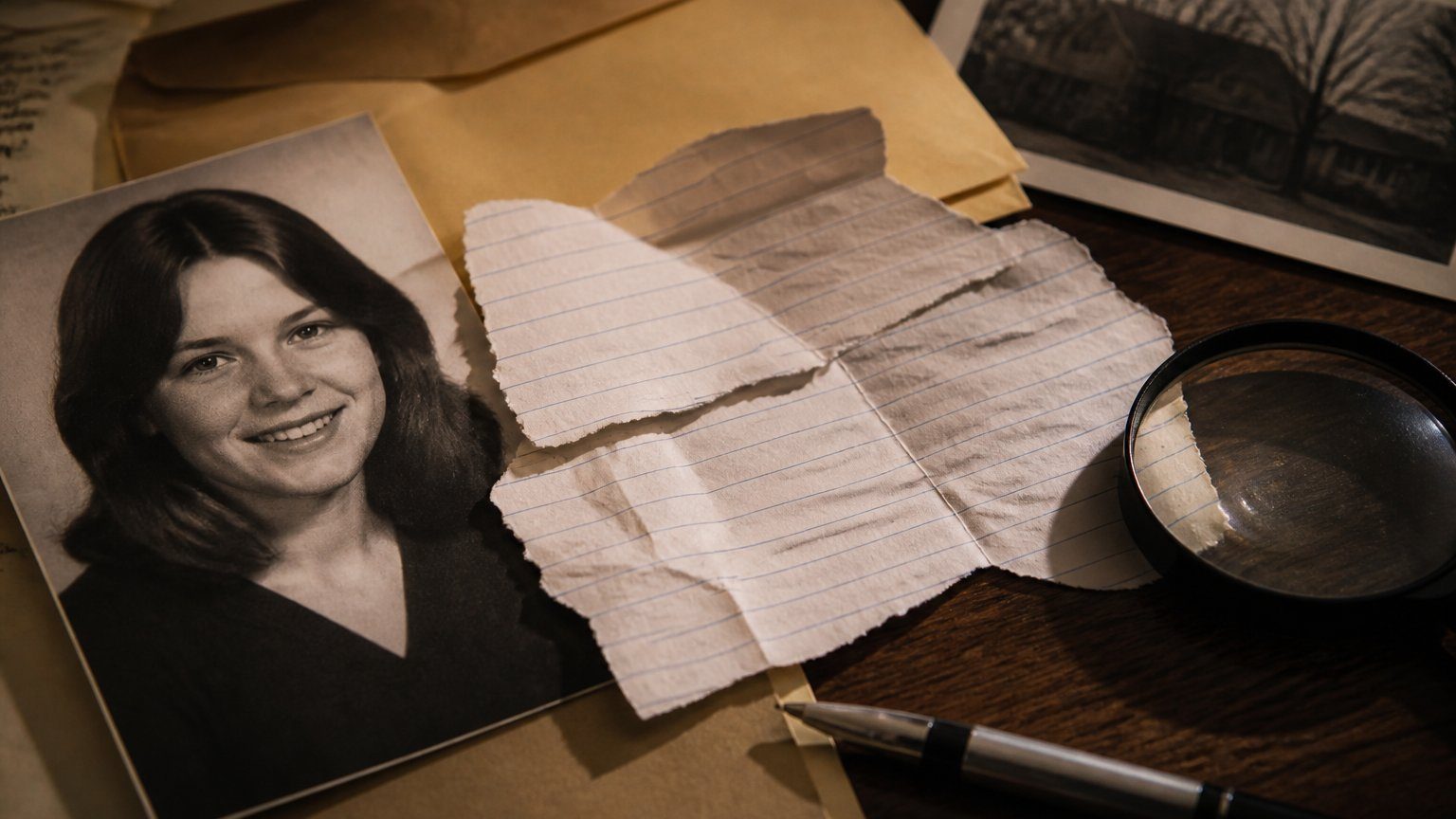
Arizona police released ransom notes in the Nancy Guthrie case, hoping distinctive wording may help identify the people who abducted her.
Arizona police are asking the public to study the ransom notes tied to the Nancy Guthrie case, hoping the language may help identify the people who abducted the 84-year-old mother of Savannah Guthrie. The notes were released on Friday, six months after Nancy Guthrie was taken from her Arizona home, as investigators continue to search for answers in a case that has produced few clear leads.
One of the notes, which authorities are treating as apparently credible, demanded millions of dollars in Bitcoin. A second note said Guthrie had died shortly after she was taken. Police have not verified that claim, but they believe the wording may still help investigators narrow the field. Pima County Sheriff Chris Nanos said there are details in the messages that may stand out to someone familiar with the writer.
That is where forensic linguistics comes in. William Eggington, a retired Brigham Young University professor who now works as a forensic consultant, said people often have an individual language pattern, sometimes called a word print, that can show up in even short messages. But he also cautioned that investigators must be careful when drawing conclusions from such limited text, especially if the writer was trying to hide a natural voice.
The first note, sent to a local television station on February 2, opened with a direct message to Savannah Guthrie and said her mother was safe but frightened. It also said she would be held for ransom and released after payment. Eggington said the note’s heavy use of passive voice and its if-then structure may suggest at least a high-school education and possibly some university exposure. He also pointed to a spelling inconsistency in the word “received,” which was first spelled correctly and later misspelled, as a possible sign of an uncareful edit or uncertain command of the word.
“Arizona police released ransom notes in the Nancy Guthrie case, hoping distinctive wording may help identify the people who abducted her.”
A second note arrived four days later and took a different tone. Addressed to the Guthrie family, it said the writer had not fully understood Nancy Guthrie’s condition and never intended to hurt her. It then claimed she died shortly after being taken and was “buried in nature.” Eggington said the passage tries to distance the writer from responsibility while also dehumanizing Guthrie by referring to her in the third person and shifting blame for her death.
Eggington also said the same person likely wrote both ransom notes, citing repeated habits in the text, including the use of commas where full stops would normally separate complete thoughts. He said investigators can use those kinds of small details to build a profile and later compare the notes with writing from potential suspects. If police get a possible match, they can then check whether known writings line up with the language in the notes.
Even so, some experts see the path to an arrest as uncertain after so much time has passed. Jeffrey Adler, who teaches the history of American crime and violence at the University of Florida, said it seems like a long shot that the suspect will be identified from the notes alone. He noted that kidnapping is rare and that many such cases involve family custody disputes rather than outside abductors. He also pointed to famous ransom cases from American history, including the Lindbergh baby kidnapping and the abduction of Frank Sinatra’s son, where money was the central motive.
The approach has worked before in another famous case: when authorities published Theodore Kaczynski’s manifesto in 1996, his brother recognized the writing and alerted investigators. For the Guthrie family, police said they spoke with relatives before making the notes public. Soon after, Savannah Guthrie urged anyone who recognized the writing to come forward. For Americans watching the case, the real significance is simple: even in a case with few physical leads, one person’s writing style could still point police toward the truth.
Frequently asked questions
Why did police release the ransom notes?
Investigators hope the wording and writing habits will help identify the person or people behind Nancy Guthrie’s abduction.
What did the first ransom note say?
It told Savannah Guthrie her mother was safe but scared, demanded Bitcoin, and said she would be released after payment.
What did the second note claim?
It said the writer had not understood Guthrie’s condition, claimed she died shortly after being taken, and said she was buried in nature.
Why do experts think the notes could help?
A forensic consultant said people often have identifiable language patterns, and repeated writing habits may be compared with known samples.
We value your privacy 🍪We use cookies for essential features and, if you allow it, to send you a notification whenever we publish a new story. See our Privacy Policy.
📨
Never Miss a Story
Get the headlines that matter delivered straight to your inbox.
📱 On iPhone: tap the Share icon, choose “Add to Home Screen”, then open TheTrueDefender from your Home Screen and tap 🔔 to turn on notifications. (Apple only allows notifications for saved web apps.)
📱 Add TheTrueDefender to your home screen for one-tap access.