Australia’s fire strategy is drawing attention as Europe battles record wildfires, with officials combining satellites, drones and Indigenous knowledge.
Australia’s fire strategy is drawing fresh attention as Europe endures severe wildfires, with Australian experts pointing to a blend of modern technology and Indigenous knowledge as a model for spotting danger earlier and reducing risk. The approach centers on Australia’s fire strategy as a way to move from reacting to blazes after they start to anticipating them before they spread.
Professor Marta Yebra, a bushfire expert based in Canberra, has spent years studying how Australia can better prepare for fires in some of the world’s most fire-prone landscapes. She leads the Bushfire Research Centre of Excellence, created after the Black Summer fires of 2019-20, when Australia’s worst fire season on record burned an area roughly the size of the UK. Her team uses satellites, drones and artificial intelligence to improve fire detection, while also relying on the judgment of experienced firefighters.
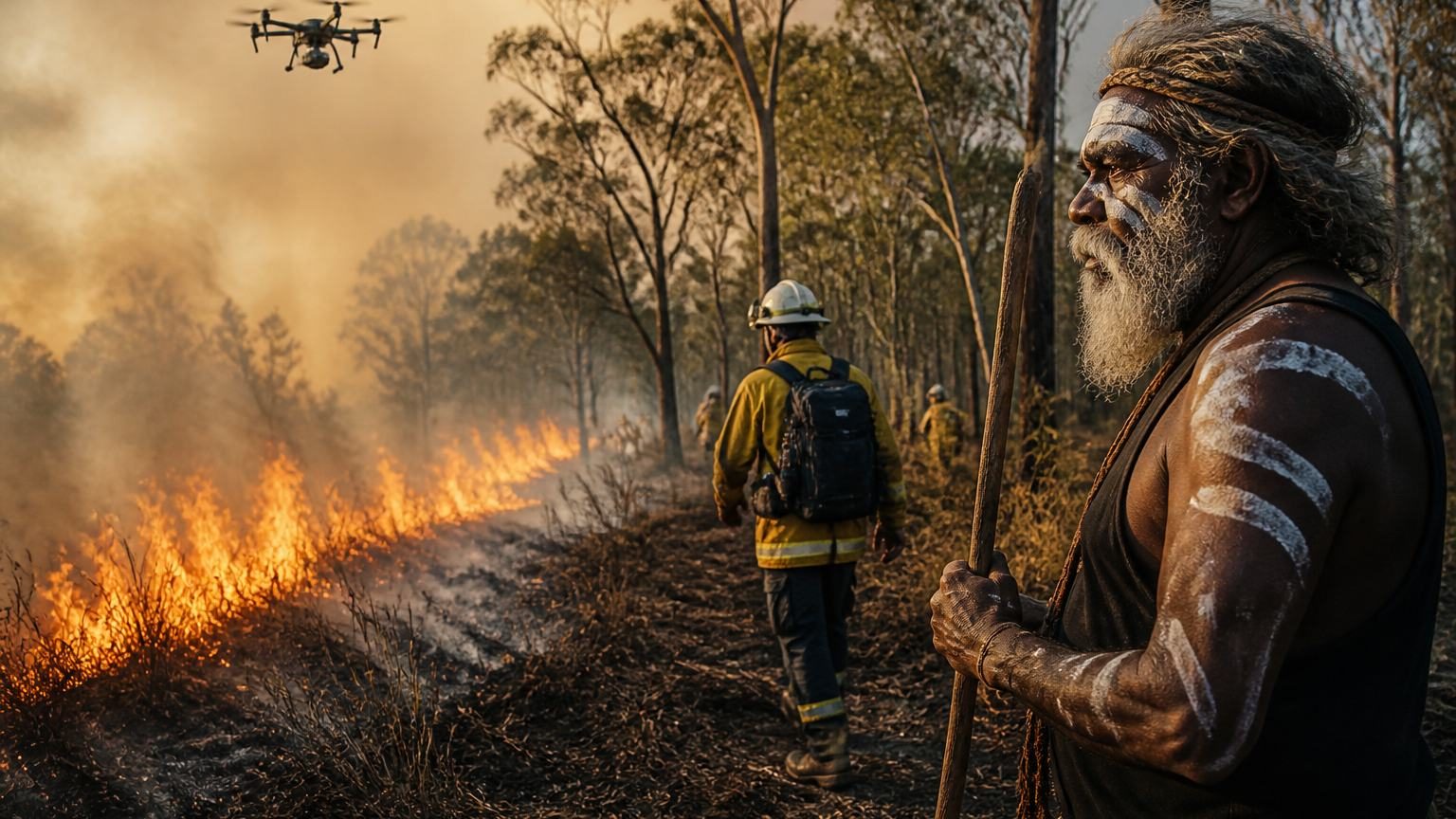
Yebra’s work has also focused on combining satellite imagery with the knowledge held by Indigenous communities, whose relationship with fire stretches back thousands of years. In one project, satellite readings that track moisture in vegetation are matched with observations from Indigenous experts who read the land through signs such as plant color, scent and tree cover. One of those experts, Webster, says the data only became useful when it was translated into conditions on the ground. Yebra said there was remarkable agreement between his assessments and the satellite results.
That collaboration reflects a broader lesson from Australia’s bushfire history: technology can help, but it does not replace lived experience. Webster describes the land as something that must be understood below the surface as well as above the canopy. He says the aim is to let the planet have a voice again, while Yebra’s team is now seeking more funding and working toward co-designed plans with Indigenous communities to protect land and manage fires.
“Australia’s fire strategy is drawing attention as Europe battles record wildfires, with officials combining satellites, drones and Indigenous knowledge.”
Australia also uses fire itself as a preventive tool. Cultural burning, a practice rooted in Indigenous tradition, uses small, controlled “cool fires” to create a patchier landscape and reduce the buildup of fuel. Yebra said Europe does not have the same cultural framework for landscape planning, even as wildfire scientists in Spain blame heavy fuel buildup for the current crisis there. She said climate change is making extreme fire weather more frequent across southern Europe, and that Europe could learn from Australia’s long experience with high-intensity bushfires.
That experience includes prescribed burns, also called hazard reduction burns, which are planned during cooler months and increasingly used in parts of Europe. Fire and Rescue NSW superintendent Andrew Shurety said the tactic is especially important on the urban fringes, where suburbs are spreading closer to bushland. He said longer fire seasons and more rain during the cooler months have narrowed the window for doing this work. Another familiar Australian method, backburning, is also being adopted more widely overseas after firefighters from Queensland used it in Alberta, Canada, where it was not previously common.
Technology is changing the response on the ground as well. Trent Curtin of the Rural Fire Service in New South Wales said drones now give crews fast intelligence on where a fire is moving before larger aircraft arrive. They can also help carry gear, assist in backburning operations and assess damage after fires. The result is a faster and more flexible response, especially when conditions are shifting quickly.
The warning signs are already there for Australia’s next fire season. Forecasters are predicting a strong El Nino, which could raise the chances of extreme heat, drought and bushfires. Jason Heffernan, chief officer of the Country Fire Authority in Victoria, said his state is bracing for something significant, with memories of the deadly Black Saturday fires still fresh. He also said local seasons are starting earlier and lasting longer, and that no fire service can handle the threat alone without trusted national and international networks. That is why France’s first-ever request for help from Australian firefighters this week stands out. For Americans watching from afar, the lesson is plain: the best defense against wildfires is to get ahead of them before the flames do the talking.
Frequently asked questions
How does Australia combine technology with Indigenous knowledge to assess fire risk?
Researchers match satellite data, such as vegetation moisture readings, with Indigenous observations of plant color, scent and tree cover. In one project, the satellite results and on-the-ground assessments showed remarkable agreement.
What is cultural burning and why is it used?
Cultural burning is an Indigenous practice that uses small, controlled cool fires. It helps create a patchier landscape and reduces the buildup of fuel that can feed bigger fires.
How are drones being used in Australian firefighting?
Drones give crews fast intelligence on where a fire is moving before larger aircraft arrive. They can also carry gear, assist in backburning, and help assess damage after fires.
Why are Australian fire officials worried about the upcoming season?
Forecasters are predicting a strong El Niño, which could increase the risk of extreme heat, drought and bushfires. Officials also say fire seasons are starting earlier and lasting longer.
We value your privacy 🍪We use cookies for essential features and, if you allow it, to send you a notification whenever we publish a new story. See our Privacy Policy.
📨
Never Miss a Story
Get the headlines that matter delivered straight to your inbox.
📱 On iPhone: tap the Share icon, choose “Add to Home Screen”, then open TheTrueDefender from your Home Screen and tap 🔔 to turn on notifications. (Apple only allows notifications for saved web apps.)
📱 Add TheTrueDefender to your home screen for one-tap access.