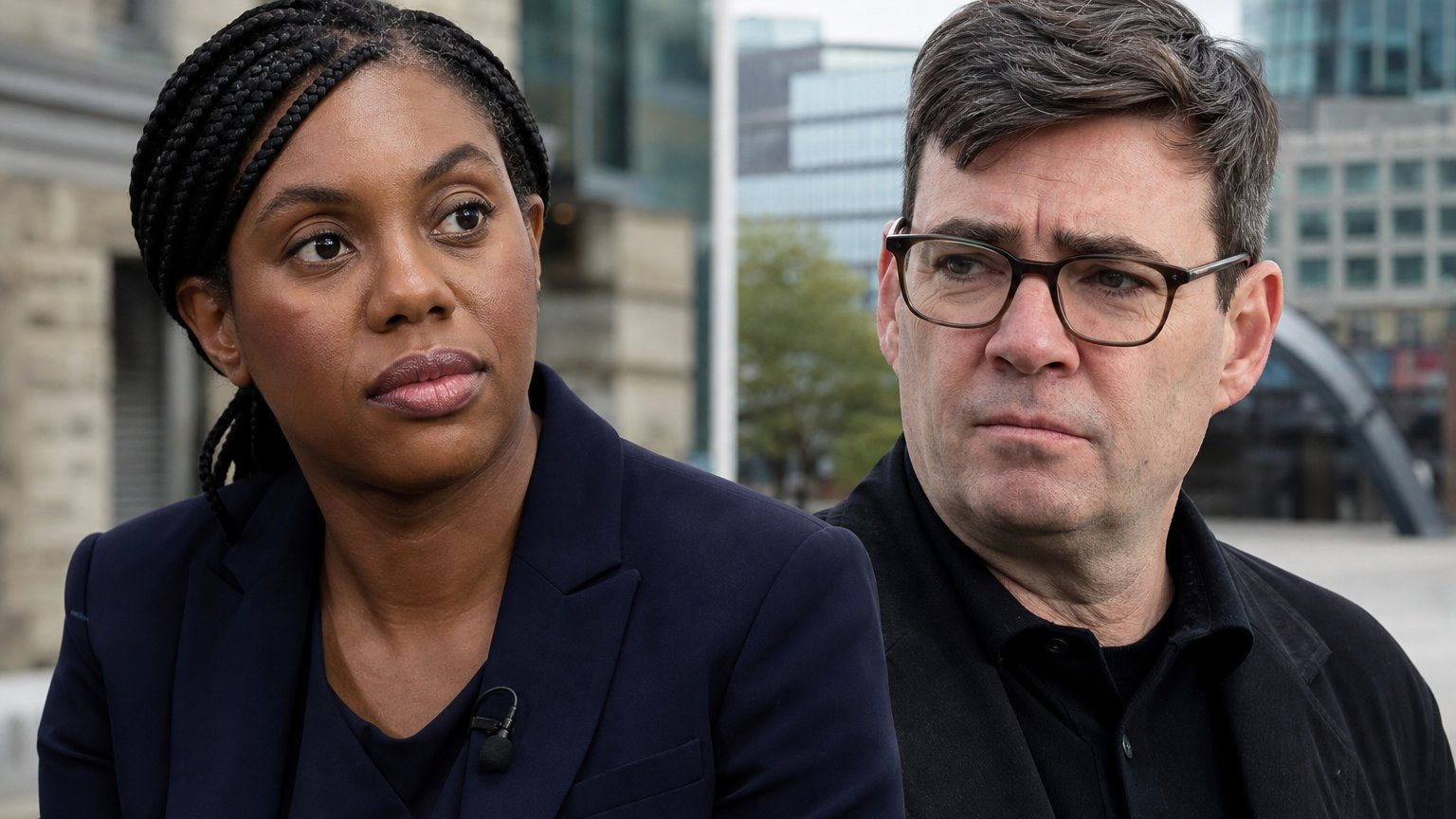
Kemi Badenoch says Andy Burnham’s early plans, including the bus fare cap and energy VAT cut, need a clearer funding plan.
Kemi Badenoch has accused Andy Burnham of acting more like a city mayor than a prime minister as the row over his early budget plans intensifies. The Conservative leader said Burnham had launched a flurry of promises in his first days in office without clearly showing how the measures would be paid for.
At the center of the dispute are a set of early policies that include restoring a £2 cap on bus fares in England and cutting VAT on household electricity bills. Burnham has also announced plans to reduce business rates for pubs and live music venues and to find more accommodation for rough sleepers. The government says the proposals, which it puts at about £1.8 billion in total, will be covered through savings, shifts in existing spending and future tax rises on what it described as “anti-social businesses.”
Badenoch challenged that explanation during a speech in London on Thursday. She urged Burnham to spell out where the savings would come from and to rule out tax increases at the autumn Budget. She also criticized him for floating other ideas, including free-at-the-point-of-use social care, a major expansion in council house building and a higher tax-free personal allowance.
“He doesn’t actually know what he wants to do, he is thinking out loud,” Badenoch said. “All that we know is it’s going to cost a lot of money.” She argued that Burnham’s ambitions were too narrow and called on him to focus on wider responsibilities, including defense spending and lower energy costs for businesses.
“Kemi Badenoch says Andy Burnham’s early plans, including the bus fare cap and energy VAT cut, need a clearer funding plan.”
Burnham, who held his first cabinet meeting on Tuesday, told ministers that the government needed to be a cost-of-living administration and said his early moves were meant to give people “breathing space.” Labour has defended the announcements and said he was bringing back hope after what it described as the Conservative Party’s damage to Britain.
The political clash also reflects Burnham’s background in Greater Manchester, where he became the first elected mayor in 2017. He has pointed to that experience as a model for his approach in Downing Street, including his decision to keep the £2 bus fare cap in place after the Starmer government raised the England-wide limit to £3 at the start of last year. He has also cited Greater Manchester’s franchised bus system as a possible template for managing water and energy more tightly.
That local record is now being used against him by the opposition. Badenoch said the powers of a city mayor are not the same as leading the country, stressing that Manchester’s mayoralty comes with a large central-government-funded budget and only limited tax powers. She said Burnham should “lift his sights” and act like a national leader rather than someone managing one region.
The debate lands as Burnham prepares to set out more of his economic agenda, including a promised 10-year plan later this year. It also comes as regional control remains a live issue in British politics, with plans already discussed to give city-regions more say over housing, transport and, in some cases, local tax revenues. For American readers, the fight shows how quickly big promises meet hard questions about funding, and why voters on both sides of the Atlantic watch not just what politicians promise, but how they say they will pay for it.
Frequently asked questions
What policies are at the center of the row over Burnham’s early budget plans?
They include restoring a £2 cap on bus fares in England, cutting VAT on household electricity bills, reducing business rates for pubs and live music venues, and finding more accommodation for rough sleepers.
How does the government say these proposals will be paid for?
It says the measures, which it puts at about £1.8 billion in total, will be covered through savings, shifts in existing spending, and future tax rises on what it called “anti-social businesses.”
What did Badenoch say Burnham should do instead?
She urged him to explain where the savings would come from, rule out tax increases at the autumn Budget, and focus on national issues such as defense spending and lower energy costs for businesses.
Why is Burnham’s background as Greater Manchester mayor being mentioned?
He has pointed to that experience as a model for his approach in Downing Street, but Badenoch argues a city mayor’s powers and budget are not the same as leading the country.
We value your privacy 🍪We use cookies for essential features and, if you allow it, to send you a notification whenever we publish a new story. See our Privacy Policy.
📨
Never Miss a Story
Get the headlines that matter delivered straight to your inbox.
📱 On iPhone: tap the Share icon, choose “Add to Home Screen”, then open TheTrueDefender from your Home Screen and tap 🔔 to turn on notifications. (Apple only allows notifications for saved web apps.)
📱 Add TheTrueDefender to your home screen for one-tap access.