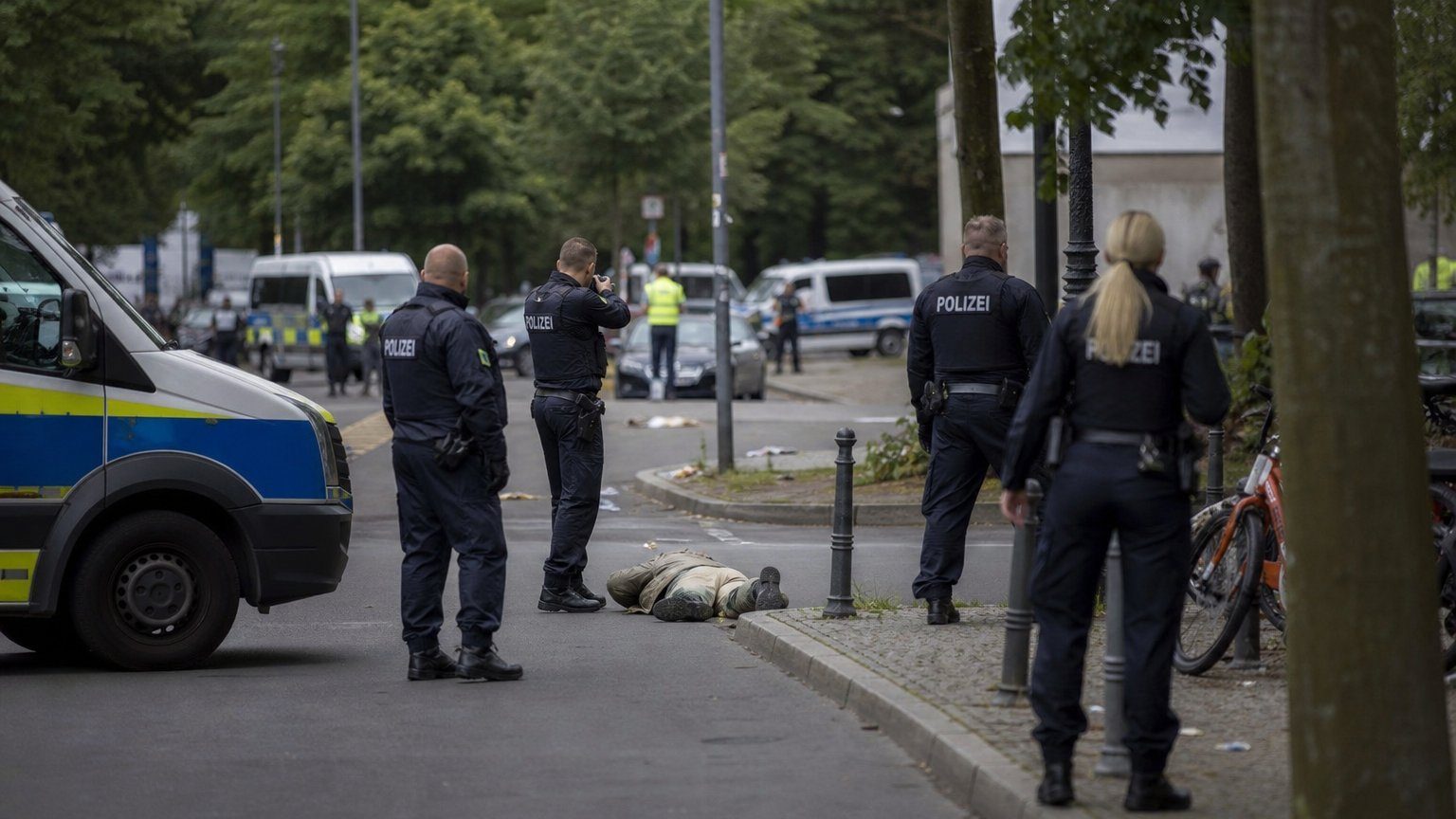
Berlin Pride attack suspect Abdul Ballout was shot dead in Spandau after police say he charged officers with a knife during a manhunt.
The Berlin Pride attack suspect was shot dead by police in Spandau after officers say Abdul Ballout rushed at them with a knife, bringing a tense manhunt to an abrupt close. Police had been searching for the 21-year-old German citizen with Lebanese heritage after a white van was driven into a crowd near Tiergarten park on Saturday evening, an assault that killed one woman and injured at least 29 others.
Authorities say the van ramming was followed by a stabbing attack that left several more people hurt. On Sunday, German Interior Minister Alexander Dobrindt said the evidence pointed to what he described as an Islamist terror attack. He said the suspected attacker had previously drawn attention for a high number of criminal offences, radicalisation, and ties to the Islamist scene.
Berlin prosecutors later outlined a history that had already put Ballout on the radar of German and Lebanese authorities. In May 2025, prosecutors said he travelled through Turkey to Lebanon with the aim of joining the Islamic State group in Syria. While in Lebanon, he allegedly made contact with people he believed were members of the group. He was arrested there in July 2025 and given a three-month sentence for incitement to religious and sectarian conflict.
Ballout was then back in Germany by November 2025, when he was arrested at Berlin Brandenburg Airport and held in pre-trial detention. In May this year, he was sentenced to one year and 10 months in prison for preparing a serious act of violence endangering the state. That ruling was deferred for six months, and he was placed under the supervision of a parole officer. Prosecutors also said he had earlier convictions for assault and robbery in 2022, and for robbing a victim of headphones in 2020.
“Berlin Pride attack suspect Abdul Ballout was shot dead in Spandau after police say he charged officers with a knife during a manhunt.”
The attack landed amid one of Berlin’s biggest annual public gatherings, turning Christopher Street Day into a scene of alarm and grief. The event draws hundreds of thousands to the city streets and marks the first known uprising among LGBT people in New York City in 1969 at the Stonewall Inn on Christopher Street. Berlin police said people were struck on Ahornsteig street, a long path through Tiergarten park in a largely wooded area.
By Sunday, German media reported that those injured were no longer in life-threatening condition. Still, the response was immediate and wide-ranging. Authorities cancelled a cleanup event planned for Tiergarten park and a breakfast market set for Sunday morning. Later, some members of the LGBT community gathered at the Brandenburg Gate for an unscheduled vigil.
At that gathering, speakers condemned extremism in all its forms and also criticized the government, pointing to recent budget cuts for queer organizations. German Chancellor Friedrich Merz visited the scene in Tiergarten park and later said at a church service for the victims that Germany would defend the freedom and openness of its life. He said extremists had no place in society and vowed the country would not let the poison of terrorism take root. The Berlin Pride attack now raises fresh questions about security at major public events, especially in a country already tightening its threat response. For Americans, the takeaway is simple: crowded civic celebrations remain vulnerable, and public safety planning matters when extremists target open societies.
Frequently asked questions
What happened to the Berlin Pride attack suspect?
Police shot and killed Abdul Ballout in Spandau after officers said he rushed at them with a knife.
How many people were killed or injured in the attack?
The van attack killed one woman and injured at least 29 others. The article also says a stabbing attack followed and left several more people hurt.
Why did German officials think this was an Islamist terror attack?
Interior Minister Alexander Dobrindt said the evidence pointed to an Islamist terror attack and said the suspect had shown radicalisation and ties to the Islamist scene.
What was Ballout’s background before the attack?
Prosecutors said he had traveled through Turkey to Lebanon in 2025, was arrested there for incitement to religious and sectarian conflict, and later faced German charges for preparing a serious violent act. He also had earlier convictions for assault and robbery.
We value your privacy 🍪We use cookies for essential features and, if you allow it, to send you a notification whenever we publish a new story. See our Privacy Policy.
📨
Never Miss a Story
Get the headlines that matter delivered straight to your inbox.
📱 On iPhone: tap the Share icon, choose “Add to Home Screen”, then open TheTrueDefender from your Home Screen and tap 🔔 to turn on notifications. (Apple only allows notifications for saved web apps.)
📱 Add TheTrueDefender to your home screen for one-tap access.