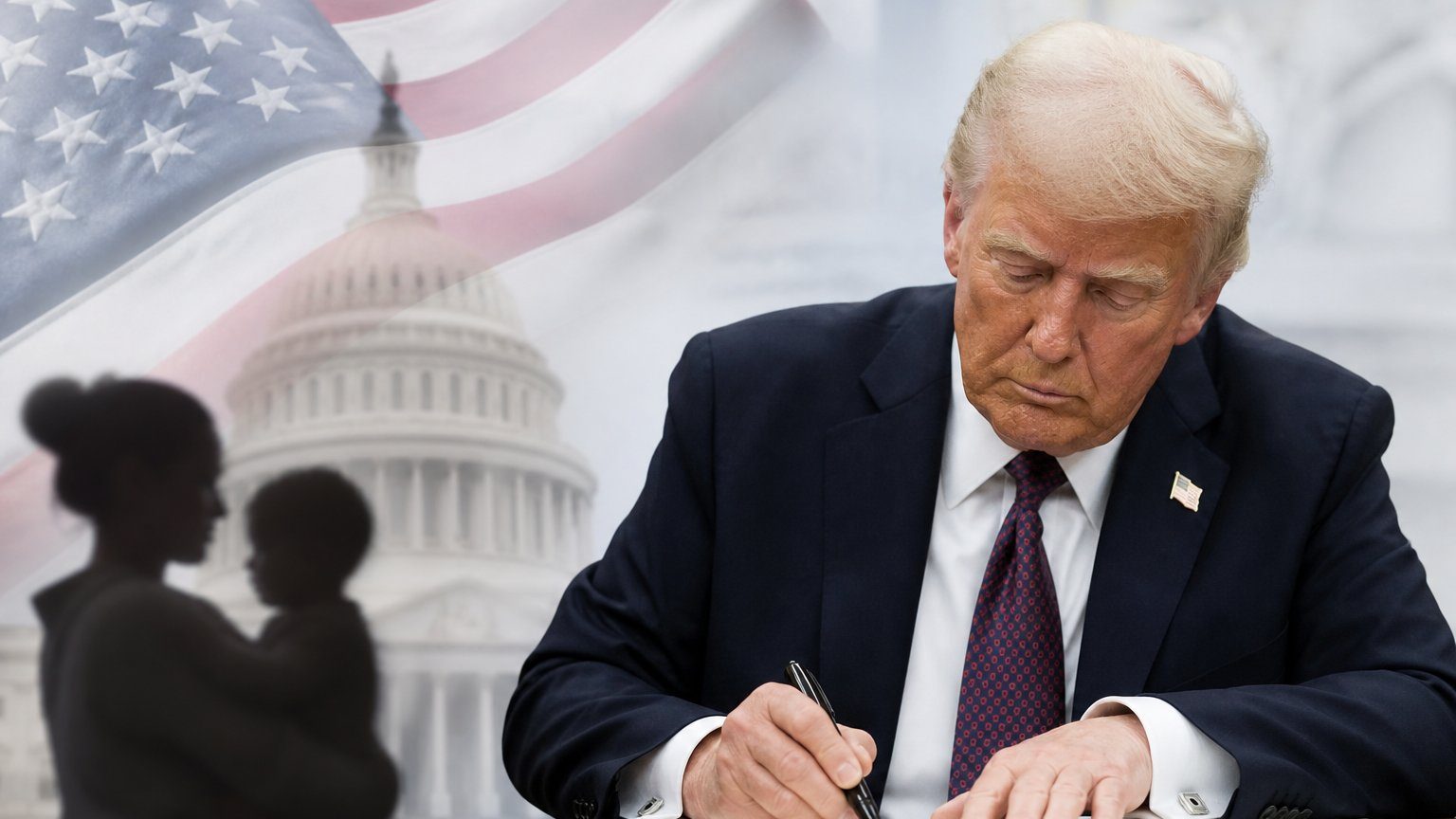
Trump has signed new orders aimed at birthright citizenship and birth tourism, reviving a fight that the Supreme Court already rejected once.
Birthright citizenship is back at the center of a major legal fight after President Donald Trump signed new orders targeting birthright citizenship and birth tourism in the United States. The moves are part of a fresh effort to narrow access to citizenship after the Supreme Court rejected his first attempt in June.
One order seeks to broaden the categories of non-citizen parents whose children would not receive automatic citizenship at birth. Under the directive, babies born in the United States to two non-citizen parents would not automatically qualify if one parent is linked to a foreign terrorist group, works for a foreign government, tried to obtain citizenship through fraud, or lives in a U.S. territory where federal law does not grant citizenship. Some of those groups are already excluded under current rules, but the foreign terrorist group provision could raise questions about how membership would be determined and who would carry the burden of proof.
Colleen Putzel-Kavanaugh, an associate policy analyst at the Migration Policy Institute, said it is unclear how such membership would be established and whether the government or the individual would have to prove the claim. That uncertainty goes to the heart of the new order’s legal vulnerability. The administration is trying to redraw the lines around birthright citizenship, but the practical question remains how those lines would be enforced.
The second executive order targets birth tourism, which refers to foreign nationals traveling to the U.S. specifically to give birth so their child can receive citizenship. Trump directed the State Department and the Department of Homeland Security to tighten regulations and step up enforcement against the practice. The order says operators in the industry use deceptive advertising to lure foreign nationals with promises of citizenship, access to public benefits, and short stays in specialized facilities, hotels, or rentals.
The administration’s position is that birth tourism exploits a legal system built around a very different era. Trump has long argued that automatic citizenship has opened the door to abuse and that the United States should stop rewarding people who arrive only to secure citizenship for a newborn. The issue became a central part of the administration’s legal argument when the case reached the Supreme Court in April.
“Trump has signed new orders aimed at birthright citizenship and birth tourism, reviving a fight that the Supreme Court already rejected once.”
During that earlier fight, Solicitor General D. John Sauer told the justices that birth tourism has helped create a generation of American citizens abroad with little connection to the country. Chief Justice John Roberts challenged that line of reasoning, asking whether birth tourism had any bearing on the legal analysis before the court. Roberts and the majority ultimately rejected the administration’s reading of the Constitution, saying the Constitution was the same even if the world had changed.
Birthright citizenship, or jus soli, is rooted in the 14th Amendment. It was originally tied to the post-Civil War goal of granting citizenship to American-born formerly enslaved people. Today, nearly everyone born on U.S. soil receives citizenship, with limited exceptions for children of foreign diplomats, enemy soldiers during a hostile occupation, and some births in unincorporated territories where federal law does not grant citizenship. Puerto Rico, Guam, and the U.S. Virgin Islands grant automatic citizenship, while American Samoa does not.
Trump said Thursday that hundreds of thousands of babies have been born through birth tourism in the United States, but he did not present evidence or say whether he meant annually. Official data does not track women arriving on tourist visas specifically to give birth. The most recent CDC estimate shows just over 9,500 babies were born to foreign women in the U.S. in 2024, out of 3.7 million total births. The Migration Policy Institute puts the number higher, estimating 20,000 to 26,000 births a year tied to birth tourism, though it says exact counts are difficult because intent is hard to measure.
Trump has also argued that the United States is among the few major countries with birthright citizenship. In fact, more than 30 countries grant automatic citizenship in almost all cases, including Brazil, Argentina and Mexico. The U.S. and Canada are the only developed countries in the International Monetary Fund’s classification that mostly grant citizenship by birth on their soil. The latest orders show the administration is not backing away from the fight, and Americans should expect another round of legal conflict over who gets to become a citizen at birth.
Frequently asked questions
What do the new executive orders do?
One order expands categories of non-citizen parents whose children would not get automatic citizenship. The other directs federal agencies to tighten enforcement against birth tourism.
What is birth tourism?
Birth tourism is when foreign nationals travel to the United States specifically to give birth so the child can receive U.S. citizenship.
How did the Supreme Court respond before?
The court rejected Trump’s earlier attempt in June. During arguments, the majority did not accept the administration’s interpretation of the Constitution.
How common is birth tourism?
CDC data shows just over 9,500 babies were born to foreign women in the U.S. in 2024, while the Migration Policy Institute estimates 20,000 to 26,000 birth-tourism births a year.
We value your privacy 🍪We use cookies for essential features and, if you allow it, to send you a notification whenever we publish a new story. See our Privacy Policy.
📨
Never Miss a Story
Get the headlines that matter delivered straight to your inbox.
📱 On iPhone: tap the Share icon, choose “Add to Home Screen”, then open TheTrueDefender from your Home Screen and tap 🔔 to turn on notifications. (Apple only allows notifications for saved web apps.)
🔔
Never miss a breaking storyGet free alerts the moment big US news breaks.
1Tap the ••• menu at the bottom of the screen, then tap Share(in Safari, just tap Share in the bottom bar directly)2Scroll down the menu and tap Add to Home Screen3Tap Add in the top-right corner4Open TheTrueDefender from your Home Screen, then tap 🔔 Subscribe and choose Allow
📱 Add TheTrueDefender to your home screen for one-tap access.