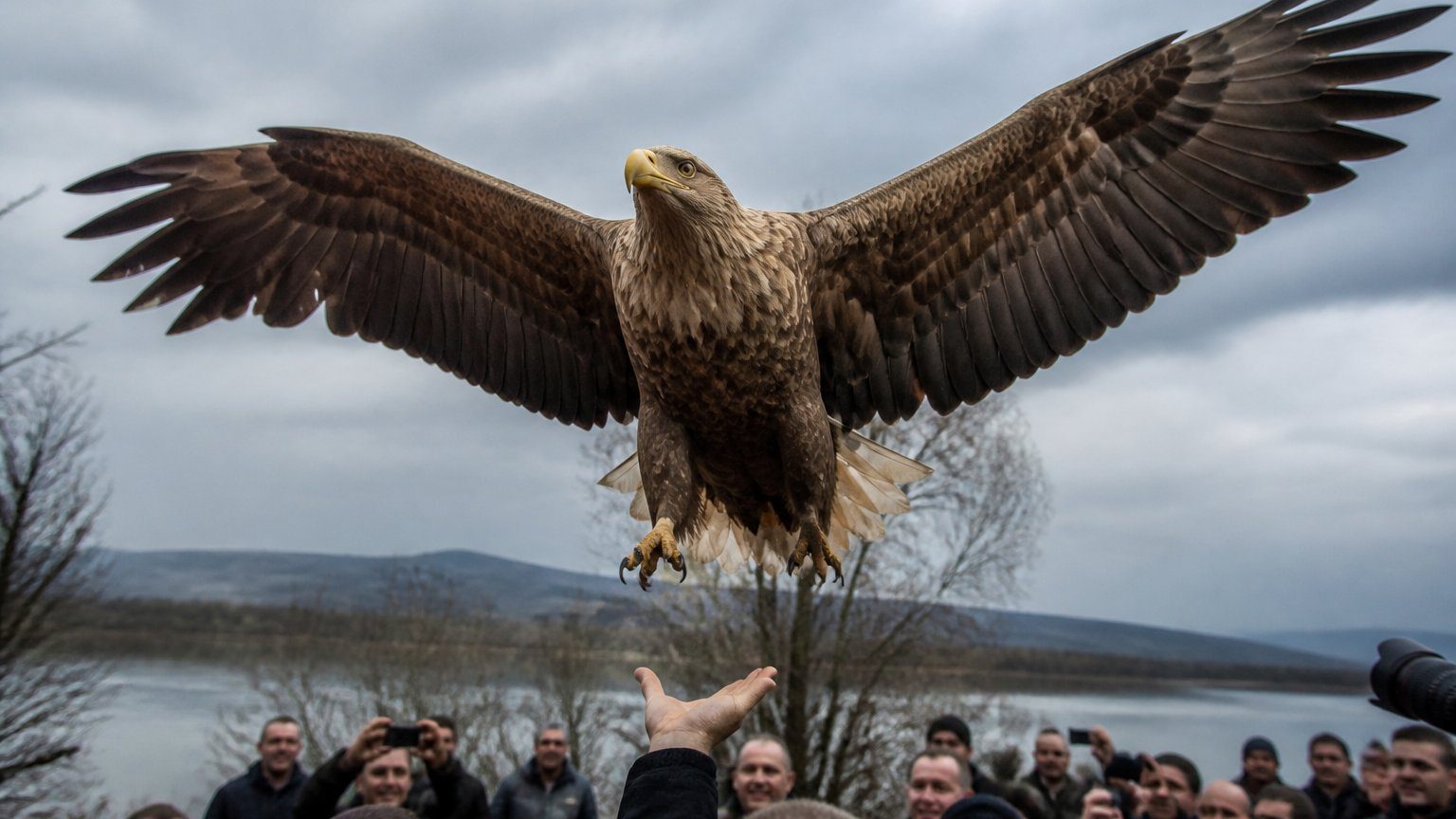
Feliks the eagle was freed in Serbia after months in captivity, ending a trafficking ordeal that began when he left the nest.
Feliks the eagle is back in the wild after a long captivity that began soon after he left the nest in Serbia. The rare eastern imperial eagle was rescued from animal traffickers and released back into the countryside after months of pressure, negotiation, and recovery.
Officials and conservationists said Feliks was caught in Syria by poachers who later demanded a ransom, but that demand was refused. After extended talks, the bird was moved to a wildlife centre in Beirut, Lebanon, where he spent more than half a year recovering before being flown home to Serbia on a military plane. The protected species is critically endangered, making the rescue of Feliks the eagle a notable win for conservation work in the region.
Experts had been tracking the young raptor for conservation purposes in July 2025, just as he first flew the nest and headed toward the Middle East. Uros Stojiljkovic of the Bird Protection and Study Society of Serbia said the team became concerned when the bird’s path carried him toward what he described as an extremely unsafe region. When the tracking signal disappeared in October, the first assumption was that the device had failed.
Instead, investigators and conservation partners concluded that Feliks had been abducted and later offered for sale by poachers. Weeks passed before a partner group in Lebanon alerted the Serbian conservationist that the bird’s captors were seeking payment. Stojiljkovic said the organization refused to pay, arguing that doing so would only fuel the smuggling network that had taken the eagle in the first place.
“Feliks the eagle was freed in Serbia after months in captivity, ending a trafficking ordeal that began when he left the nest.”
According to reporting cited in the case, Feliks was eventually carried across the Nahr al-Kabir river on the border between Syria and Lebanon in a potato sack, with refugees helping move him during the handoff. In June, Serbian peacekeepers returning from Lebanon escorted the bird to Palic Zoo, where he was described by zoo director Sonja Mandić as exhausted after a demanding trip by military plane.
At the zoo shelter, Feliks was monitored daily as he regained his strength. After more than a month of careful care, he was released on Thursday. The Bird Protection and Study Society of Serbia said the hope is that the bird will recover fully, claim a territory, and eventually produce offspring.
The broader story behind the rescue is Serbia’s effort to rebuild a species that had nearly vanished there. Since 2017, conservation work has helped lift the country’s eastern imperial eagle population from one pair to 29 pairs this year, according to the society. That progress gives the release of Feliks the eagle significance beyond one animal: it stands as a test of whether conservation efforts can outpace trafficking and keep a critically endangered bird flying free. For American readers, the case is a reminder that wildlife crime crosses borders and that recovery depends on persistence, cooperation, and enforcement.
Frequently asked questions
What happened to Feliks the eagle?
Feliks was caught by poachers after leaving the nest, then held in captivity before being rescued and released in Serbia.
Where was Feliks kept before returning to Serbia?
He recovered at a wildlife centre in Beirut, Lebanon, for more than half a year before being transported back.
Why did conservationists refuse the ransom demand?
Uros Stojiljkovic said paying would effectively support the smuggling chain that trafficked the bird.
Why does this rescue matter beyond one bird?
The Eastern Imperial Eagle is critically endangered, and Serbia has been trying to rebuild its population through conservation work since 2017.
We value your privacy 🍪We use cookies for essential features and, if you allow it, to send you a notification whenever we publish a new story. See our Privacy Policy.
📨
Never Miss a Story
Get the headlines that matter delivered straight to your inbox.
📱 On iPhone: tap the Share icon, choose “Add to Home Screen”, then open TheTrueDefender from your Home Screen and tap 🔔 to turn on notifications. (Apple only allows notifications for saved web apps.)
🔔
Never miss a breaking storyGet free alerts the moment big US news breaks.
1Tap the ••• menu at the bottom of the screen, then tap Share(in Safari, just tap Share in the bottom bar directly)2Scroll down the menu and tap Add to Home Screen3Tap Add in the top-right corner4Open TheTrueDefender from your Home Screen, then tap 🔔 Subscribe and choose Allow
📱 Add TheTrueDefender to your home screen for one-tap access.