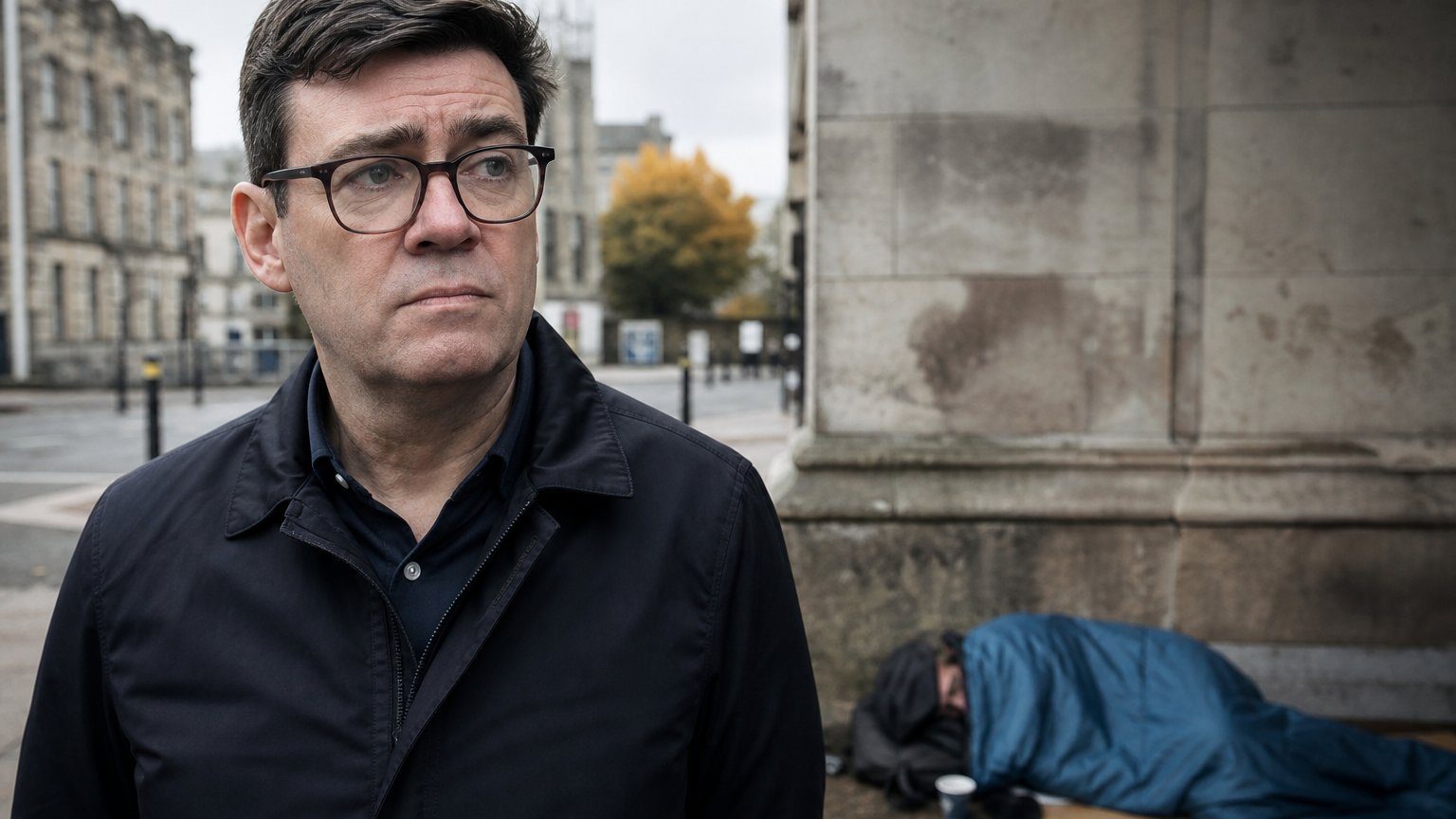
Andy Burnham has made rough sleeping his first pledge as prime minister, unveiling a rough sleeping pledge on his first day in Downing Street and promising to push for an end to long-term street homelessness across the UK. In his first speech, Burnham said the government should be focused on “investing in people’s success rather than paying for failure.”
The government said an extra £340m will be put toward the plan. Officials said the package is expected to deliver 1,200 homes and “intensive support” for at least 3,000 people in England over five years. The first stage is expected to focus on moving people who have been sleeping rough for a long time into secure housing, including through the acquisition of suitable homes.
Burnham reinforced the message in a statement after speaking outside 10 Downing Street. He said the government was committed to “finally end long-term rough sleeping across the UK at the earliest opportunity” and said ministers would work immediately with national and local government to get the policy moving. Housing and homelessness are devolved matters in the UK, meaning Scotland, Wales and Northern Ireland run their own strategies.
The announcement lands against a grim backdrop. The latest annual national statistics, published by the Westminster government in February this year, estimated 4,793 people were sleeping rough on a single night in England in autumn 2025. That was described as a new record high and the fourth annual increase in a row. In Greater Manchester, the figures were 268 in 2017, 149 in 2023 and 154 in autumn 2024, according to the Greater Manchester Combined Authority, with the Manchester Mill reporting that the figure had risen to 197 in 2025.
Burnham’s record on the issue is already under scrutiny. When he became Greater Manchester mayor in 2017, he pledged to end rough sleeping in the area by 2020. The area’s “A Bed Every Night” scheme, which he created and supported with 15% of his salary, now provides more than 600 beds a night for people who might otherwise be on the streets. Greater Manchester also helped pioneer the government’s Housing First scheme, which draws on a Finnish model and treats stable housing as the base for recovery and wider support.