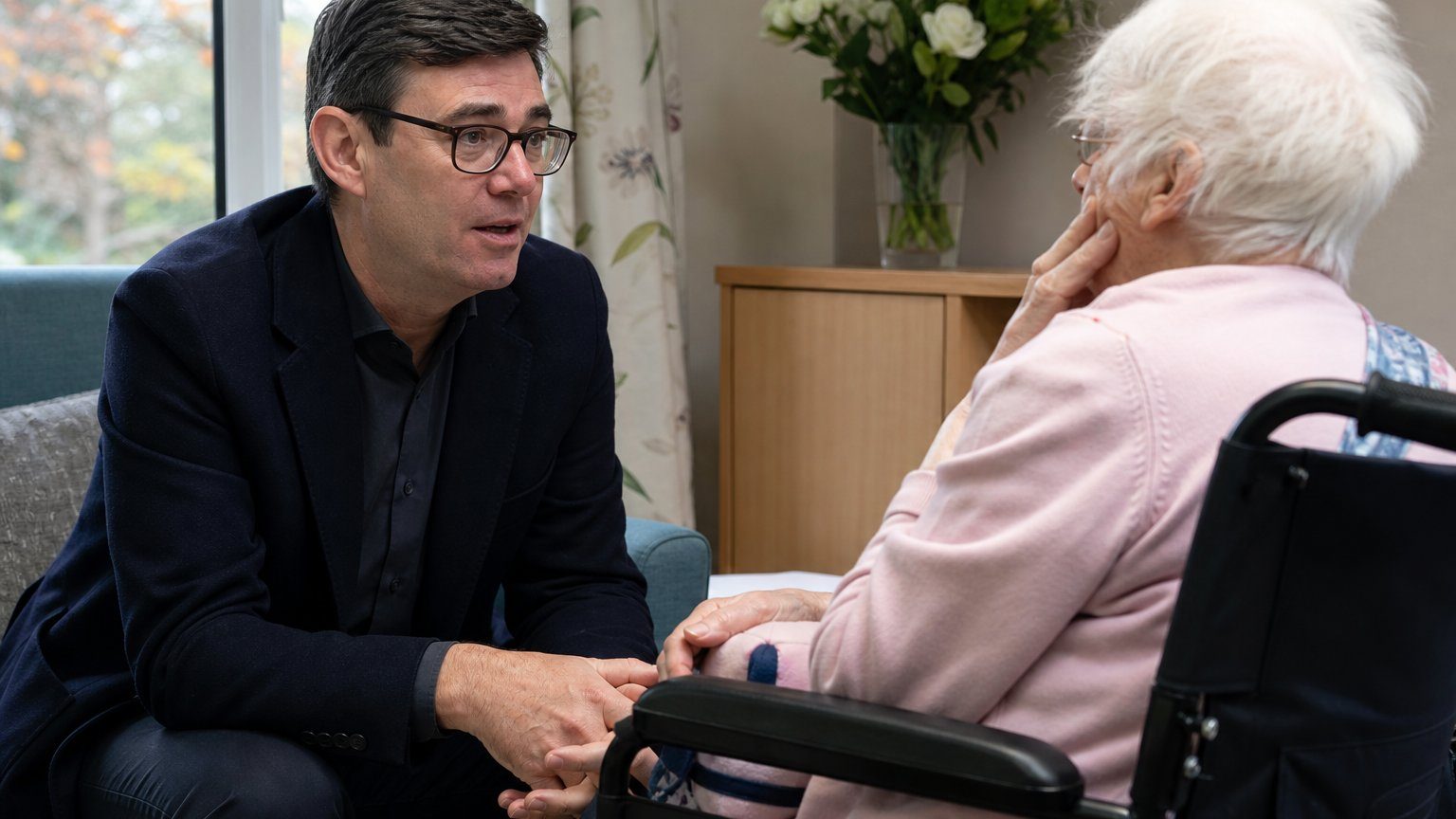
Andy Burnham’s social care push will headline his first week as prime minister, as he pairs it with plans on youth unemployment and devolution.
Andy Burnham’s social care push is set to become one of the defining features of his first week as prime minister, with Downing Street trying to present him as a leader moving quickly on some of Britain’s hardest problems. Next week, Burnham will make a speech on social care, while also setting out positions on youth unemployment and devolution.
No 10 described those three areas as among the country’s most difficult challenges and said they have been left unresolved for too long. A Downing Street source said Burnham is choosing to confront problems that have been neglected, arguing that he wants to give people hope again and show that government can improve daily life when it decides to act. The source added that he is determined to prove difficult issues are not beyond fixing.
The social care push has clear political weight because Burnham has been linked to reform for years. He first put forward the idea of a universal social care system in England in 2009, when he was health secretary under Gordon Brown. Now, as prime minister, he has said he is willing to spend political capital on the issue. That makes the coming speech more than a routine set piece; it is a test of whether Burnham intends to turn an old promise into real policy.
Adult social care in England is already a fraught issue for families. Unlike the NHS, it is not free at the point of use. People with savings above £23,250 are not eligible for help with the cost of care from their local council. That threshold and the wider system have made reform politically difficult for successive governments, which have often promised action but struggled to deliver it.
“Andy Burnham’s social care push will headline his first week as prime minister, as he pairs it with plans on youth unemployment and devolution.”
Burnham would not be the first leader to make that promise. In 2019, Boris Johnson used his first speech as prime minister to say the Conservative Party would fix the social care crisis once and for all. More recently, Labour faced criticism in July 2024 after scrapping plans for an £86,000 cap on what anyone in England would spend on personal care over a lifetime. The history matters because it shows how often governments have reached for the issue without settling it.
The political response to Burnham’s new push has already begun. Liberal Democrat leader Sir Ed Davey, who has long pressed for social care reform, said the effort should mark the start of a real attempt to end what he called a social care catastrophe. He also said family carers must not be overlooked and urged cross-party agreement. Burnham replied on X that he was open to working together and finding common ground.
The Conservative response was sharper. Kevin Hollinrake, chairman of the Conservative Party, asked where the money would come from and said it was easy to promise solutions without explaining how they would be paid for. That line points to the core problem for Burnham and any government trying to tackle social care: the politics are popular, but the financing is hard.
Burnham’s first week has not been limited to social care. He has also pledged to end rough sleeping in England, cut VAT on domestic electricity bills in the current financial year, lower the cap on bus fares outside London from £3 to £2 in January, and reduce business rates for pubs, clubs and live music venues in England by 20% from April. Taken together, the announcements suggest a prime minister trying to move on several fronts at once. For American readers, the lesson is straightforward: big promises on care, cost and public services always run into the same test — whether leaders can pay for them and still deliver.
Frequently asked questions
What is Andy Burnham planning to do about social care in his first week as prime minister?
He is set to make a speech on social care next week. Downing Street is presenting it as a major early push on one of Britain’s hardest problems.
Why is Burnham’s social care speech being treated as politically important?
He has been linked to social care reform for years and first proposed a universal system in England in 2009. As prime minister, he says he is willing to spend political capital on it.
What makes social care reform difficult in England?
Adult social care is not free at the point of use, and people with savings above £23,250 are not eligible for council help with care costs. The system and its funding have made reform politically difficult for successive governments.
How have other political leaders responded to Burnham’s push?
Liberal Democrat leader Sir Ed Davey welcomed a serious attempt at reform and urged cross-party agreement. Conservative chairman Kevin Hollinrake questioned where the money would come from and said promises are easy without funding plans.
We value your privacy 🍪We use cookies for essential features and, if you allow it, to send you a notification whenever we publish a new story. See our Privacy Policy.
📨
Never Miss a Story
Get the headlines that matter delivered straight to your inbox.
📱 On iPhone: tap the Share icon, choose “Add to Home Screen”, then open TheTrueDefender from your Home Screen and tap 🔔 to turn on notifications. (Apple only allows notifications for saved web apps.)
📱 Add TheTrueDefender to your home screen for one-tap access.