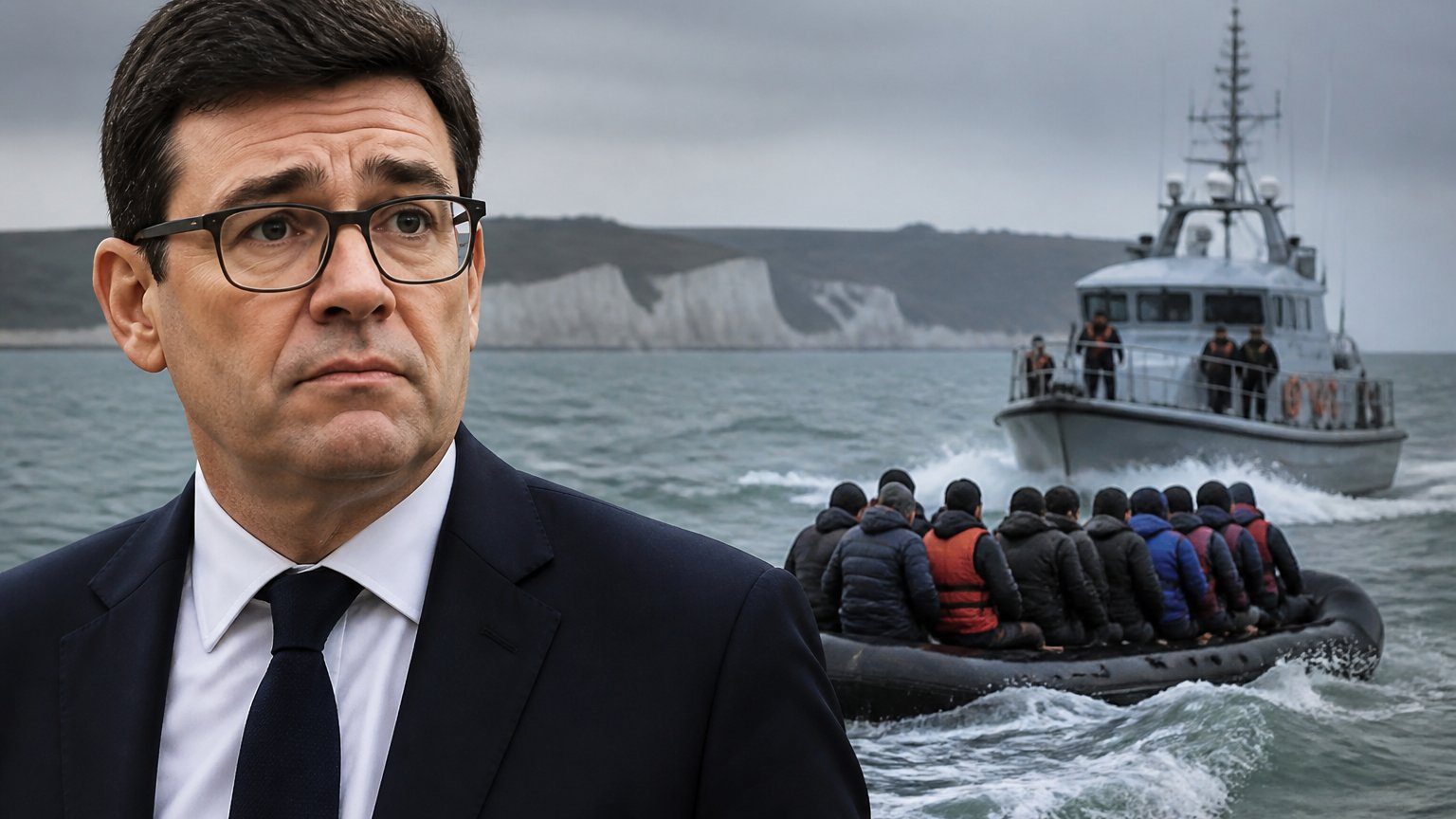
Andy Burnham has vowed that his government will be relentless in cutting small boat crossings into the UK, as he paired tougher enforcement with a call for more safe routes for people who need them. Speaking in Dover, the prime minister said the government was changing its approach and that more officers were now targeting people-smuggling gangs on both sides of the Channel.
Burnham said people wanted the issue dealt with, not turned into a political game. He argued that stronger enforcement must be matched by legal routes into the country, saying that would reduce the appeal of smugglers who profit from desperation. The Home Office said the number of National Crime Agency officers working on smuggling gangs had risen to almost 800 from 376 at the start of 2025, and Burnham said French enforcement had also been doubled.
The push comes as small boat crossings remain at the center of Britain’s immigration debate. Between January 1 and July 29, 2026, 14,128 people crossed the English Channel from France by small boat, though that was down 42% from the same stretch a year earlier. The Home Office said small boat arrivals accounted for 42% of asylum applications between April 2025 and March 2026, underlining how central the route has become to the wider asylum system.
Burnham also pointed to recent events in Spain’s Ceuta, where tens of thousands of migrants entered the African territory on Thursday. He noted that 98% of those who swam there had been returned to Morocco, and said that showed an immediate response can work. He added that there is a wider question about the Schengen area and the UK’s relationship with Europe, and said he would want regular discussions with the EU on those issues.
The political fight over the Channel has quickly sharpened. The Conservatives accused Labour of failing to deliver on migration pledges, while Reform UK said it would send the Royal Navy to stop small boat crossings. Reform’s shadow home secretary, Zia Yusuf, said the party would order the Navy to force boats back to France, a move he said would be the biggest military operation in the Channel since World War Two. A Labour spokesperson dismissed that as an attempt to distract from scrutiny of Reform’s finances.