⚡ LATEST
Delhi Pellet Gun Claims Gain Expert Support

Delhi Pellet Gun Claims Gain Expert Support

Delhi pellet gun claims are being backed by ballistic experts after protesters said they were wounded during a crackdown near parliament.

Delhi pellet gun claims are drawing fresh scrutiny after independent ballistic experts told the BBC that injuries suffered by several protesters in the Indian capital were consistent with birdshot fire. The cases emerged after last week’s crackdown on a large protest in central Delhi, where supporters of the Cockroach Janta Party tried to march toward parliament to demand education reforms and the resignation of the education minister.

Police and paramilitary personnel used wooden sticks, batons and tear gas as the crowd surged through central Delhi on 20 July, according to the report. Delhi Police said 60 protesters and 118 of its personnel were hurt, while the Cockroach Janta Party said the number of wounded demonstrators was far higher. The government has not confirmed media reports that pellet guns were used, but the BBC said it verified at least four cases in which injured men were treated in hospitals for wounds experts identified as pellet-gun injuries.

Two independent specialists reviewed photographs and video of the injuries. UK-based ballistics forensic scientist Philip Boyce said the wounds were “definitely from a pellet gun,” describing the weapon as a 12-gauge pump-action shotgun. He said such injuries can be severe even when a person is struck from a distance, and noted that they can still be dangerous at 100 feet. NR Jenzen-Jones, director of Armament Research Services in the UK, said images from the protest showed police using shotguns for crowd control and that the injuries were strongly consistent with birdshot.

Jenzen-Jones also warned that these pellets are not harmless. He said they can cause life-changing or life-threatening injuries and leave toxic lead in the body. Boyce added that shotguns are commonly used for bird hunting in the UK, but he was not aware of any example of them being used there for crowd control. The report also noted that several countries have banned or restricted such weapons.

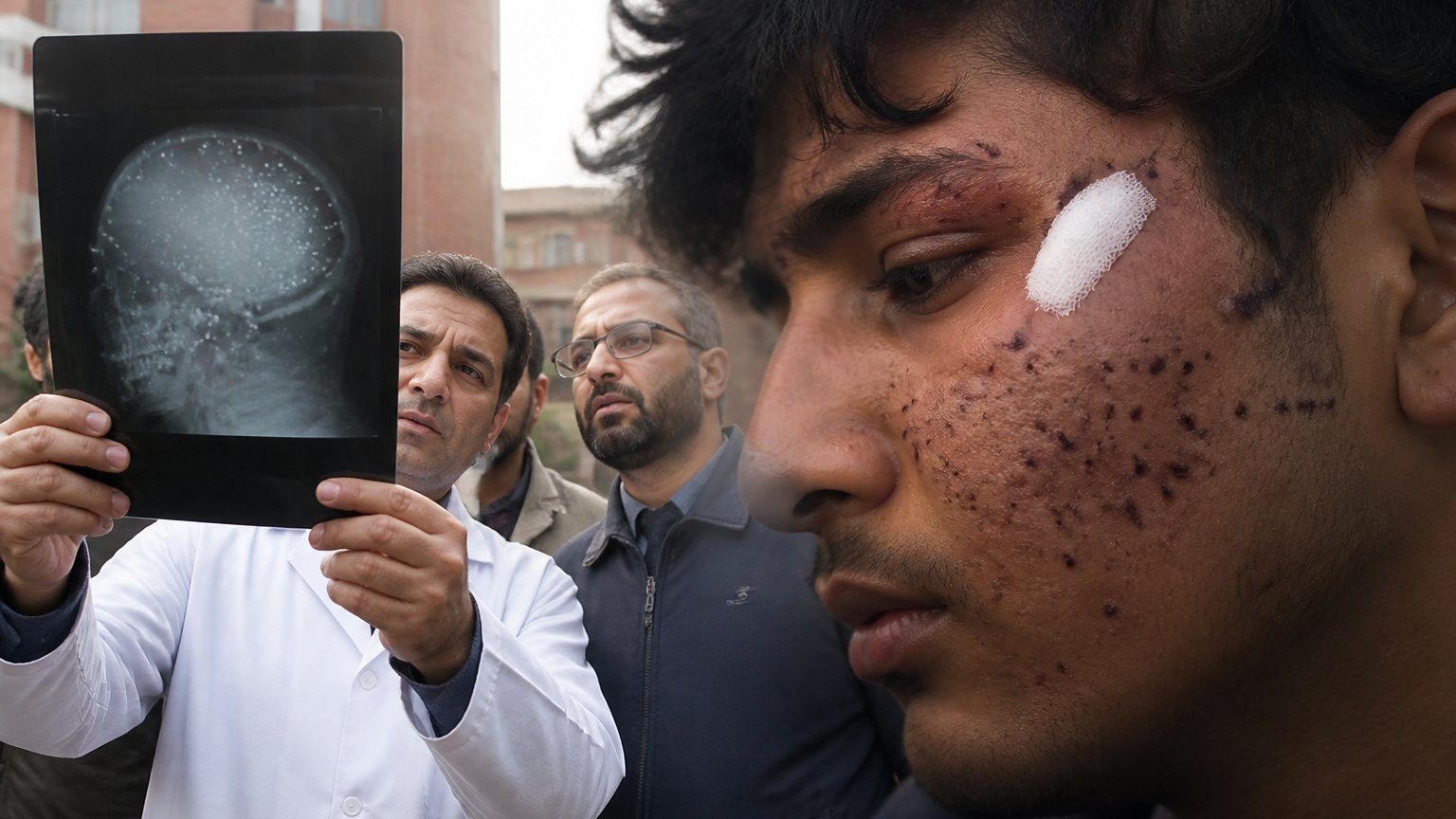
One of the men the BBC spoke to, Mohit, said he was hurt near Connaught Place after a security officer appeared to aim at him and he turned to run. The 28-year-old journalist said he felt a burning pain in his arm and back, then noticed tiny circular holes after washing the wounds. An X-ray from Safdarjung hospital showed small objects lodged in his arm and upper torso, and his medical records said he had 26 pellet wounds on his right elbow and four on his upper right back.
Another protester, Shaikh Irshad Mansoori, said he was walking from Connaught Place to Jantar Mantar when police and Rapid Action Force personnel began beating the crowd and firing tear gas, creating panic. He said an RAF officer pointed a gun at the group, followed by a cracking sound and pellets striking his eyebrow and chin. He was taken to Lady Hardinge hospital, where scans reportedly showed more than 40 pellets in his body. Surgeons removed seven pellets the next morning, but left one in his neck because it was too risky to take out.

The Delhi police denied earlier claims that pellet guns were used, calling them completely false and misleading and saying they did not possess such weapons. Since then, Indian media have reported that the shots may have been fired by the Rapid Action Force, which reports to the Central Reserve Police Force. The BBC said it contacted CRPF chief Gyanendra Pratap Singh but had not received a response. In parliament, minister Jitendra Singh said no bullets were fired and only tear gas was used, without addressing pellet guns.

The debate has now reached the political level as opposition leader Rahul Gandhi called for Home Minister Amit Shah to be removed, pointing to the fact that both Delhi Police and the CRPF report to him. Among the injured protesters highlighted alongside Gandhi was Sahil Lochab, a 19-year-old Delhi University student who said he may lose an eye. The case matters because if pellet gun use is confirmed in Delhi, it would mark the first known time such weapons were used on citizens in the capital, raising serious questions about crowd control, restraint and accountability.

Frequently asked questions

What evidence supports the pellet-gun claim in Delhi?
The BBC said it verified at least four cases of injured men treated in hospitals for wounds experts identified as pellet-gun injuries. Two independent ballistics specialists also said photographs and video were consistent with birdshot fire.
What did the experts say about the injuries?
Philip Boyce said the wounds were definitely from a pellet gun and described it as a 12-gauge pump-action shotgun. NR Jenzen-Jones said the injuries were strongly consistent with birdshot and could cause life-changing or life-threatening harm.
How have Delhi authorities responded?
Delhi Police denied earlier claims that pellet guns were used, calling them completely false and misleading and saying they did not possess such weapons. In parliament, minister Jitendra Singh said no bullets were fired and only tear gas was used.
What happened to the protesters the BBC spoke with?
Mohit said he suffered pellet wounds to his arm and back, and his hospital records listed 26 pellet wounds on his right elbow and four on his upper right back. Shaikh Irshad Mansoori said more than 40 pellets were found in his body, with seven removed and one left in his neck because surgery was too risky.
More from World

View all →
📨

Never Miss a Story

Get the headlines that matter delivered straight to your inbox.