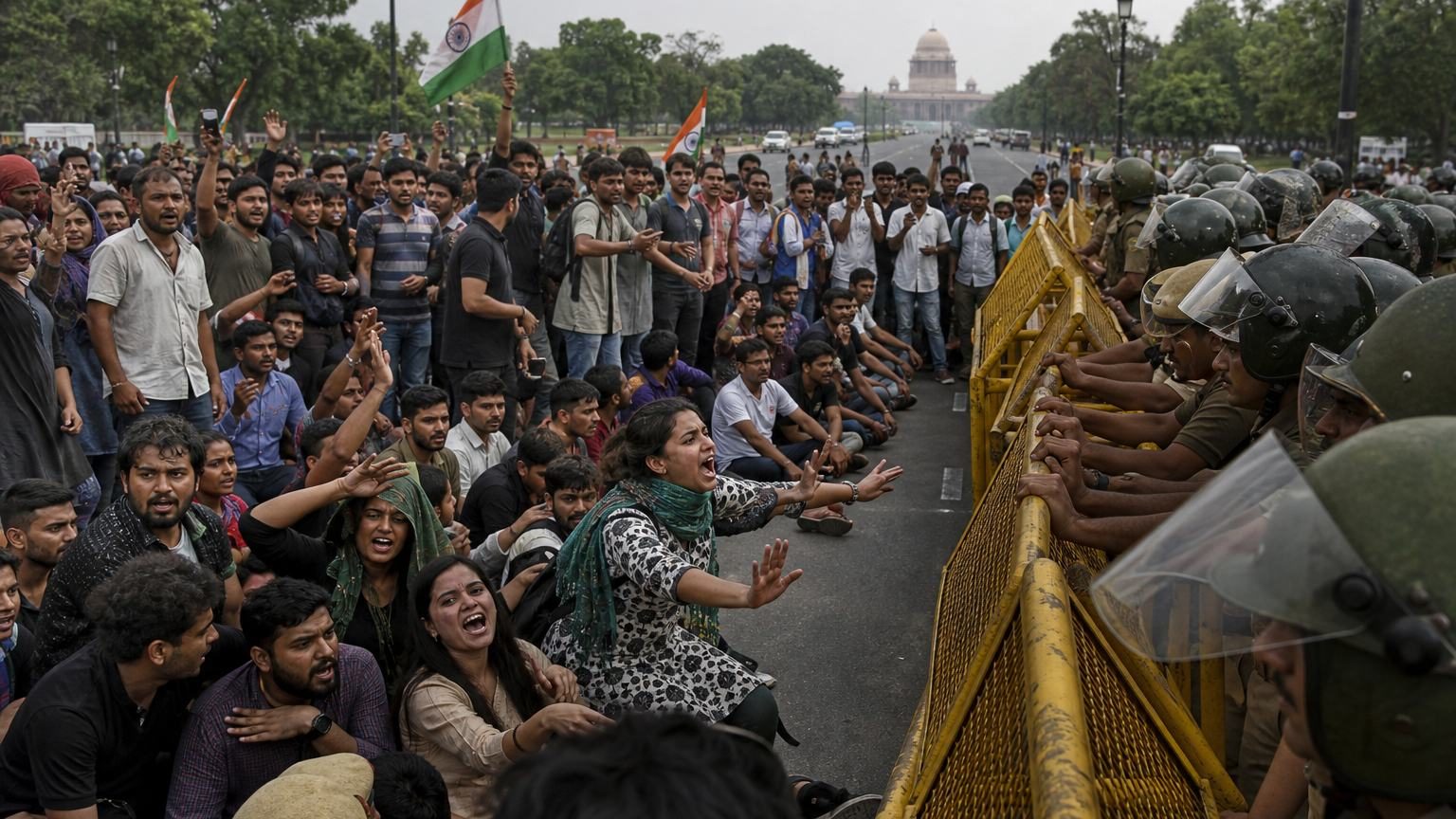
India’s CJP protests have widened in Delhi and beyond, after police clashes and a surprise opposition march to Modi’s house.
India’s CJP protests are intensifying in Delhi, with thousands of supporters still camped out despite heavy rain overnight. The protest movement, built around demands for education reform and the resignation of Education Minister Dharmendra Pradhan, gained fresh momentum after opposition leaders joined the fight against the government’s response.
On Tuesday, leaders from the main opposition Congress party staged a protest outside Prime Minister Narendra Modi’s residence. Congress said the demonstration was aimed at the police crackdown on Monday’s CJP march, when officers used batons and tear gas to break up crowds in central Delhi. The source says at least 60 people were injured, including protesters and police. Congress also shared video showing its MP Rahul Gandhi and others being pushed into buses and taken to detention centres before later being released.
Monday’s CJP protest drew tens of thousands after the group called for a march to parliament as the monsoon session opened. Police dismantled the stage and temporary tents at Jantar Mantar, the protest’s main base near the historic observatory, but demonstrators refused to leave and kept up a round-the-clock sit-in. The day after the violence, several senior opposition figures, including former Delhi chief minister Arvind Kejriwal and veteran politician Sharad Pawar, visited the protesters.
“India’s CJP protests have widened in Delhi and beyond, after police clashes and a surprise opposition march to Modi’s house.”
Later on Tuesday, Congress president Mallikarjun Kharge and Gandhi led a surprise march to Modi’s house, demanding the resignations of Pradhan, Home Minister Amit Shah, and the prime minister himself. Gandhi said the government should apologise to students over the crackdown, and he argued Congress had gone to Modi’s residence because it was not allowed to raise the issue in parliament. He said he had met Speaker Om Birla seeking a discussion, but claimed the speaker said approval was needed from the government and that there was no appetite for debate.
Federal Minister Jitendra Singh rejected Gandhi’s account, saying he had told the Congress MP that the government had agreed to a discussion. Singh accused Gandhi of later changing his demand by also seeking Pradhan’s resignation, and said the protest location was not suitable. Pradhan, in his first remarks since Monday’s unrest, accused Congress of using students for politics and said the government still stood by education reforms, answers and accountability. The CJP has not responded to his comments. The movement, which began after remarks by India’s chief justice about unemployed young people, has now drawn attention well beyond Delhi, with support also reported in Mumbai, Hyderabad, Bengaluru and Ahmedabad. The bottom line: the protests now show how quickly student anger can turn into a wider national challenge for Modi’s government.
Frequently asked questions
What sparked the CJP protests?
The movement began after remarks by India’s chief justice about unemployed young people. It grew into protests demanding education reform and the resignation of Education Minister Dharmendra Pradhan.
What happened during Monday’s protest in Delhi?
Tens of thousands joined a march toward parliament, and police used batons and tear gas to break it up in central Delhi. At least 60 people were injured, according to the article.
How did opposition leaders respond to the crackdown?
Congress leaders staged a protest outside Narendra Modi’s residence on Tuesday, and senior opposition figures including Arvind Kejriwal and Sharad Pawar visited the protesters. Congress said it was responding to the police crackdown and the government’s handling of the issue.
How did the government respond to the opposition’s criticism?
Jitendra Singh rejected Rahul Gandhi’s account and said the government had agreed to a discussion. Dharmendra Pradhan accused Congress of using students for politics and said the government stood by its education reforms.
We value your privacy 🍪We use cookies for essential features and, if you allow it, to send you a notification whenever we publish a new story. See our Privacy Policy.
📨
Never Miss a Story
Get the headlines that matter delivered straight to your inbox.
📱 On iPhone: tap the Share icon, choose “Add to Home Screen”, then open TheTrueDefender from your Home Screen and tap 🔔 to turn on notifications. (Apple only allows notifications for saved web apps.)
📱 Add TheTrueDefender to your home screen for one-tap access.