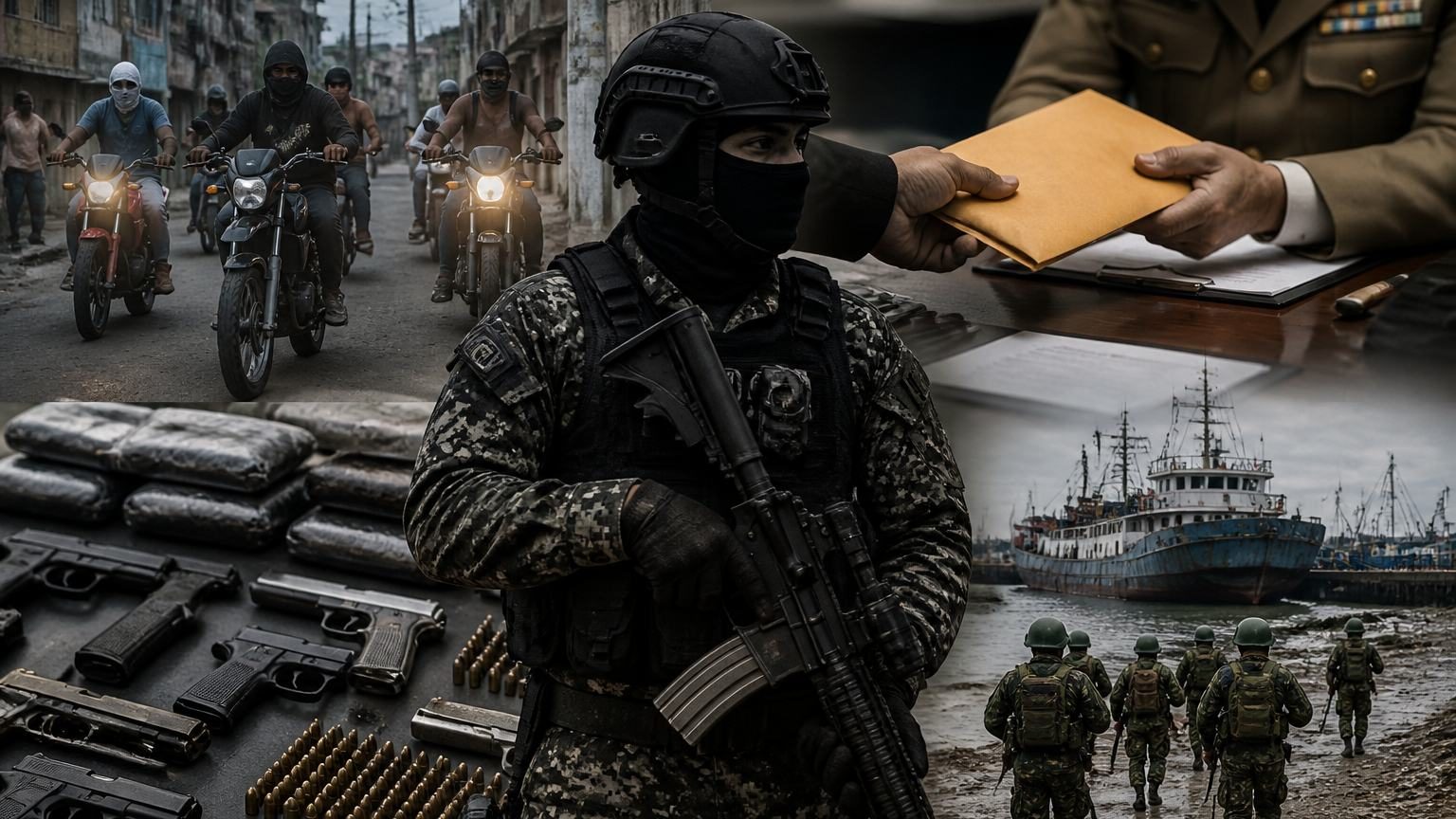
In Durán, Ecuador, the drug war has turned daily life into a test of nerves, and Police Captain Jean Carlos Bustamante says the fight is not only against armed gangs but also corruption inside the state. On patrol in the city, he described a system where officers, officials and politicians can be bought, and where trust is in short supply.
Bustamante leads a hand-picked team he says he can rely on. During one nighttime operation, his officers raided an abandoned house believed to be hiding weapons and recovered two handguns and ammunition for an assault rifle. He called it a small win, saying his team stayed safe and took two guns out of gang hands. But he also said the gangs have far more weapons and money than the state.
The Durán drug war is tied to a wider trafficking route that feeds markets in Europe and the United States. According to Ecuadorian President Daniel Noboa, around 70% of the cocaine reaching Europe and the US is funneled out of Ecuador. The drugs come in from Colombia and Peru, then move through home-grown gangs with links to Mexican cartels and Albanian mafia groups, helped by weak border controls, thinly stretched security forces and a long Pacific coast.
The toll has been steep. Ecuador’s interior ministry said the country recorded more than 9,200 killings last year, one of the highest murder rates in the world. President Noboa has pressed a hard crackdown over the past two years, but critics say it has not solved the problem. Officials say key gang leaders have been arrested, yet the groups have splintered and multiplied. In Durán, police say the murder rate fell by half in the first six months of this year, and that streets are less empty after 19:00 local time.