⚡ LATEST
El-Obeid Braces as RSF Advance Nears

El-Obeid Braces as RSF Advance Nears

El-Obeid is becoming the new flashpoint in Sudan’s war, as thousands sheltering there face fresh danger and warnings of an RSF attack grow.

El-Obeid is fast becoming the next major pressure point in Sudan’s war, as thousands of people who fled fighting now find themselves in danger again. The el-Obeid shelter crisis has deepened as paramilitary RSF fighters move closer to the army-held city in North Kordofan, a key battleground for both sides.

Displaced families have packed into the city hoping for safety, but the UN’s International Organization for Migration says el-Obeid has turned into a central refuge for people escaping violence nearby. Satellite imagery shows the main displacement camp has grown sharply since March, and aid workers say dozens of new arrivals continue to come in each day. Mohamed Refaat, the IOM’s mission chief in Sudan, said many families have already been uprooted before and are once again being forced to leave their homes and livelihoods behind.

Warnings of an RSF attack have now come from the UN and G7 foreign ministers, who fear atrocities could be repeated if the city falls. Their concern is shaped in part by the massacre in el-Fasher last October, when thousands were killed after the RSF overran the city’s defenders. In and around el-Obeid, verified footage has shown RSF fighters in armored trucks in nearby Nyala, while recent video placed them within 40km of the city.

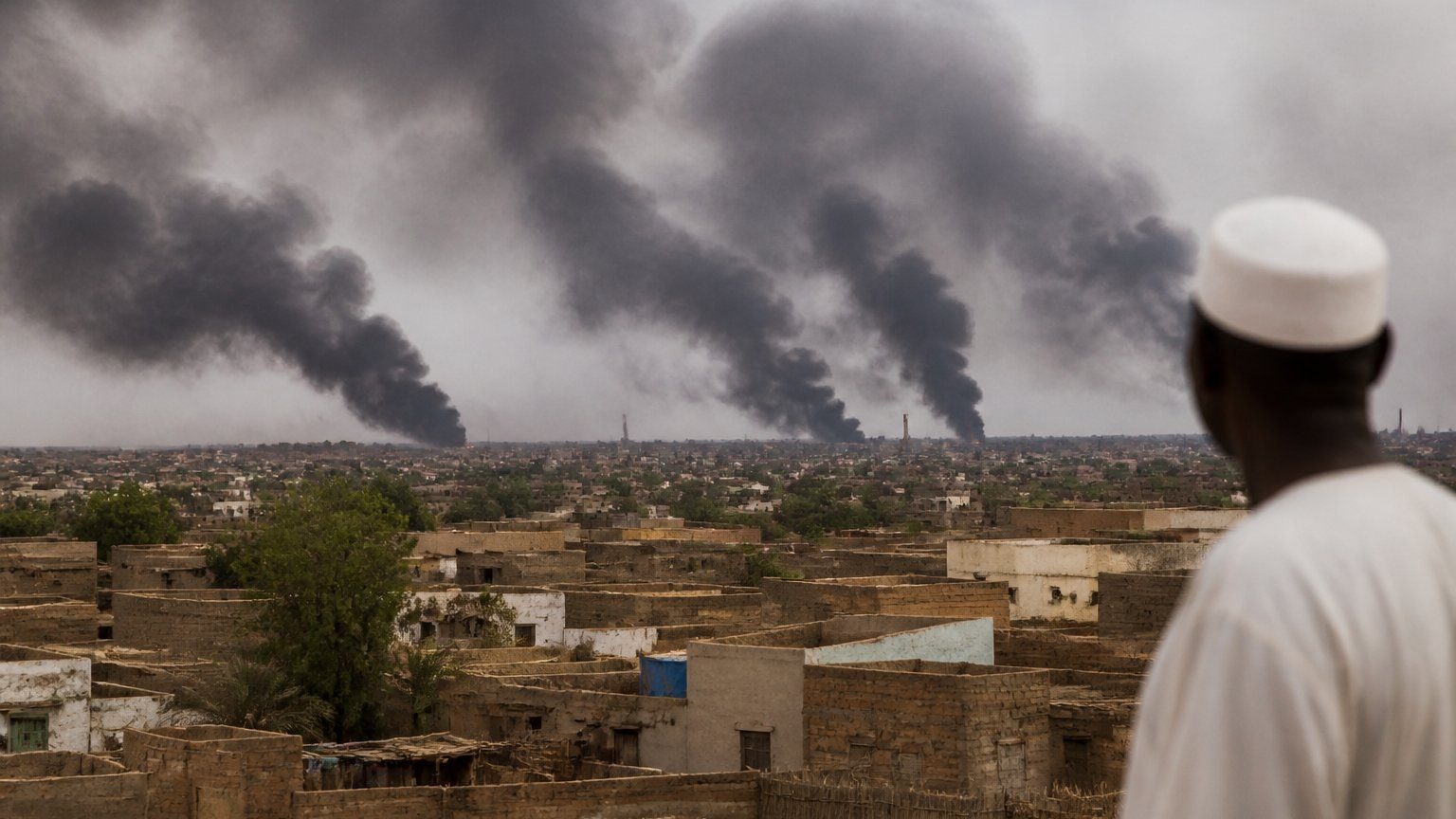
The pressure on el-Obeid has not only come from the battlefield. The RSF launched a record number of drone strikes on the city in June, according to the monitoring group Acled, and only reduced them in July because the force was responding to military attacks elsewhere in Sudan. The UN says more than 83,000 civilians have fled other parts of the state and sought shelter in the city, but conditions have worsened as supply routes were cut and aid flights through the airport stopped, according to Islamic Relief.
Local and humanitarian sources say food, water, fuel and power have all been hit. Last month, verified video showed a large explosion at a fuel station after one strike, and satellite images suggest damage to power stations and warehouses in the market district. One aid worker working with Islamic Relief said the situation has improved somewhat in recent days as drone attacks slowed and some power returned, but he called it highly unpredictable and said fuel shortages remain a serious problem.

The city’s military defenders appear to be preparing for a siege. Satellite images suggest the Sudanese army is building an earth berm around el-Obeid, while the RSF leader, Mohamed Hamdan Dagalo, known as Hemedti, has urged his fighters to move forward with no retreat. With outside powers also being pressed to cut support to the warring sides, el-Obeid now stands as a frontline test of whether another mass atrocity can be prevented. Why this matters: what happens in el-Obeid could decide whether more civilians are trapped or forced to flee again.

Frequently asked questions

Why is el-Obeid important in Sudan’s war?
It is an army-held city in North Kordofan that has become a central refuge for displaced people and a key battleground as RSF fighters advance.
How many people have fled to el-Obeid?
The UN says more than 83,000 civilians have fled other parts of the state and sought shelter in the city.
What threats is the city facing?
The RSF has moved closer, launched record drone strikes in June, and cutoffs to supply routes and aid flights have worsened living conditions.
What are officials worried could happen if the RSF takes the city?
UN and G7 officials fear atrocities could be repeated, drawing on the massacre in el-Fasher last October when thousands were killed after the RSF overran the city.

More from World

View all →
📨

Never Miss a Story

Get the headlines that matter delivered straight to your inbox.