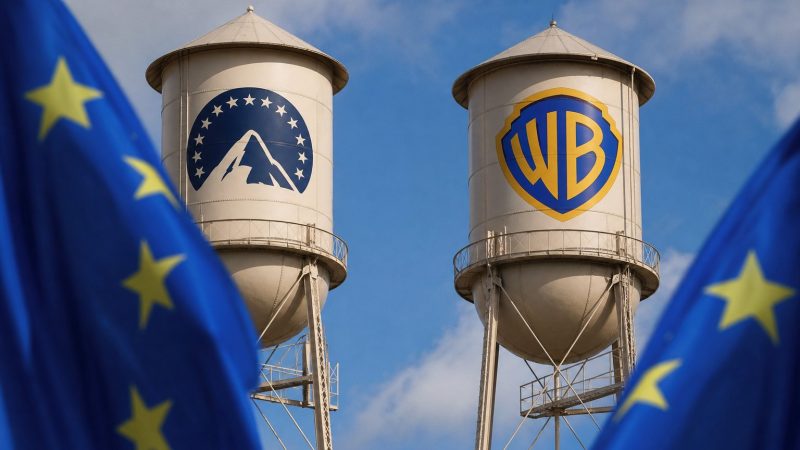
Paramount Skydance chief David Ellison defended the Warner Bros deal, arguing the $110bn merger fits today’s media market.
Paramount Skydance chief executive David Ellison is publicly defending the Warner Bros deal, arguing that criticism of the $110bn merger is rooted in a Hollywood model that no longer matches the market. In an op-ed published by The New York Times, Ellison said the objections overlook how much the entertainment business has changed as streaming and tech platforms have reshaped viewing habits.
Ellison made his first public comments on the transaction while Paramount and Warner Bros. Discovery remain locked in a legal fight to complete the takeover. He rejected concerns that a combined company would have too much power in the market or weaken newsroom independence. He also said Paramount’s CBS and Warner’s CNN would stay non-partisan and continue to tell the news straight down the middle.
To answer antitrust concerns, Ellison said a merged Paramount-Warner would represent less than 20% of U.S. television watch time, or about 13% when YouTube is included. He pointed to competition from major tech and media companies including Netflix, Amazon, and Apple, saying their resources dwarf those of Paramount and Warner. His argument is clear: the real competition is no longer just the old studio system, but the large digital platforms that now dominate entertainment consumption.
“Paramount Skydance chief David Ellison defended the Warner Bros deal, arguing the $110bn merger fits today’s media market.”
Ellison also laid out what the combined company would promise on the creative side. He said it would expand traditional production with 30 theatrical films and 170 television series each year, supported by more than $30bn in annual content investment. He argued that level of spending is important for creative workers facing pressure from technology platforms built around engagement algorithms. Even so, he acknowledged that nobody can dictate what audiences will love.
The Warner Bros deal has become a test case for how regulators and courts view consolidation in the entertainment business. In July, 12 state attorneys general led by California’s Rob Bonta, along with the Writers Guild of America, filed antitrust lawsuits aimed at stopping the merger. They said the deal would violate the Clayton Act by cutting competition and limiting opportunities for writers.
Federal approval has already come from the U.S. Department of Justice, and international regulators including the European Union have also signed off. But domestic challenges have frozen progress in the United States, and federal proceedings are now on hold with trial pushed to 2 March 2027. The standoff shows how one of the biggest media combinations in years is now being judged not just as a business deal, but as a question of who controls the future of news, entertainment, and creative work. The bottom line for Americans: the Warner Bros deal may reshape what millions watch, read, and trust, but it cannot move forward until the legal fight is settled.
Frequently asked questions
What is David Ellison arguing about the Warner Bros deal?
He says criticism of the merger relies on an outdated view of Hollywood. He argues the combined company would still face strong competition from major tech and streaming firms.
What did Ellison say about CBS and CNN?
He said the outlets would remain non-partisan and continue to tell the news straight down the middle. He rejected concerns that the merger would erode newsroom independence.
Who is trying to stop the merger?
Twelve state attorneys general, led by California’s Rob Bonta, and the Writers Guild of America have filed Antitrust lawsuits. They argue the deal would reduce competition and harm writers.
What happens next in the legal fight?
Federal proceedings are on hold, and the trial has been pushed to 2 March 2027. The deal remains frozen in the United States while the legal challenge continues.
We value your privacy 🍪We use cookies for essential features and, if you allow it, to send you a notification whenever we publish a new story. See our Privacy Policy.
📨
Never Miss a Story
Get the headlines that matter delivered straight to your inbox.
📱 On iPhone: tap the Share icon, choose “Add to Home Screen”, then open TheTrueDefender from your Home Screen and tap 🔔 to turn on notifications. (Apple only allows notifications for saved web apps.)
🔔
Never miss a breaking storyGet free alerts the moment big US news breaks.
1Tap the ••• menu at the bottom of the screen, then tap Share(in Safari, just tap Share in the bottom bar directly)2Scroll down the menu and tap Add to Home Screen3Tap Add in the top-right corner4Open TheTrueDefender from your Home Screen, then tap 🔔 Subscribe and choose Allow
📱 Add TheTrueDefender to your home screen for one-tap access.