⚡ LATEST
England’s New Technical Education Routes at 14

England’s New Technical Education Routes at 14

England’s new technical education routes could let pupils study AI and manufacturing from age 14, tied to local jobs and industries.

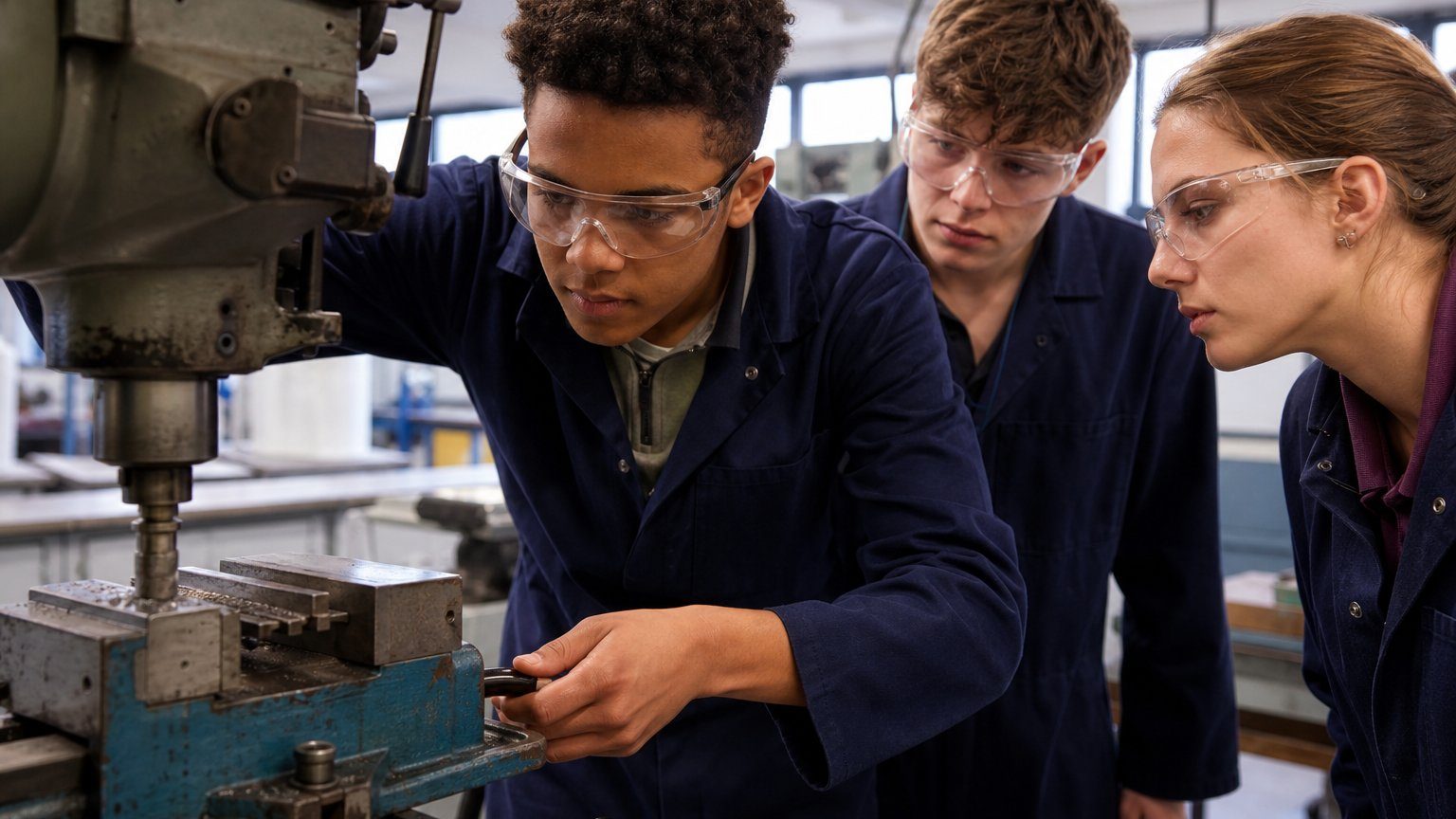
England’s new technical education routes could let pupils study manufacturing and AI from age 14, as the government moves to link school learning more closely with local jobs. Under the plans, pupils in Year 10 would be able to mix core academic subjects with technical courses designed around the needs of employers in their area.

The government said the aim is to give young people more practical skills, work experience and contact with businesses. It said students would still study subjects such as English and maths, while also taking part in technical education tied to jobs available nearby. Officials said the new pathways would help pupils spend time with employers and gain real-world experience.

The announcement follows data released earlier this year showing that more than one million young people across the UK were not in education, employment or training, the highest level in more than 12 years. The Office for National Statistics also reported that 13.5% of UK 16 to 24-year-olds were in that category at the start of this year. Prime Minister Andy Burnham said the country needed a major shift in how it treats technical learning, arguing that students should be respected whether they choose construction, coding, classics, maths, manufacturing or mechanics.

The government said the new routes would build on local efforts such as the Greater Manchester Baccalaureate, known as the MBacc, which was announced in 2023 and launched in September 2024. That programme gives pupils a framework for choosing GCSE subjects that combine academic and technical study, linked to growing sectors such as green energy and digital. The BBC understands the national plans are expected to be running in some areas by 2028, though the changes will apply only to England because education is devolved.


Education Secretary Lucy Powell said the plan begins a shared effort with employers, businesses, mayors and councils to connect young people with careers in their own communities. Former minister Alan Milburn, who has warned of a possible “lost generation” in his review of youth inactivity, called the changes very welcome and said they fit his findings. The shadow education secretary, Laura Trott, said the plans do not go far enough and raised concerns about GCSEs and the lack of clarity in the government’s approach.

School leaders’ unions also backed the goal of stronger technical education but said the government still needs to explain how the changes will work in practice and how they will be funded. The message from this plan is straightforward: Britain wants to give more young people a direct path from school into work, and families will be watching closely to see whether that promise turns into real opportunity.

Frequently asked questions

What would the new technical education routes let pupils study at 14?
Pupils in Year 10 could mix core academic subjects with technical courses, including areas such as manufacturing and AI.
Would students still study academic subjects under the plan?
Yes. The government said students would still study subjects such as English and maths alongside technical education.
Why is the government changing technical education now?
The announcement follows data showing more than one million young people across the UK were not in education, employment or training, the highest level in more than 12 years.
When and where could the new routes start?
The BBC understands they are expected to be running in some areas by 2028, and the changes will apply only to England.

More from World

View all →
📨

Never Miss a Story

Get the headlines that matter delivered straight to your inbox.