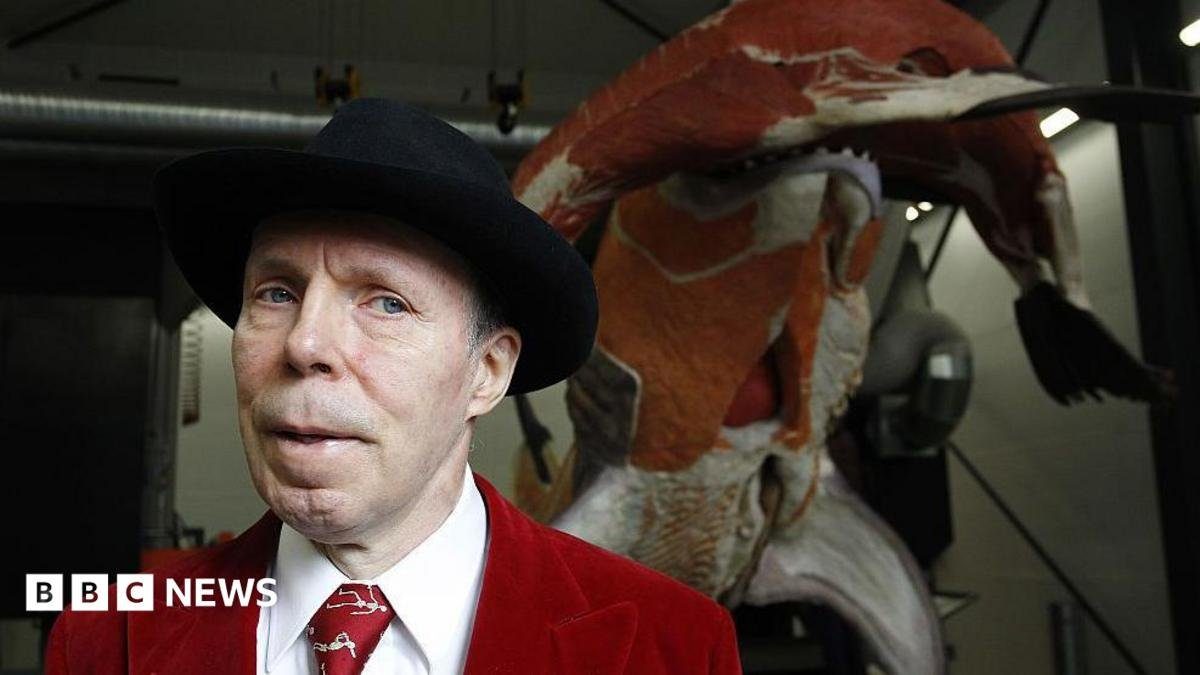
Gunther von Hagens, the Body Worlds creator, has died at 81 after a brain haemorrhage, and his family says they will preserve his body by plastination.
Gunther von Hagens, the man behind the Body Worlds exhibitions, has died at 81, his family said. The Body Worlds creator died after a brain haemorrhage, ending a long and disputed career that made him one of the most recognizable names in modern anatomy displays.
His family said he was admitted to a clinic in Heidelberg, Germany, and died the following day. They also said he had lived with Parkinson’s disease for nearly two decades. In the statement, the family said von Hagens had asked for his body to be made available for plastination after his death, and that they planned to respect that wish.
Von Hagens became known for developing plastination, a process that replaces fluids and fatty tissue in corpses with rubber and polymers. That technique helped turn his work into a global phenomenon. The family said more than 58 million people around the world had seen his exhibitions, which displayed dissected human and animal bodies and were marketed as public anatomy displays.
The Body Worlds creator was born in Nazi-occupied Poland in the final months of World War Two and later grew up in communist East Germany. He fled to the West in 1970. In the years that followed, he developed plastination and saw his specimens used as teaching tools at universities and research institutes before taking his exhibitions on the road in the late 1990s.
“Gunther von Hagens, the Body Worlds creator, has died at 81 after a brain haemorrhage, and his family says they will preserve his body by plastination.”
Supporters remembered him as a pioneer, a researcher and an inventor who helped make anatomy understandable to ordinary people. But the response to his work was never simple. Religious groups and other critics repeatedly objected to the display of human remains, and some accused him of voyeurism and of turning death into a commercial enterprise.
That debate followed him for years and helped define the public reaction to the Body Worlds creator. His exhibitions drew large audiences, but they also raised questions about where education ends and spectacle begins, especially when human bodies are used to tell that story.
Von Hagens also stirred fresh controversy in 2002 when he carried out what was described as the first public autopsy in London in 170 years, and the event was filmed. Authorities warned it might be illegal, but no charges were filed. His death closes a chapter on a figure who changed the way many people encountered the human body, while leaving behind the same questions that shadowed his career. For American readers, the story matters because it shows how far public science can go before it collides with faith, ethics and common standards of decency.
Frequently asked questions
How did Gunther von Hagens die?
His family said he died after a brain haemorrhage. He had been admitted to a clinic in Heidelberg, Germany, and died the next day.
What was plastination, and why was von Hagens known for it?
Plastination is a process that replaces fluids and fatty tissue in corpses with rubber and polymers. Von Hagens developed it, and it helped make his Body Worlds exhibitions a global phenomenon.
Why were the Body Worlds exhibitions controversial?
Critics, including religious groups, objected to the display of human remains. Some accused von Hagens of voyeurism and of turning death into a commercial enterprise.
What happened during the 2002 London autopsy event?
Von Hagens carried out what was described as the first public autopsy in London in 170 years, and the event was filmed. Authorities warned it might be illegal, but no charges were filed.
We value your privacy 🍪We use cookies for essential features and, if you allow it, to send you a notification whenever we publish a new story. See our Privacy Policy.
📨
Never Miss a Story
Get the headlines that matter delivered straight to your inbox.
📱 On iPhone: tap the Share icon, choose “Add to Home Screen”, then open TheTrueDefender from your Home Screen and tap 🔔 to turn on notifications. (Apple only allows notifications for saved web apps.)
📱 Add TheTrueDefender to your home screen for one-tap access.