A Hamas disarmament plan could open a path in Gaza, but politics, mistrust and the war’s wreckage make any deal fragile.
A Hamas disarmament plan has emerged as a possible opening in Gaza, but the road ahead is crowded with political danger, deep mistrust and the devastation of war. The proposal at the center of the talks links Hamas handing over its weapons with Israel pulling back from the roughly 70% of Gaza it now occupies.
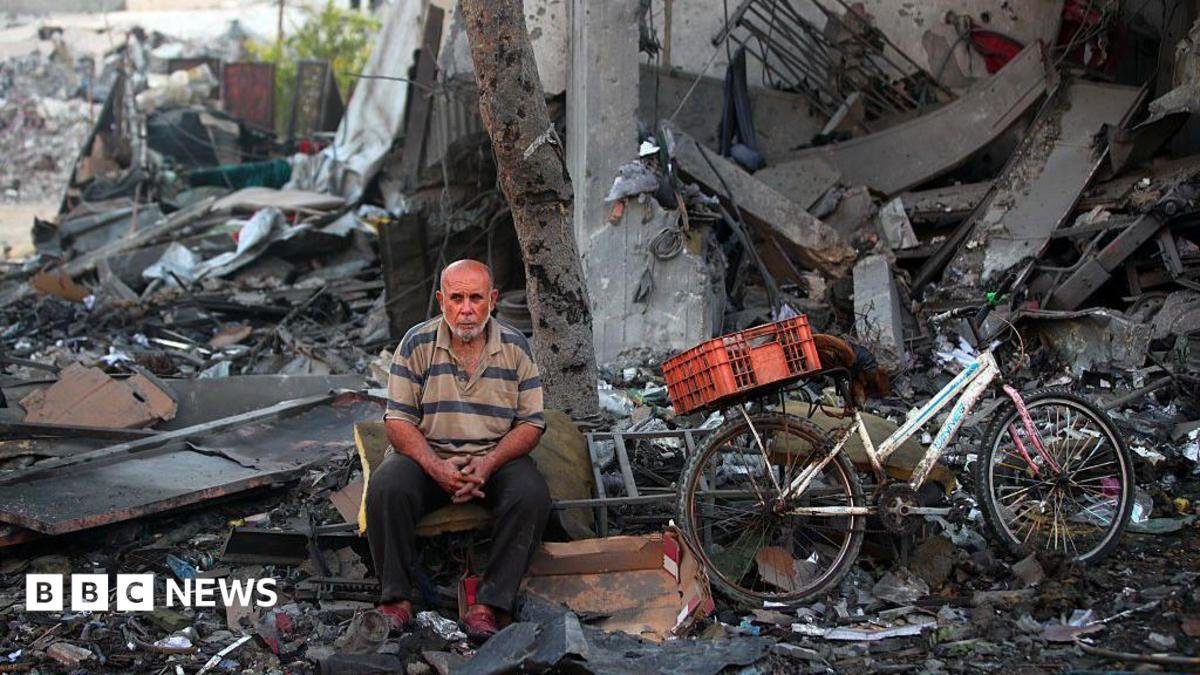
On paper, the formula looks straightforward. In practice, it runs into the reality of more than 2 million Palestinian civilians living in desperate conditions, widespread destruction and years of bloodshed. The war has left much of Gaza in ruins, and the scale of loss on both sides has hardened views. Israel says Hamas must fully disarm before any withdrawal. Hamas has never agreed to disarm before now, which is why even cautious diplomats see a narrow opening.
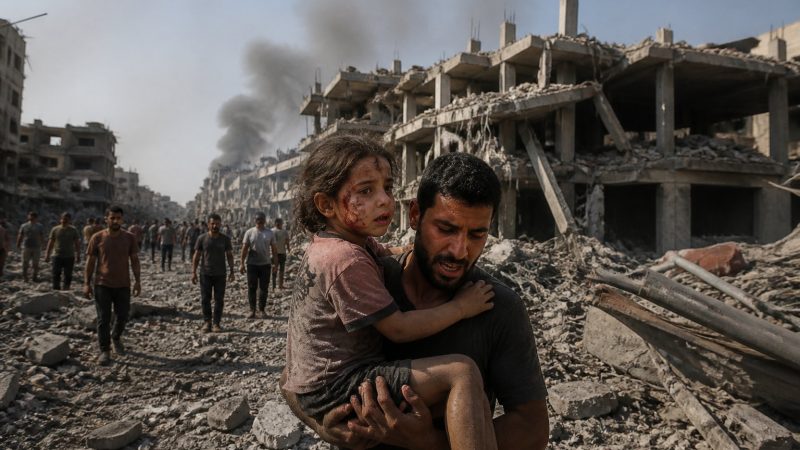
The human toll is staggering. The Hamas-run health ministry says Israel has killed more than 70,000 Palestinians during the war and more than 1,000 more since the ceasefire. The UN considers those figures reliable. Unicef says Israel has killed more than 20,000 children since 7 October 2023, including at least 1,000 babies among the dead and wounded. Israel’s military campaign has also been paired with what the article describes as an organized, officially sponsored effort to tear down communities and infrastructure, with civilian demolition contractors from Israel used to complete work begun by airstrikes.
Many Palestinians believe Israel is making life so unbearable that people will leave if given the chance. Leaders and senior officials in Jordan and Egypt also believe that influential figures inside the Israeli government are trying to create conditions that could drive Palestinians across their borders. On the Israeli side, a large Jewish majority sees Hamas as an ongoing threat until it is stripped of weapons and power. That fear is rooted in Hamas’ 7 October 2023 attack, when Hamas and other Palestinians killed almost 1,200 people in Israel and took 251 hostages into Gaza.
“A Hamas disarmament plan could open a path in Gaza, but politics, mistrust and the war’s wreckage make any deal fragile.”
The political backdrop is just as important as the battlefield. Israel is headed toward a general election at the end of October, and Prime Minister Benjamin Netanyahu is trailing in the polls. He is under pressure to avoid any appearance of weakness on Hamas, while also managing a long-running corruption trial that has slowed while he remains in office. Across the Atlantic, President Donald Trump also faces pressure, with US midterm elections in November and a need for a foreign policy success he can claim as his own.
Netanyahu is known for delaying hard decisions when cornered, and he is likely to try to keep both domestic critics and Washington at bay until election day. Hamas, meanwhile, has been weakened by the war. Most of its senior figures and thousands of fighters have been killed, and the Israel Defense Forces continue to target senior members when they can. Some Palestinians blame Hamas for the consequences of the 7 October attack, while the group also faces pressure from powerful families and militias backed by Israel.
Even so, Hamas has tried to rebuild support at the grassroots level. According to BBC Gaza correspondent Rushdi Abu Alouf, the group has turned part of its attention toward social and political outreach, including Quran memorization programs and charitable activity for children and young people, while making use of the humanitarian crisis and families’ dependence on aid. Khalil al Hayya, Hamas’ newly confirmed political leader, played a key role in dropping objections to the framework after diplomatic work by Egypt and Turkey.
That work is only a beginning. A step-by-step approach, starting small and building trust, appears to be the only path with any chance of success. But the process is fragile, and the occupied West Bank is also on edge, with ACLED warning that 2026 is on track to be its most violent year in a decade. Jewish settlers, backed by Israeli forces and encouraged by extremists in Netanyahu’s government, have attacked Palestinians and driven some from their land, while Palestinians organize their own resistance. Without a political horizon for Palestinians and a route to self-determination, the Gaza effort may collapse before it begins. For Americans, the lesson is simple: if diplomacy is not sustained, the war can keep feeding the same cycle of violence, instability and wider regional risk.
Frequently asked questions
What is the basic formula being discussed in the Gaza talks?
The proposal links Hamas handing over its weapons with Israel pulling back from the roughly 70% of Gaza it now occupies. Israel says Hamas must fully disarm before any withdrawal.
Why is a Hamas disarmament agreement considered so difficult?
The article says the talks are blocked by deep mistrust, the devastation in Gaza, and years of bloodshed. Hamas has never agreed to disarm before, and many Israelis still view it as an ongoing threat.
How severe has the human toll of the war been, according to the article?
The Hamas-run health ministry says Israel has killed more than 70,000 Palestinians during the war and more than 1,000 since the ceasefire. The article also says Hamas’s 7 October 2023 attack killed almost 1,200 people in Israel and took 251 hostages.
What political factors could affect the talks?
Israel is approaching a general election, and Prime Minister Benjamin Netanyahu is trailing in the polls and under pressure not to look weak on Hamas. President Donald Trump also faces pressure from upcoming US midterm elections and wants a foreign policy success.
We value your privacy 🍪We use cookies for essential features and, if you allow it, to send you a notification whenever we publish a new story. See our Privacy Policy.
📨
Never Miss a Story
Get the headlines that matter delivered straight to your inbox.
📱 On iPhone: tap the Share icon, choose “Add to Home Screen”, then open TheTrueDefender from your Home Screen and tap 🔔 to turn on notifications. (Apple only allows notifications for saved web apps.)
📱 Add TheTrueDefender to your home screen for one-tap access.