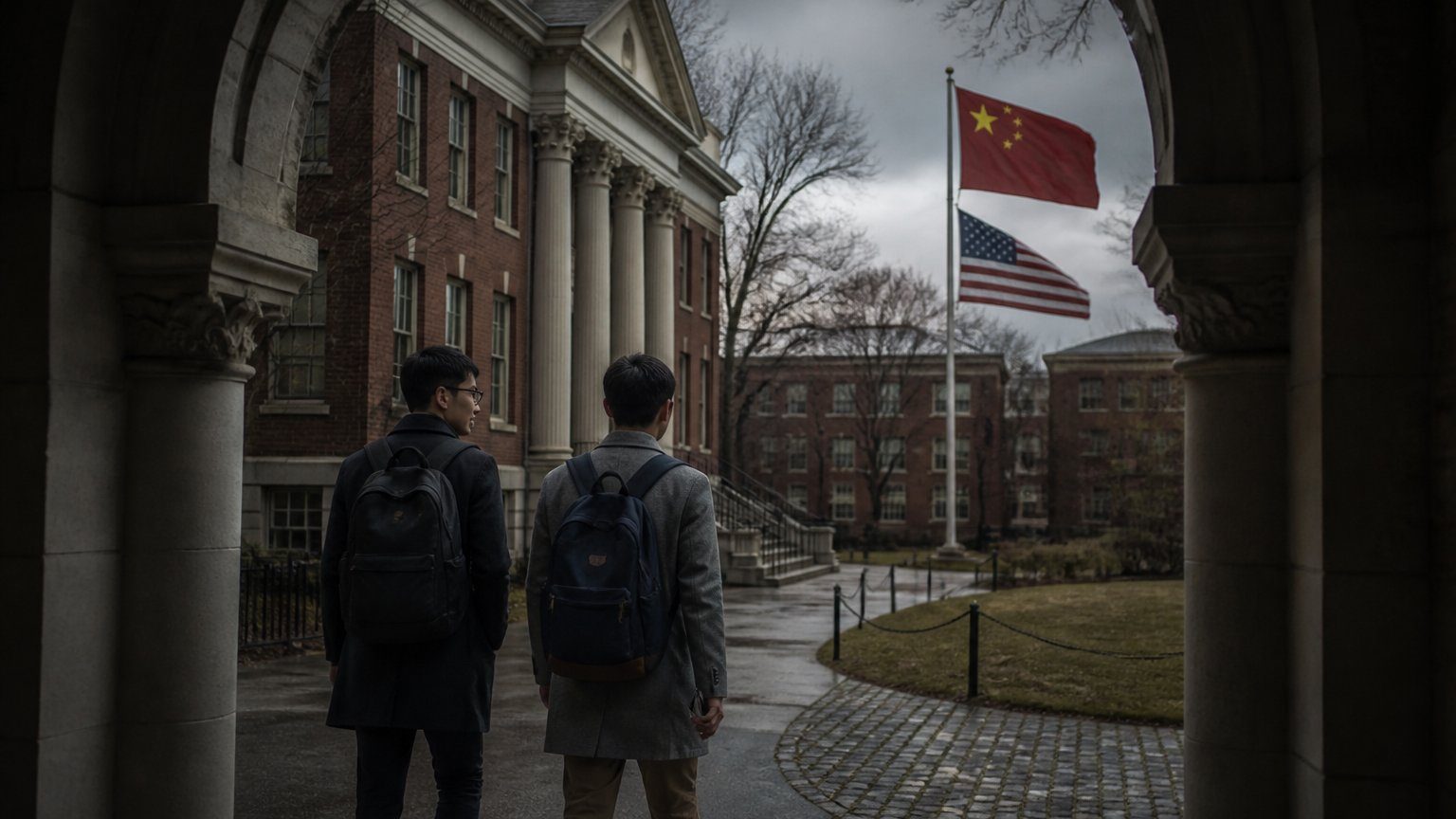
A House China Committee report says Harvard co-authored more than 140 papers with Chinese military-linked universities and took in over $600 million from China.
Harvard-China research ties are under fresh scrutiny after a House Select Committee on the Chinese Communist Party report said Harvard co-authored more than 140 publications with researchers from Chinese universities tied to Beijing’s military and defense-industrial system. The report, reviewed by Fox News Digital before its release, says the university’s handling of those partnerships left room for national-security risks that went beyond ordinary academic exchange.
The committee says the schools involved belong to the group known as the Seven Sons of National Defense, universities identified by the Pentagon and other U.S. officials as central to China’s defense research and military modernization. It argues Harvard’s research security posture was too weak and that its financial relationship with China underscored the need for closer oversight. The report cites Education Department dashboard data showing Harvard reported more than $600 million from China under the federal Section 117 foreign-gift disclosure system, the most of any American university.
Committee chairman Rep. John Moolenaar, R-Mich., said the school should use the investigation as a turning point. “From allowing violence against anti-China protestors to collaborating with entities linked to the PLA, Harvard has made serious mistakes and must act now to prevent more,” he said in a statement. He called for reforms that would end Chinese Communist Party influence on campus and put secure American research first.
The report points to specific examples it says illustrate the problem. One 2023 paper on bio-inspired soft robots for deep-sea exploration was co-authored by a Harvard-affiliated researcher and a researcher from Beihang University, also known as Beijing University of Aeronautics and Astronautics. That school has been on the Commerce Department’s Entity List since 2001. The committee says the work could have military uses, including underwater detection, while Harvard’s research-compliance office described the project as nonmilitary research.
Another 2023 paper involved Harvard researchers and a researcher at China’s National University of Defense Technology, which the report says is on a U.S. restricted list. That study focused on magnetic materials and included partial support from the U.S. Army Research Office. The committee said it reviewed publications across dozens of fields and found engineering accounted for the largest share of Harvard-affiliated research involving the Seven Sons institutions.
“A House China Committee report says Harvard co-authored more than 140 papers with Chinese military-linked universities and took in over $600 million from China.”
Beyond research papers, the report also examines Harvard’s executive education program with China’s National Healthcare Security Administration, which trained Chinese health officials on international health-insurance systems. It says attendance and registration records show officials linked to the Xinjiang Production and Construction Corps were listed in connection with some sessions. The Treasury Department sanctioned the XPCC in 2020 over alleged human-rights abuses against Uyghurs and other ethnic minorities in Xinjiang. The report says it is unclear whether those officials attended every session, but alleges Harvard had advance participant information for a 2020 online program that included XPCC-affiliated officials and did not take further action.
Harvard professor Winnie Yip, who helped organize the executive education program, told committee investigators she did not know the XPCC was a sanctioned entity at the time and had not received sanctions-compliance training, according to the report. The committee also cites Harvard research official John H. Shaw, who said the university reviews collaborations case by case and does not ban all work involving robotics or Chinese institutions. The report says that approach is too narrow for work tied to China’s military-civil fusion system, where unclassified research can still have military uses.
The committee further questions Harvard Global Research and Support Services, a nonprofit affiliated with the university that can accept awards when Harvard cannot agree to a sponsor’s terms directly. It alleges the entity could be used to sidestep federal foreign-gift reporting rules. Harvard did not respond to Fox News’ request for comment on the report’s findings.
The report recommends that Harvard cut research ties with entities on U.S. restricted or sanctioned lists and centralize its research-security oversight. It also calls on Congress to tighten foreign-funding disclosure rules for universities. For American readers, the issue reaches beyond one Ivy League campus: it goes to whether U.S. schools can protect taxpayer-backed research from foreign military interests while keeping the benefits of open academic inquiry. What happens next will show whether lawmakers push for tougher rules or whether universities continue policing these ties on their own.
Frequently asked questions
What did the House China Committee allege about Harvard?
The committee said Harvard failed to adequately protect research collaborations with Chinese institutions tied to Beijing’s military and defense-industrial base.
How many publications are at issue?
The report says Harvard-affiliated researchers co-authored more than 140 publications with researchers from Chinese military-linked universities.
Which Chinese institutions did the report highlight?
It singled out Beihang University and China’s National University of Defense Technology, among others in the Seven Sons of National Defense.
Did Harvard respond to the report?
Harvard did not respond to Fox News’ request for comment on the committee’s findings.
We value your privacy 🍪We use cookies for essential features and, if you allow it, to send you a notification whenever we publish a new story. See our Privacy Policy.
🇺🇸
The Defender Morning Brief
5 stories Americans need to know. 3 minutes. Every morning. Free.
📱 On iPhone: tap the Share icon, choose “Add to Home Screen”, then open TheTrueDefender from your Home Screen and tap 🔔 to turn on notifications. (Apple only allows notifications for saved web apps.)
🔔
Stay Ahead of Breaking NewsGet alerts when major stories break — not every time we publish.Breaking news only. No spam. Turn off anytime.
1Tap the ••• menu at the bottom of the screen, then tap Share(in Safari, just tap Share in the bottom bar directly)2Scroll down the menu and tap Add to Home Screen3Tap Add in the top-right corner4Open TheTrueDefender from your Home Screen, then tap 🔔 Subscribe and choose Allow
📱 Add TheTrueDefender to your home screen for one-tap access.