India’s CJP protest began over exam paper leaks, then grew into a major student uprising that pushed Education Minister Dharmendra Pradhan out.
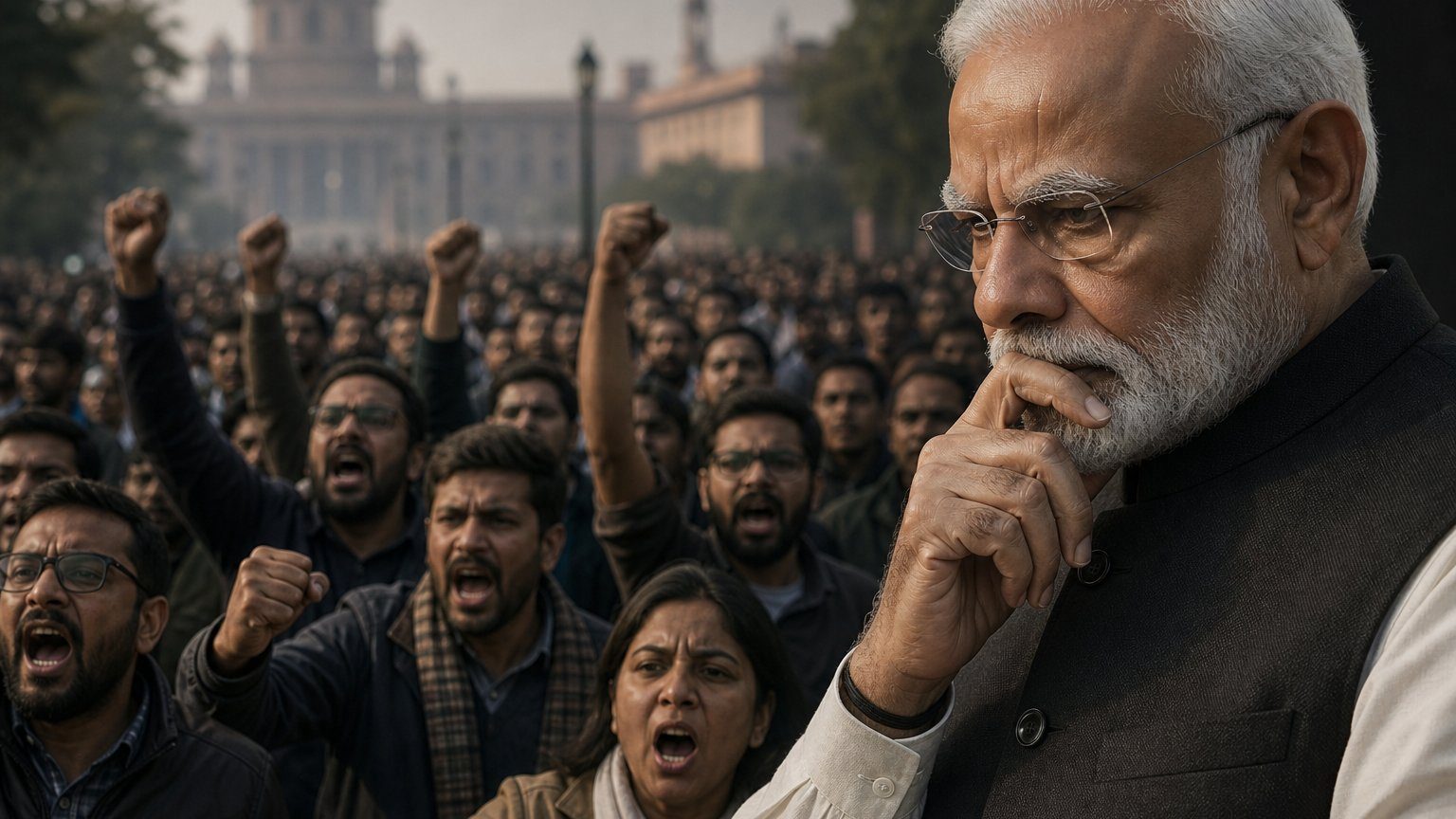
India’s CJP protest began with a basic fear felt by millions of students: if the exam system cannot be trusted, what does that mean for their future? What started as anger over repeated paper leaks quickly turned into the country’s biggest student mobilisation in years, with tens of thousands trying to march on parliament on Monday and police meeting them with tear gas and baton charges.
The Cockroach Janta Party, or CJP, is a youth-led movement built around demands for education reform and the resignation of Education Minister Dharmendra Pradhan. Hours after Pradhan stepped down on Saturday, following weeks of unrest over paper leaks and testing irregularities, the group called off its agitation and said the government had accepted its demands. At the centre of the campaign was activist Sonam Wangchuk, who ended a 26-day hunger strike on Thursday after losing 11kg.
What set this CJP protest apart, analysts told the BBC, was not just its size but its reach. Unlike earlier demonstrations against Prime Minister Narendra Modi’s government over citizenship, farm laws or other divisive issues, this one was not tied to ideology or one community. It cut across caste, class and gender, and tapped into a shared belief that the state must guarantee fairness in the exams that shape social mobility for young Indians.
“India’s CJP protest began over exam paper leaks, then grew into a major student uprising that pushed Education Minister Dharmendra Pradhan out.”
That broader anger helped push the movement beyond its original organisers. Student unions, Left groups and the Bhim Army were present, but observers said they were outnumbered by students arriving from across the country on their own. After initially leaving the response to ministers and party spokespeople, the ruling BJP’s top leadership stepped in on Wednesday. Defence Minister Rajnath Singh accused the opposition of using students as a political tool, while Modi addressed the issue publicly on Thursday for the first time and announced fast-track courts for swift punishment in paper leak cases.
Whether those moves will calm the streets is still unclear. Some experts see the CJP protest as a sign of wider frustration over jobs, the slowing economy and dimming prospects, while others warn it may fade after giving people a place to vent anger. Even so, the protests have already shown that students and young Indians are willing to confront the state over governance failures, not just ideology. In plain terms, this matters because it reflects a rising demand for accountability from the people who will carry India’s future.
Frequently asked questions
What sparked the CJP protest?
It began with anger over repeated paper leaks and testing irregularities, which students feared would undermine the exam system and their future opportunities.
What did the protesters want?
The movement demanded education reform and the resignation of Education Minister Dharmendra Pradhan.
What happened after the protest grew?
Pradhan stepped down on Saturday, and the group later called off its agitation, saying the government had accepted its demands.
How did the government respond to the unrest?
Police used tear gas and baton charges against marchers, and later top BJP leaders responded publicly. Modi then announced fast-track courts for swift punishment in paper leak cases.
We value your privacy 🍪We use cookies for essential features and, if you allow it, to send you a notification whenever we publish a new story. See our Privacy Policy.
📨
Never Miss a Story
Get the headlines that matter delivered straight to your inbox.
📱 On iPhone: tap the Share icon, choose “Add to Home Screen”, then open TheTrueDefender from your Home Screen and tap 🔔 to turn on notifications. (Apple only allows notifications for saved web apps.)
📱 Add TheTrueDefender to your home screen for one-tap access.